In Colorado Springs, an art center’s dramatic reinstallation of its collection reconsiders the Southwest—breaking old notions of regionalism in art history.
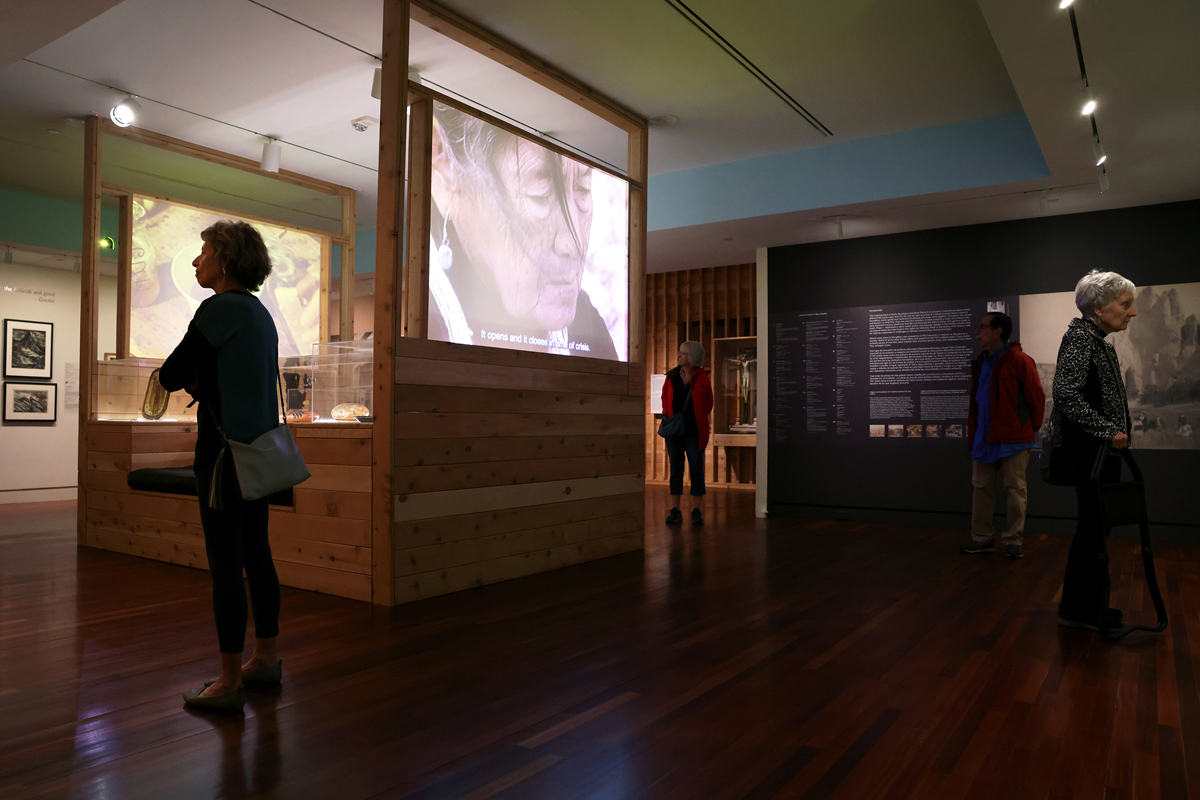
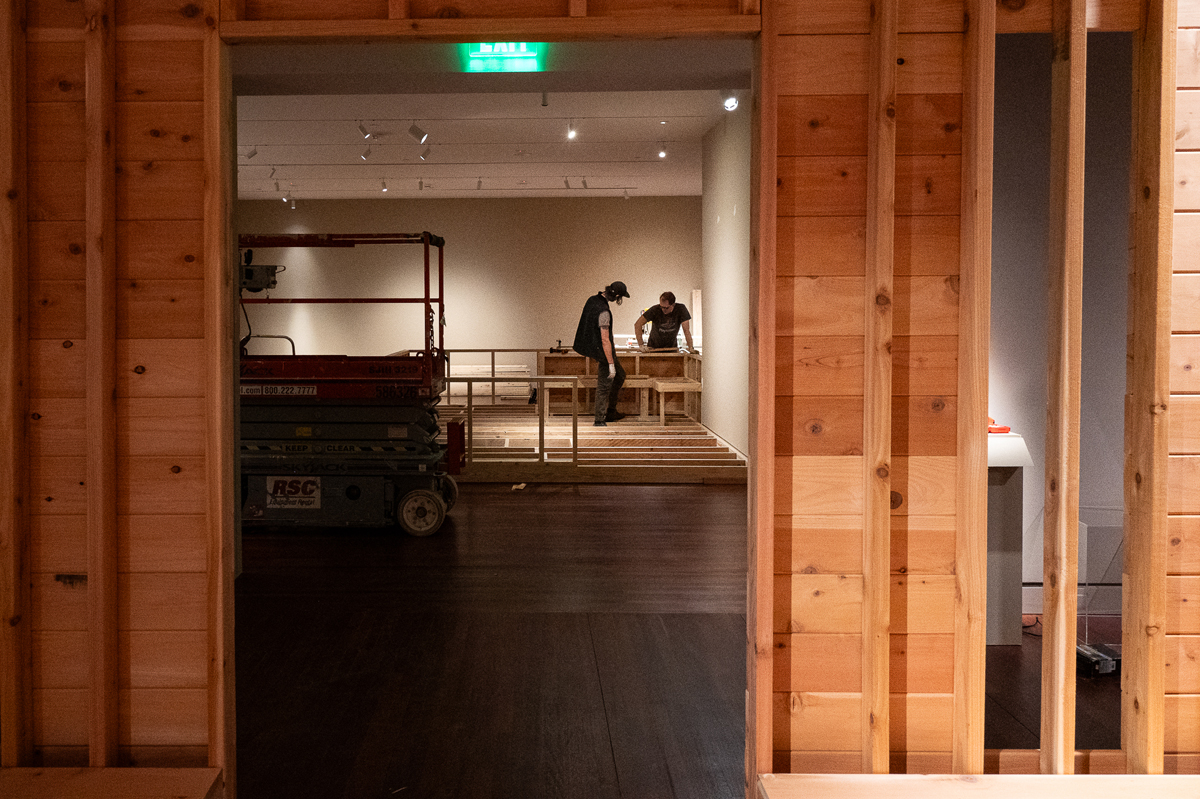
COLORADO SPRINGS—For the first time since 2018, the Colorado Springs Fine Arts Center (FAC) reinstalled its permanent collection in a display titled Gathering Place. A considerable achievement, the reinstallation drew from a collection of tens of thousands of works to populate four galleries and a large adjacent corridor that connects the galleries and also features artwork. The spaces had to be reconfigured, as did the narratives that the institution had previously used to present the collection.
The museum’s staff reached out to various community stakeholders for help.
Michael Christiano, the director of visual arts and museum, recognized that the complexity of the overlapping stories converging in Colorado Springs required a diversity of perspectives and experiences to help narrate them.
Right from the start, it felt important to aerate the process [by inviting in] lots of different stakeholders.
During a curator discussion in the exhibition guide, Christiano describes how “Right from the start, it felt important to aerate the process, meaning, to invite lots of different stakeholders to help shape the thinking.” His aeration metaphor captures the sense of revitalization and excitement involved in bringing the proverbial breath of fresh air to spaces that had remained relatively untouched for years.
In 2023, the FAC hosted a gathering of approximately forty people, including art historians and Colorado Springs residents, to discuss their sense of place and the cultural practices vital to their lives. Out of this “convening,” the museum staff invited four guest curators to continue the dialogue and collaboration, assigning them galleries to curate.
One of the guest curators, Pat Musick, a local artist and scholar, invokes the concept of the “ecotone” in her gallery, a transition zone between ecosystems. Colorado Springs is an ecotone in the ecological sense. As the homeland of the Ute Tribes, it is also a historical site of conflict and convergence, punctuated by the waves of colonists and settlers speaking languages ranging from Spanish to English. The Ute language is critically endangered and undergoing revitalization efforts.

Musick’s research of the museum’s collection revealed an often-untold history. For her, the curation process “was largely one of clarification and discernment: gaining a greater understanding of the people and forces that contributed to [the FAC’s] establishment, how particular decisions made over the years have shaped it, discerning threads of continuity.” She was surprised by the “differing ways people perceive and experience collections and museums over the decades.”
To provide a sense of this diversity, and to tell a fuller version of the institution’s story, she selected a variety of works, including a large colcha embroidery, 1920s Impressionist paintings by Colorado Springs instructors of the Broadmoor Art Academy (which became the FAC in the 1930s), and informative videos produced by the FAC during the 1930s and ’90s.
In terms of connection to the region, we represent the two extremes on the curatorial team.
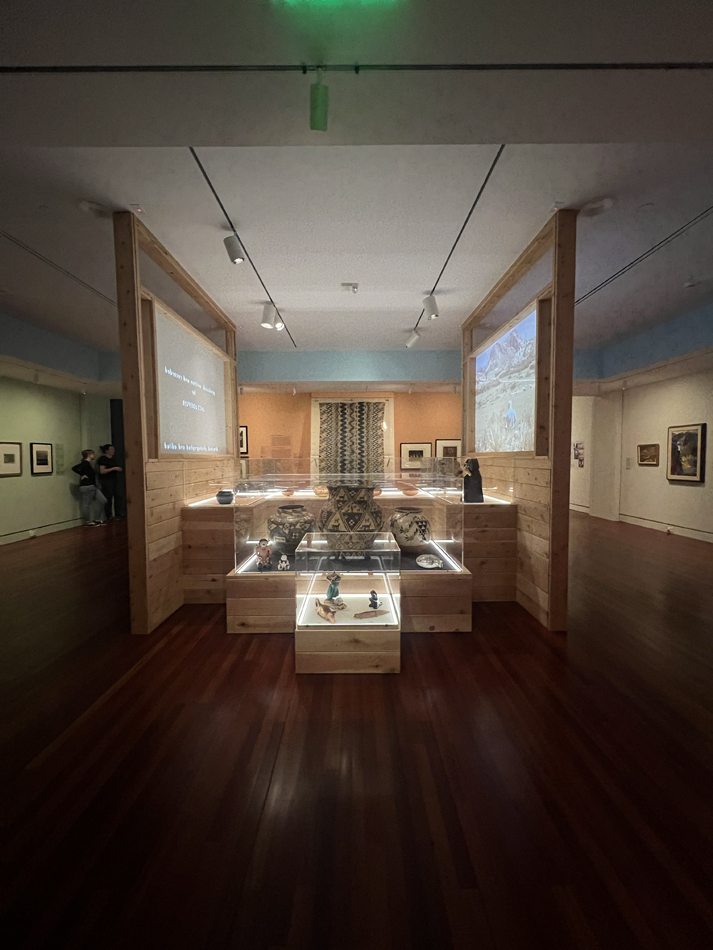
The museum’s inclusion of Cassandra Atencio as a guest curator is a significant gesture. An elder of the Southern Ute Indian Tribe, Atencio worked with Josh T. Franco, an artist and art historian from West Texas, to reinstall the first gallery visitors see upon entering the space. The question “Where are you when you are here?” greets visitors, who then encounter an array of paintings and landscape photographs of well-known Colorado Springs vistas. This gallery interrogates the notion of place via a multiplicity of artists’ perspectives.
Franco describes how the dialogue with Atencio led to their fruitful curatorial collaboration. Atencio had a “profound understanding of the place where the Fine Arts Center is physically located.” Franco reflects in writing, “It was a great privilege to work with Cassandra on the first gallery visitors will enter in the new installation. In terms of connection to the region, we represent the two extremes on the curatorial team: Cassandra’s roots as a Southern Ute tribal member and elder are the deepest, while I was really experiencing my first impressions of Southern Colorado through this project. (I grew up in West Texas and have lived on the East Coast for nearly twenty years.)”
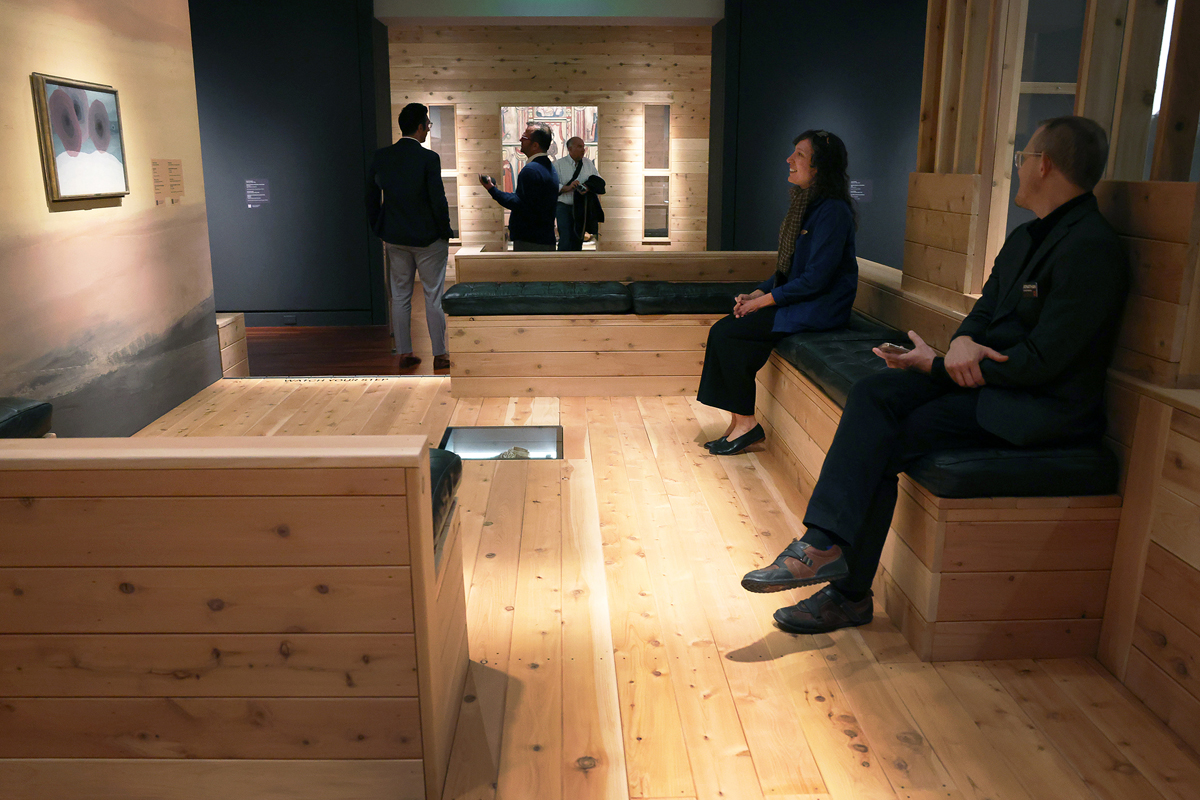
The convergence of their experiences is captured in the gallery. According to Franco, “I think this is evident in the pairings of works like Arthur Dove’s abstract painting Foghorns (1929) and Native gear, such as the moccasins by artist Debra Box. This pairing is unique to the FAC and to the region and offers a view of American art not available anywhere else.”
To showcase the artworks and Indigenous clothing chosen for this gallery, the museum’s staff designed display cases with built-in seating that invite visitors to pause and reflect on the work. Modernist paintings such as Dove’s became a significant part of the permanent collection, yet the exhibition does not privilege this strand of art history. A case built into the cedar structure displays Box’s moccasins in front of Dove’s painting. The presence of the moccasins reminds viewers that modernism did not replace Indigenous ways of life. The Utes remain present in the region.
According to the head of exhibitions, Jonathan Dankenbring, “Early in the design process for Gathering Place, we decided that [locally sourced] cedar would be an integral part of the exhibition design language used. We wanted to use the cedar as an anchoring point for the entire exhibition, to give it a very welcoming domestic feel.”
Our intention is to repeat the reinstallation process, gathering a new cohort of guest curators.
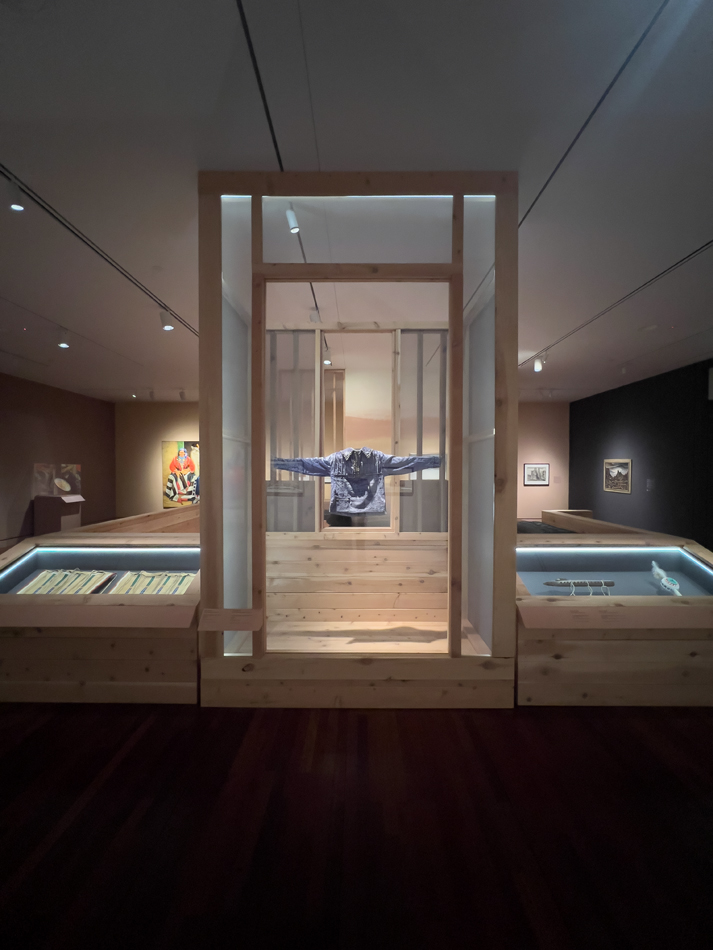
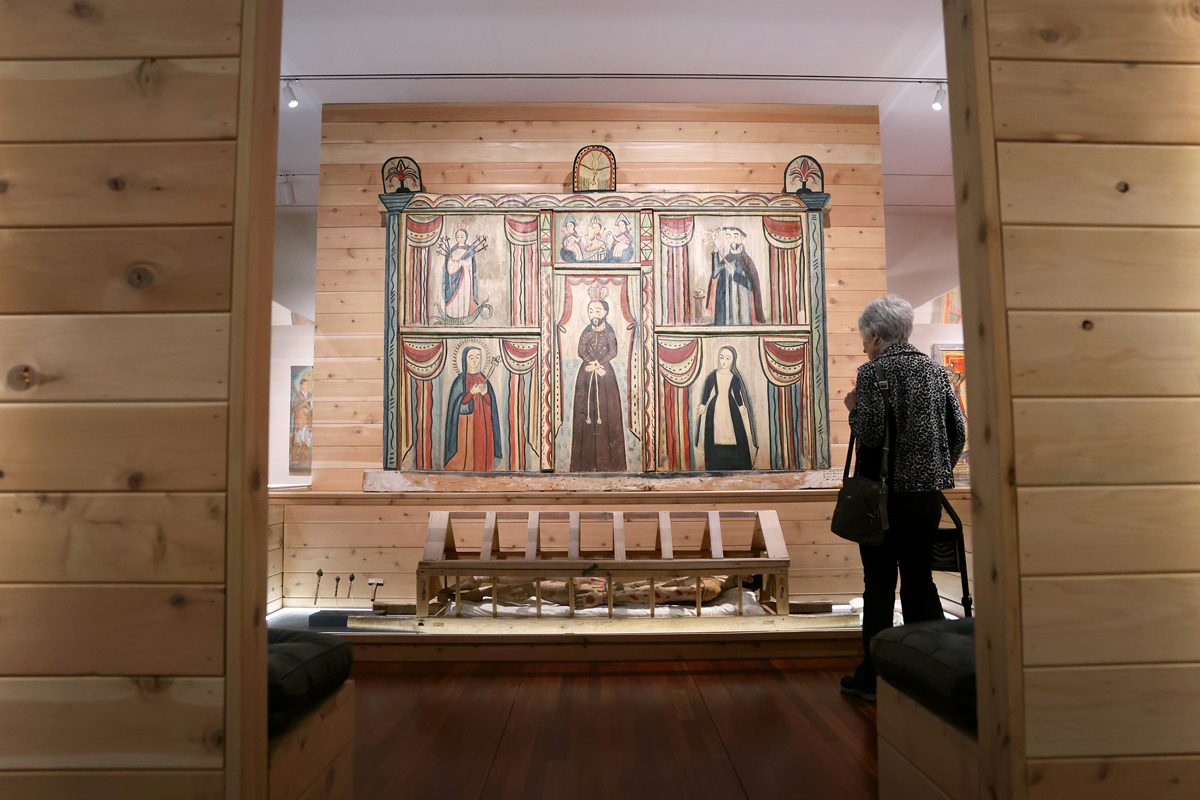
The adjacent gallery, curated by James M. Córdova, an associate professor of art history at the University of Colorado Boulder and a practicing santero, reinforces this domestic, reverent atmosphere. A newly built facade reminiscent of a wooden home invites viewers into a space showcasing a selection of items from the museum’s renowned collection of New Mexican sculptures and paintings. For Córdova, a “guiding principle” for curating this space “was to highlight the devotional power of the santos and how they functioned as sacred objects in the special spaces they inhabited (churches, shrines, chapter houses, home altars, etc).”
It was essential to Córdova to highlight “the fluidity of images and visual syntax between Hispano and Indigenous artistic traditions in New Mexico from the 18th century to the present day.” By showing the shared visual syntax, Córdova resists the narratives of art history that reinforce hierarchies by categorizing some practices as folk art. His curation of the gallery shows how “the cultural and artistic landscape of New Mexico was, and still is, permeable.” Yet, it was equally important to him to emphasize how this permeability was often the product of a history of violence. Museum visitors, he says, are “reminded of the problems of colonialism,” thereby avoiding a facile sense of cultural harmony.
Gathering Place is on view until April 2028, after which the museum plans to reconsider the permanent collection once again. “Our intention is to repeat the reinstallation process,” says Christiano, “gathering a new cohort of guest curators to explore stories from the collection from their unique perspectives and sets of expertise. The process will be informed by the curatorial model we developed during this initial effort.”