Eric Romero’s unique artistic vision celebrates Hispanic culture as a vital expression of New Mexico’s storied past and promising future.
Eric Romero: Querencia
September 25–October 8, 2026
Blue Rain Gallery, Santa Fe
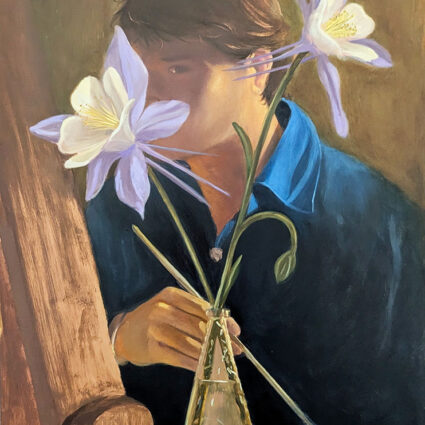
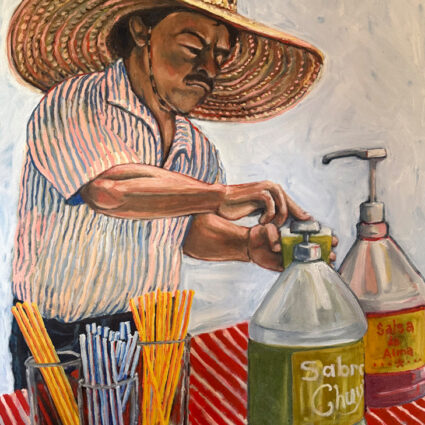
What do Renaissance symbolism, cultural colonization, and family values have in common? In the hands of oil painter Eric Romero, they all become defining elements of a unique artistic vision that celebrates Hispanic culture as a vital expression of New Mexico’s storied past and promising future. Using vibrant colors and classical painting techniques, Romero blends religious iconography, Renaissance motifs, and pop culture as he pays homage to the ordinary people whose resilience and indefatigable spirit have informed local cultures for centuries.
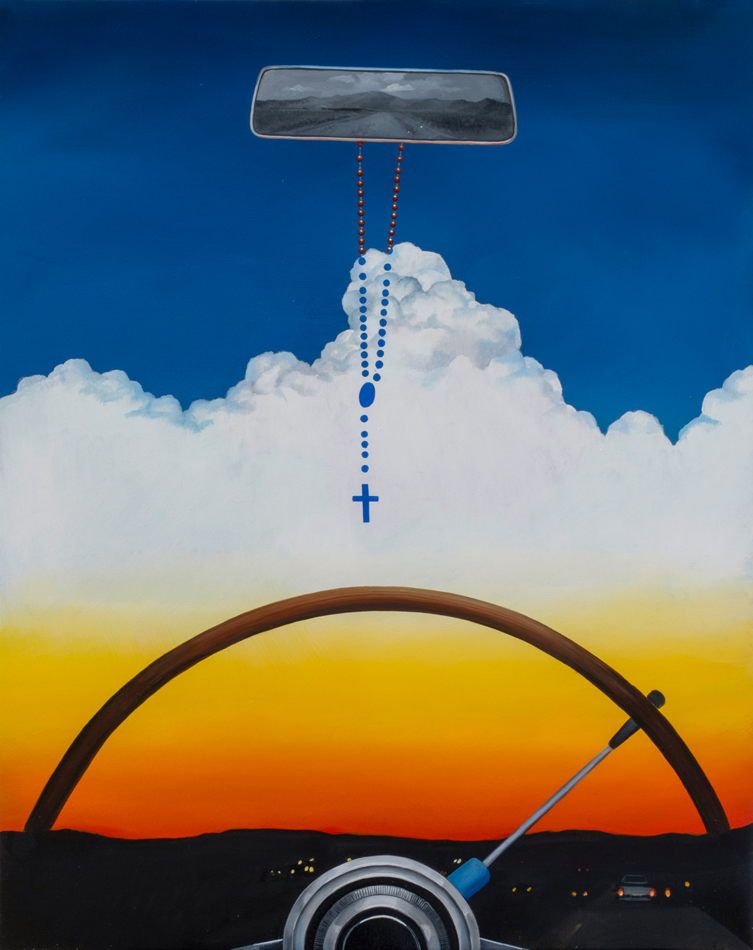
His latest series of paintings, Querencia, speaks to the driving force behind his own life and work. An untranslatable Spanish word, querencia refers to a sanctuary where one feels safe, supported, at home, and able to be one’s authentic self. Those feelings suffuse this new work as he blends cultural signposts and visual metaphors into a celebration of family, heritage, and tradition, subtly referencing colonization and religious syncretism along the way. Romero is proud of his Hispanic roots and his New Mexico home, such that his subjects, which range from church to family to the state’s car culture, are portrayed with humor, respect, and pride.
“My work deals with my lived experience,” the artist explains, “and I paint people whom I admire. I incorporate elements of Greek mythology and urban folklore into the work as well. I feel like the more vulnerable I get with my painting, the more universal it becomes.”
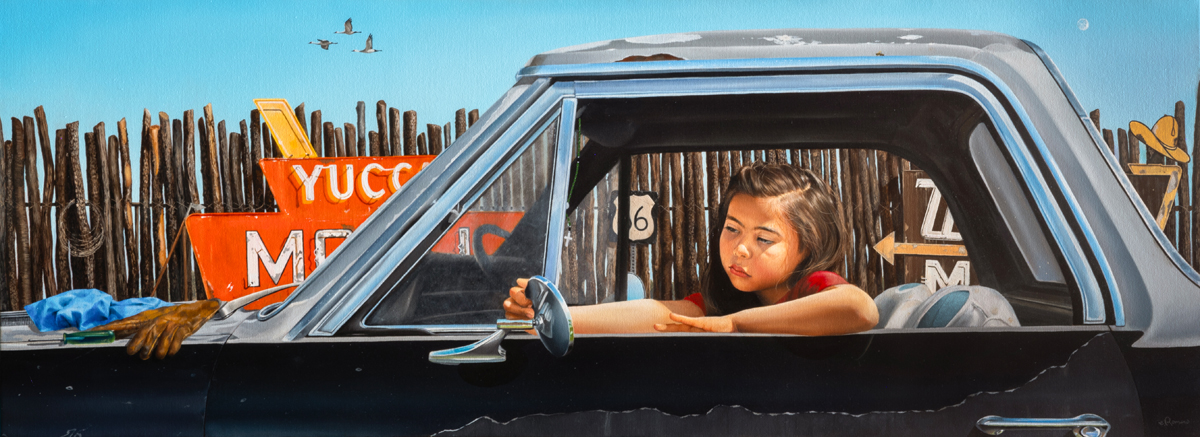
We see this in paintings such as Route of Tomorrow, in which Romero shows his young daughter leaning out of the window of a Chevrolet El Camino while behind her we see a coyote fence, a neon motel sign, and a highway marker for Route 66. “The painting is about seeing the new generation becoming the caretakers of culture, about seeing themselves in a position to learn, to grow, to embrace the obligations of tradition and heritage,” he says.
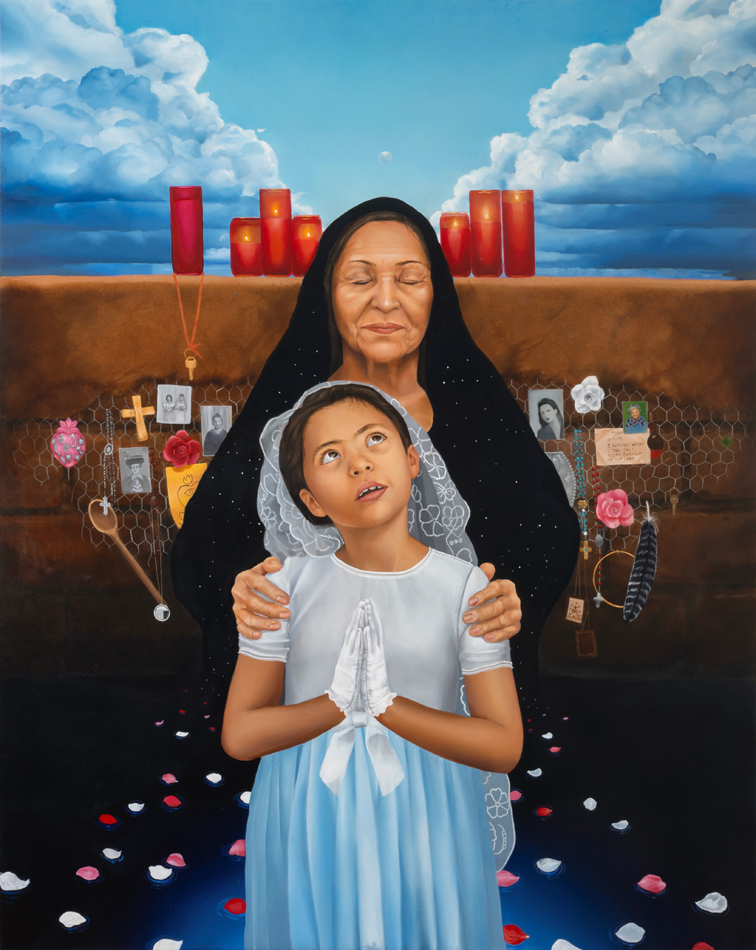
Another painting, A Thousand Mothers Behind Her, features an older woman (Romero’s mother) and a young girl (his daughter) and honors the matriarchal nature of Hispanic culture. “It dispels the myth of the machismo/toxic masculinity while honoring the women who shape, nurture, and perpetuate the culture,” Romero says. “It’s a testament to the enduring power of womanhood, paying homage to the wisdom and enduring love of our mothers.”
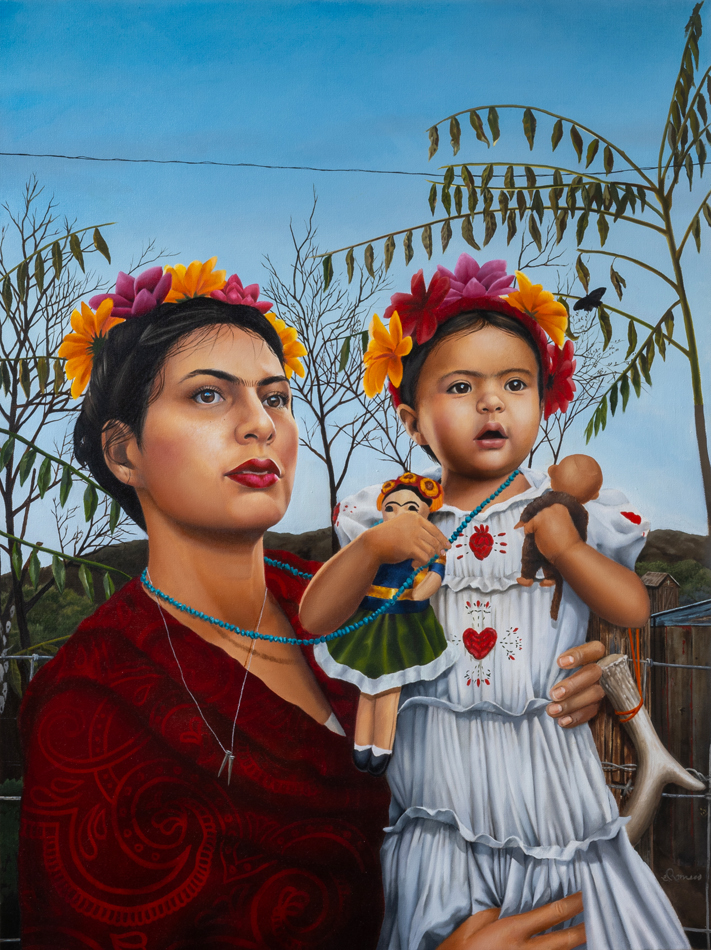
In Las Fridas, in which he presents his wife and daughter dressed as Frida Kahlo, he explores the impact one woman can have on a universal level. “People worldwide can see the power that comes through vulnerability,” Romero points out. “It speaks to the cross-cultural influence, seeing that acceptance of our humanity is the only way to realize we are more powerful with faults than without them.”
Romero’s bold colors, endearing vignettes, and clear-eyed optimism combine to bring us a message of pride and appreciation for our shared humanity as glimpsed through the lens of family, tradition, and multiculturalism.