Ephemeral Collective’s roving performance festival in Moab holds lessons in pooling resources to shape a tiny counterculture.
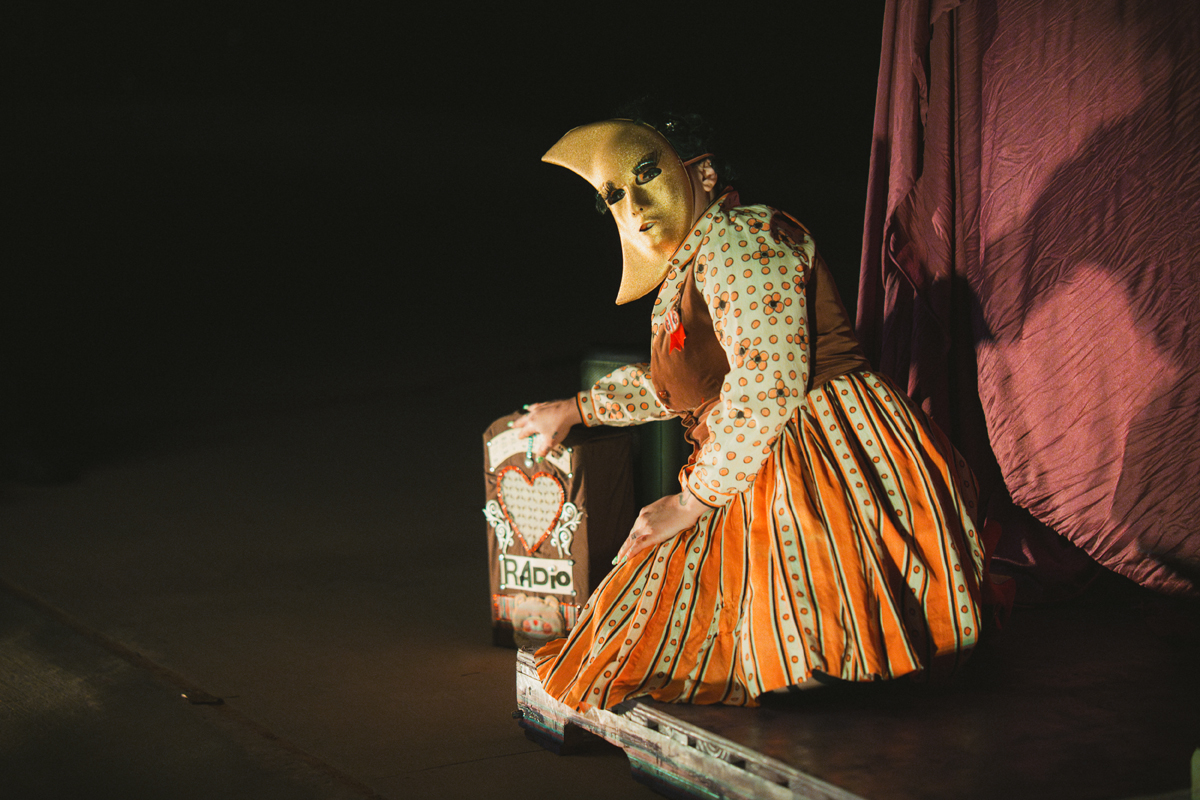
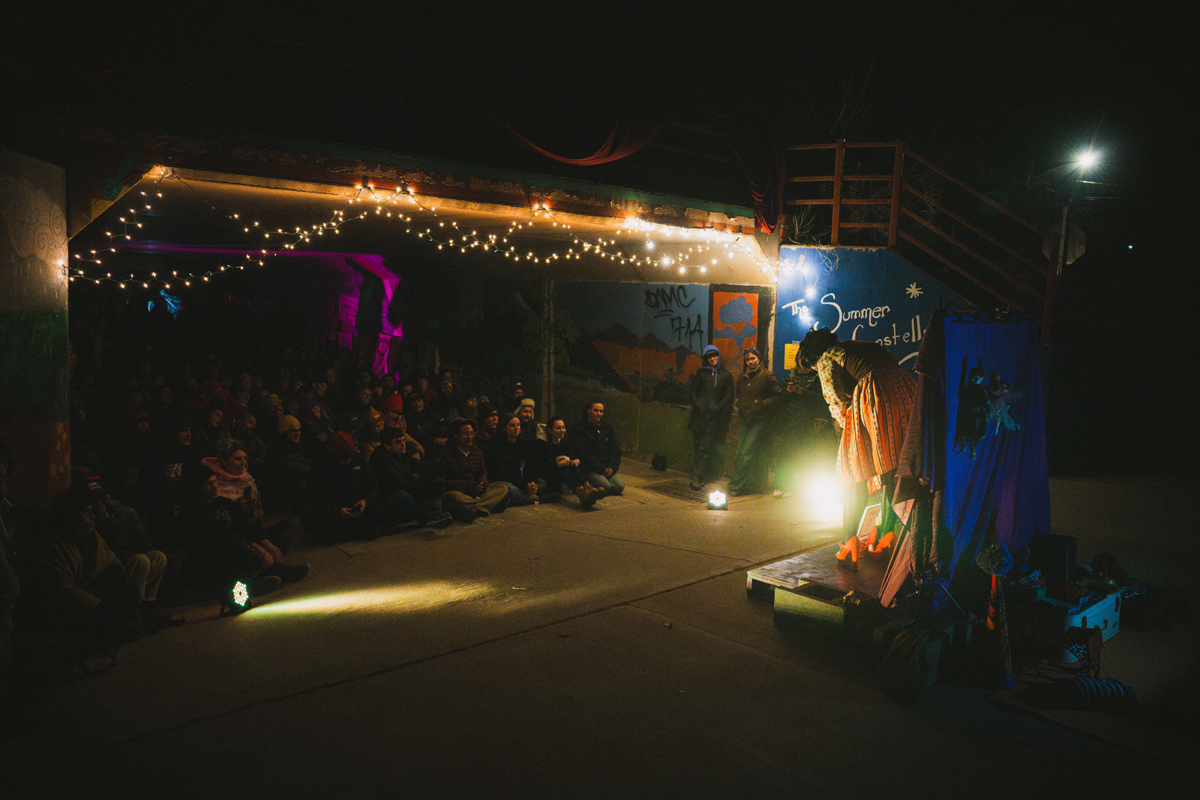
It was standing room only in the storm drain, and it was time to send in the clown.
It was Saturday night, and a crowd was gathering in a concrete culvert for the closing act of Stoopfest, a roving performance art extravaganza that took place at various outdoor locations throughout Moab, Utah, in March.
By now, these people had already consumed several hours of experimental theater. They had been to an opera and an Iranian poetry reading. They had sat through two musicals and endured an hour of amateur stand-up comedy. They were no doubt exhausted. And yet, more than a hundred audience members pushed through to the grand finale—a vaudevillian puppet show performed by Salt Lake City–based clown Madazon Can-Can.
Moab gravitates toward… a kind of site-specific community theater of the ‘DIY clown parade’ variety.
“The fact that so many people spent the entire day sitting in people’s backyards watching performances they knew basically nothing about beforehand, that was pretty cool,” says Sam Van Wetter, one of the festival’s organizers. The two-day event, which was put on by a local art collective called Ephemeral, drew more than 300 spectators and involved almost fifty performers. “I think that speaks to the blind support of the community and the appetite here for this kind of art.”
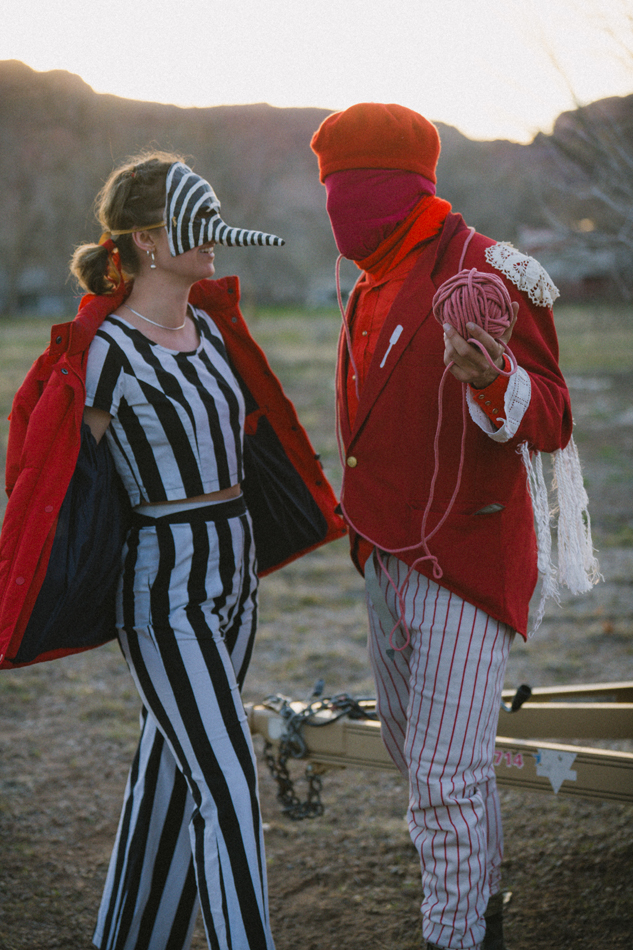
By that, Van Wetter means a specific flavor of performance art that Moab gravitates toward—a kind of site-specific community theater of the “DIY clown parade” variety, as Stoopfest organizer Rachel Toups describes it.
The style is distinct to Moab, shaped as much by the constraints of the rural town as by its playful spirit, and it reflects a recent wave of homespun, community-powered public spectacle that has emerged in the past few years.
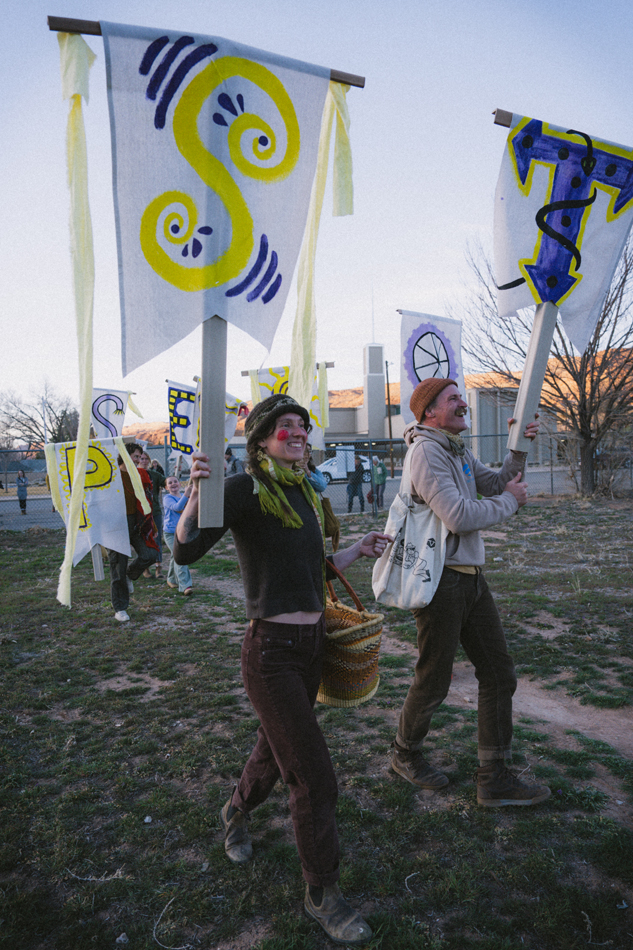
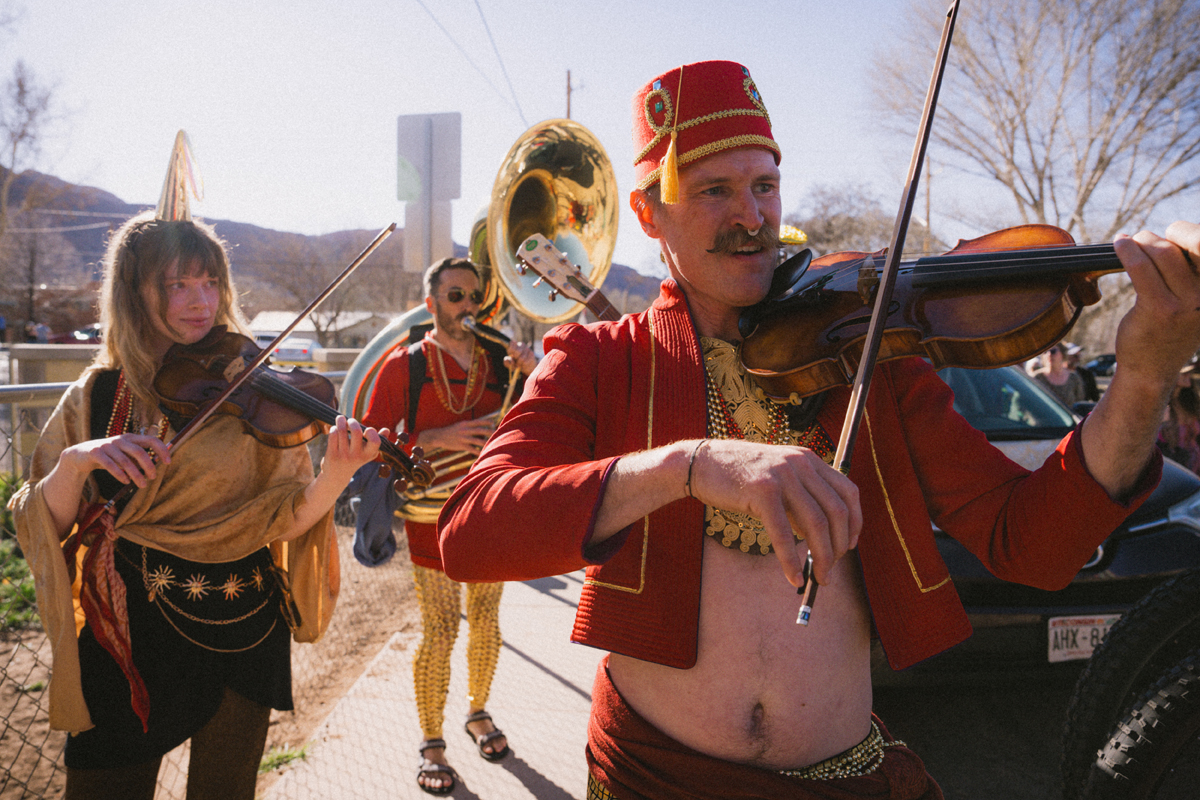
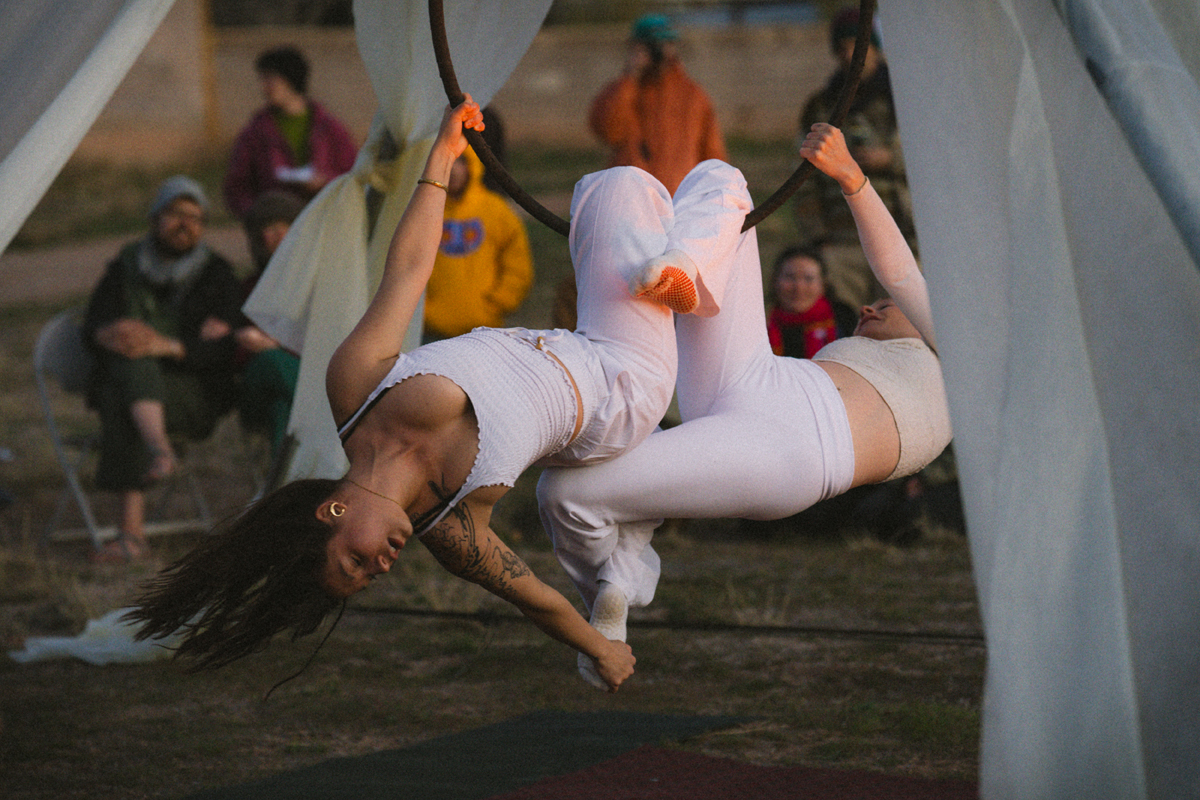
In keeping with that open-invite philosophy, Stoopfest embraced a come one, come all attitude. Spots were limited for the opening performance—a comedy-memoir solo clown show called Sugar Mud by Los Angeles–based artist Meat Bar—and for the workshops offered that weekend—a narrative dance class led by local theater director Malcolm Campbell-Taylor, and a clowning class led by Madazon. But the main procession was free, spanning seven venues along a two-mile route throughout a residential neighborhood, and audience members traveled together—with a marching band—to each show.
“Something I’ve missed about living in bigger cities is spontaneity, just being able to stumble upon something,” says Megan Vickery, a founding member of Ephemeral. “Stoopfest was meant to be communal in that way.”
But though the public nature of the event was intentional, it was also somewhat born out of necessity. “There are very few venues in Moab,” Vickery says. “And definitely none that would work for these kinds of performances.”
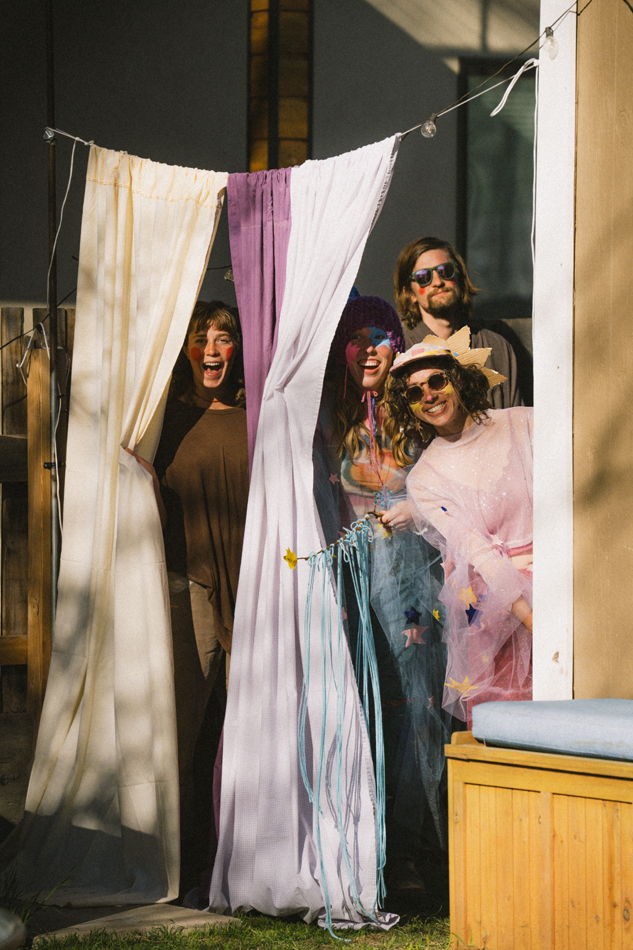
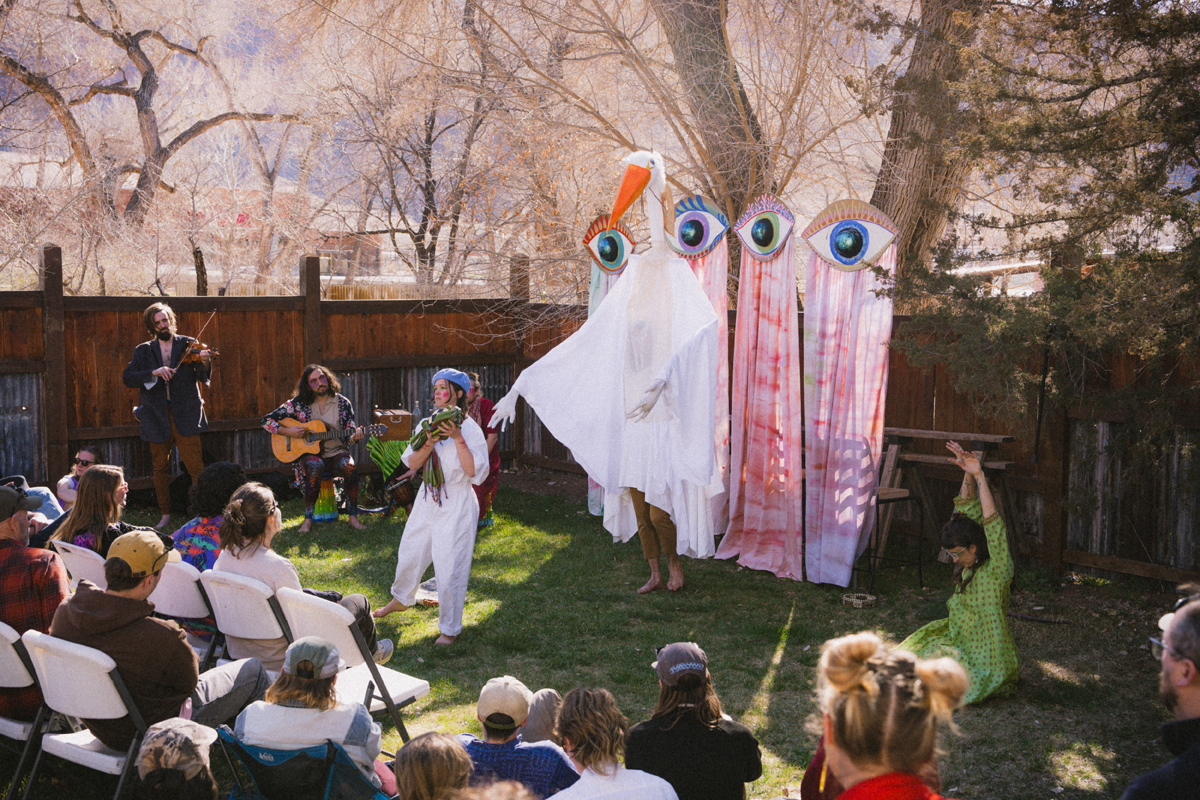
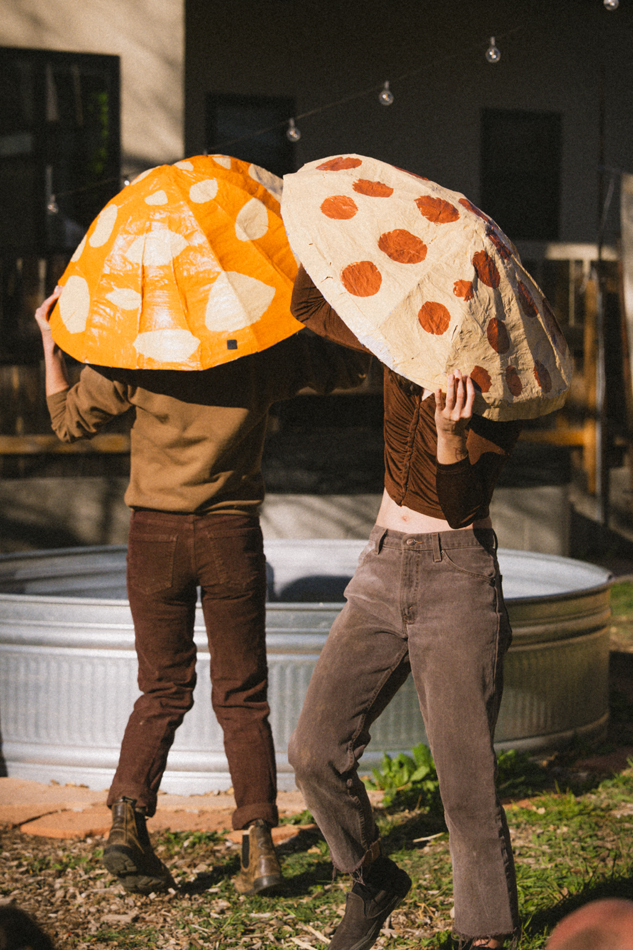
“There’s an ingenuity that comes from the lack of resources here,” Van Wetter says. Artists in Moab swear by the holy trinity of paper, glue, and paint, as demonstrated by the dancing papier-mâché mushrooms in Coalescence, the third performance in the procession. With an old bed sheet and some two-by-fours, they can marshal a parade or animate a twelve-foot egret, as The Garden Ensemble did in their show The Orifice.
“The thing about a DIY clown parade is that you can do it cheaply,” Toups says. “A lot of people who live here year-round are not making a lot of money, so having an outlet to make something out of plywood and face paint and cardboard is really attractive.”
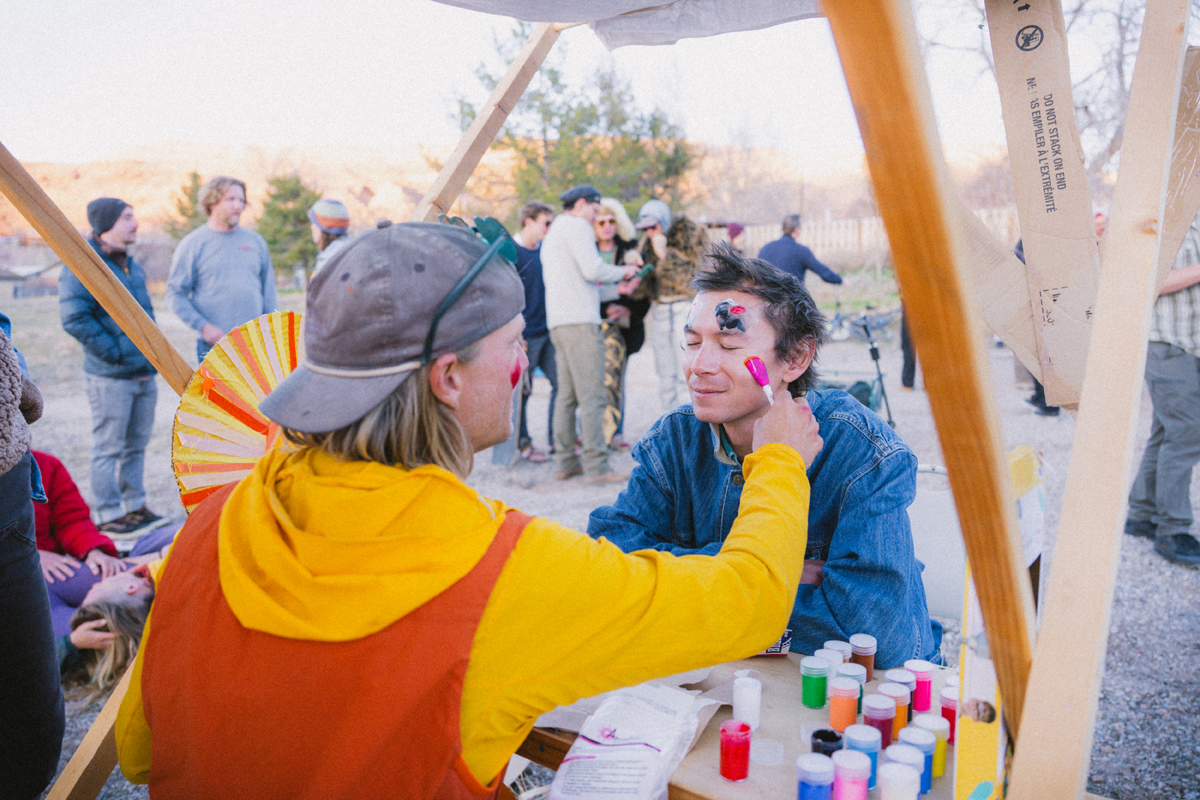
Indeed, all it took was a big red circle on either cheek to turn ordinary Stoopfest spectators into rosy-faced clowns themselves throughout the day after someone in the audience sacrificed a lipstick for the communal face painting cause.
“Moab has the clown spirit,” says Madazon. And to some degree, it was that playful generosity of spirit that made the festival such a success.
“People were really excited to water a fake flower or throw a cow around during a fake tornado,” Madazon continues, adding that so much of a clown’s performance depends on the willingness of the audience to play along. “People were dedicated to one another’s joy. I think that says something special about this community.”
Toups credits Ephemeral for helping harness and channel that special something into the arts community in recent years, saying the collective has “added a layer of legitimacy to the arts scene here without adding constraints.” The collective, which also publishes a biannual magazine, formed two years ago to respond to the needs of local artists and provide a centralized platform for people to share and promote their work.
“In a small town like this, often you’ll have one person who starts something as a passion project, but then they move or get busy, and all of a sudden it feels like the whole community loses momentum,” says Toups. “Something really beautiful about the collective is that it decentralizes that leadership role, and it does feel like that’s caused a shift in the community. There’s more happening, and it feels more sustainable.”
As the collective has grown, so too has enthusiasm for local art-making, especially for community theater. Much of that enthusiasm is owed to a production that debuted last fall called Leaving A Trace. The three-hour place-based musical written by Moab resident Ash Hanson was performed on public land (and public radio) and involved more than a hundred locals in the cast and crew.
That momentum has carried over into other recent spectacles, including the second annual Sleepless Jeepless Bike Safari. Though technically a bike race, the twenty-four-hour scavenger hunt is arguably performance art in the way that it forces participants to publicly humiliate themselves and cause a scene through outrageous challenges. The event was started two years ago by the same group of locals who built and “drove” a to-scale cardboard Jeep puppet during one of Moab’s largest off-roading competitions as a kind of playful satire.
Both Leaving A Trace and Sleepless Jeepless Bike Safari, though wildly different endeavors, share the same hyperlocal, self-referential focus that defines so much of the art produced in Moab. Leaving A Trace is a loving parody and celebration of the community, featuring famous people from Moab’s history as well as characters based on regional flora and fauna. And Bike Safari is similarly insular, with much of the fun predicated on incredibly specific local trivia and a nuanced understanding of the subject of the parody—Moab’s tourism economy and its pinnacle event, Easter Jeep Safari.
There’s an insistence that we can do more than just ride our bikes and run the rivers and serve tourists at restaurants.
“So much of our lives revolve around this place, so the art that we make is maybe inevitably about this place too,” says Van Wetter. But that’s where Stoopfest deviated from the typical Moab production. Aside from taking place in Moab, the Stoopfest performances had nothing to do with the place. “The shows didn’t have to be about the slick rock when you’re on the slick rock.”
“I think [Stoopfest] spoke to an artistic output that is more than just Delicate Arch greeting cards,” he continues, alluding to the plein air landscape souvenir effect that often dominates the creative output of beautiful tourist destinations like Moab. “There’s an insistence that we can do more than just ride our bikes and run the rivers and serve tourists at restaurants. There’s an insistence that we can make things that are larger than our day-to-day lives.”