On her path to the international art circuit, Emmi Whitehorse had to defend her aesthetic at every turn. The Diné artist reflects on Jaune Quick-to-See Smith, the Venice Biennale, and more.
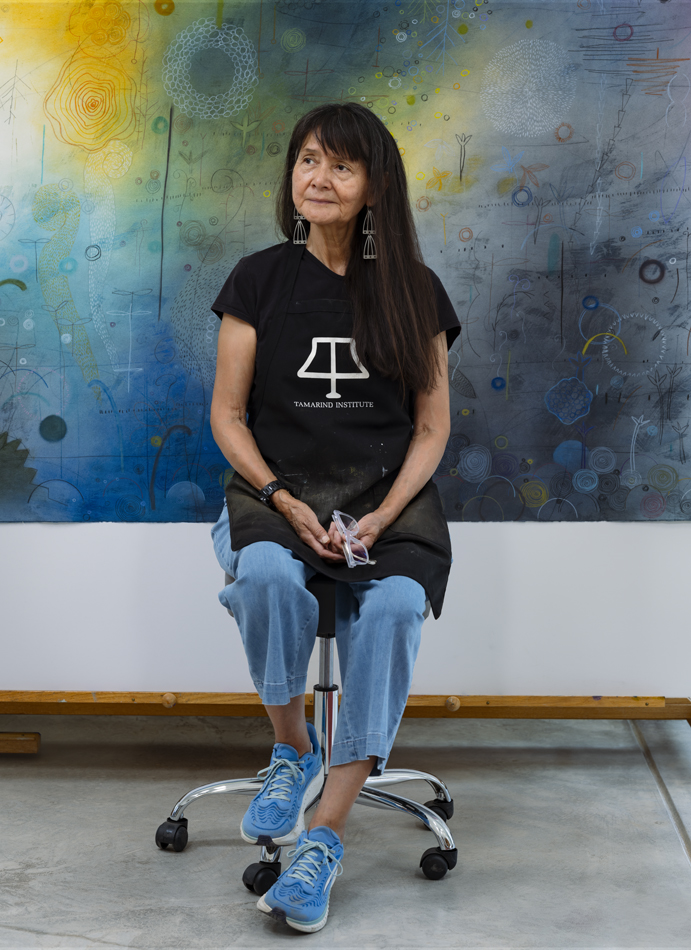
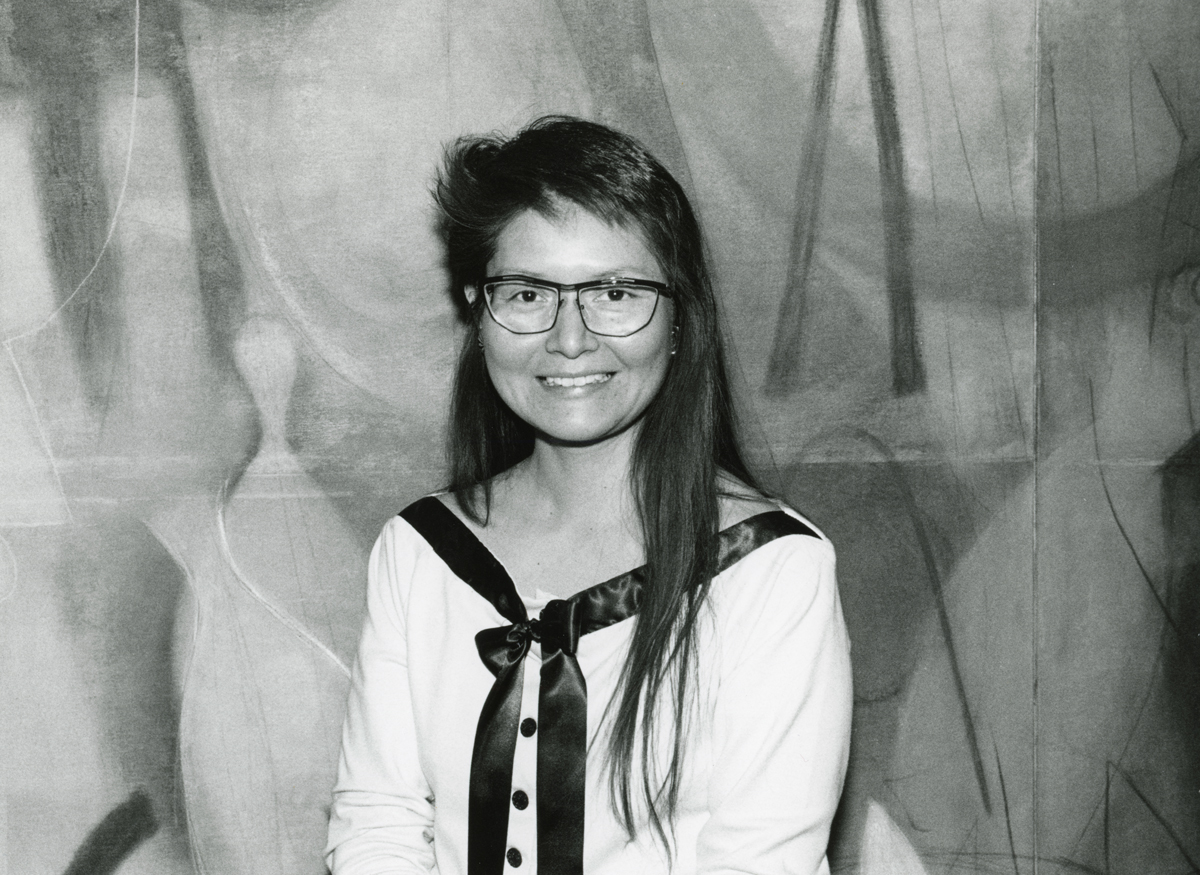
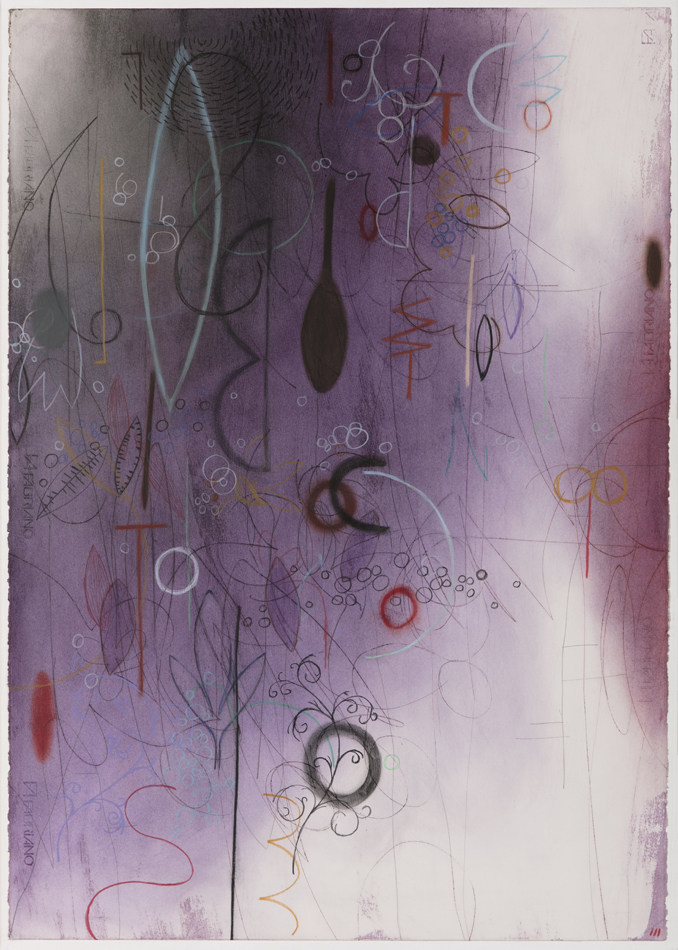
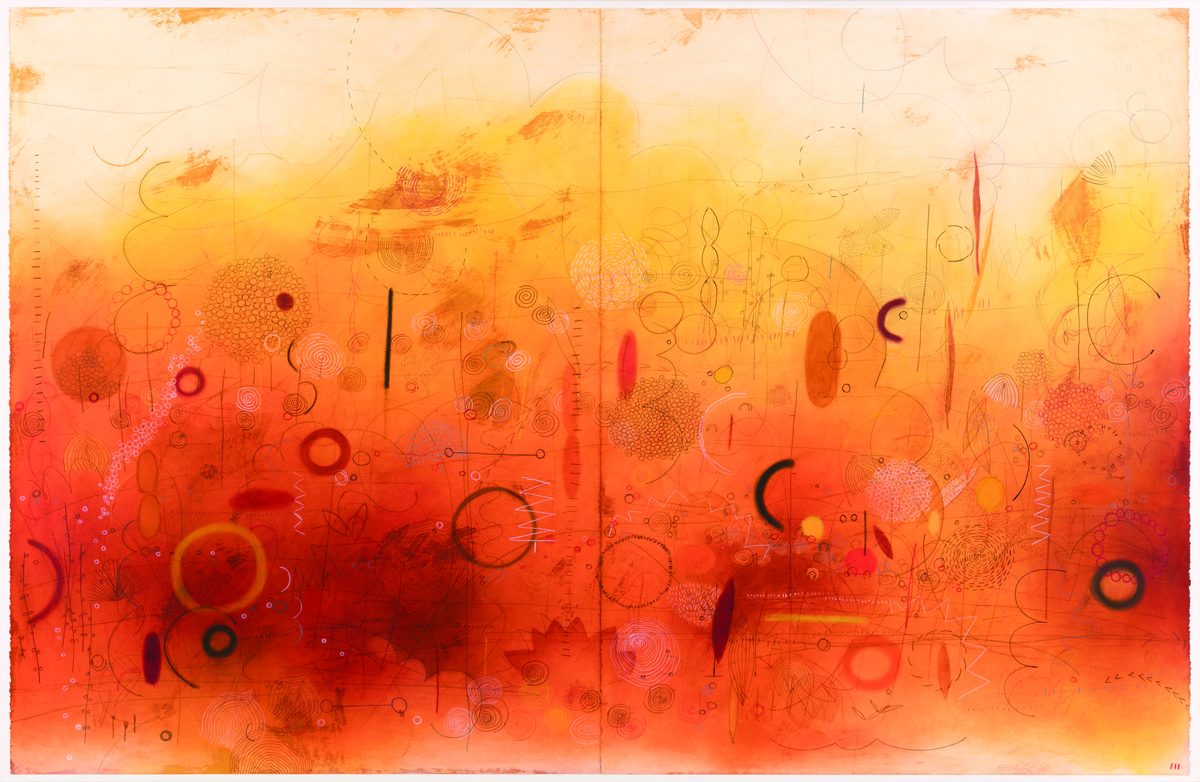
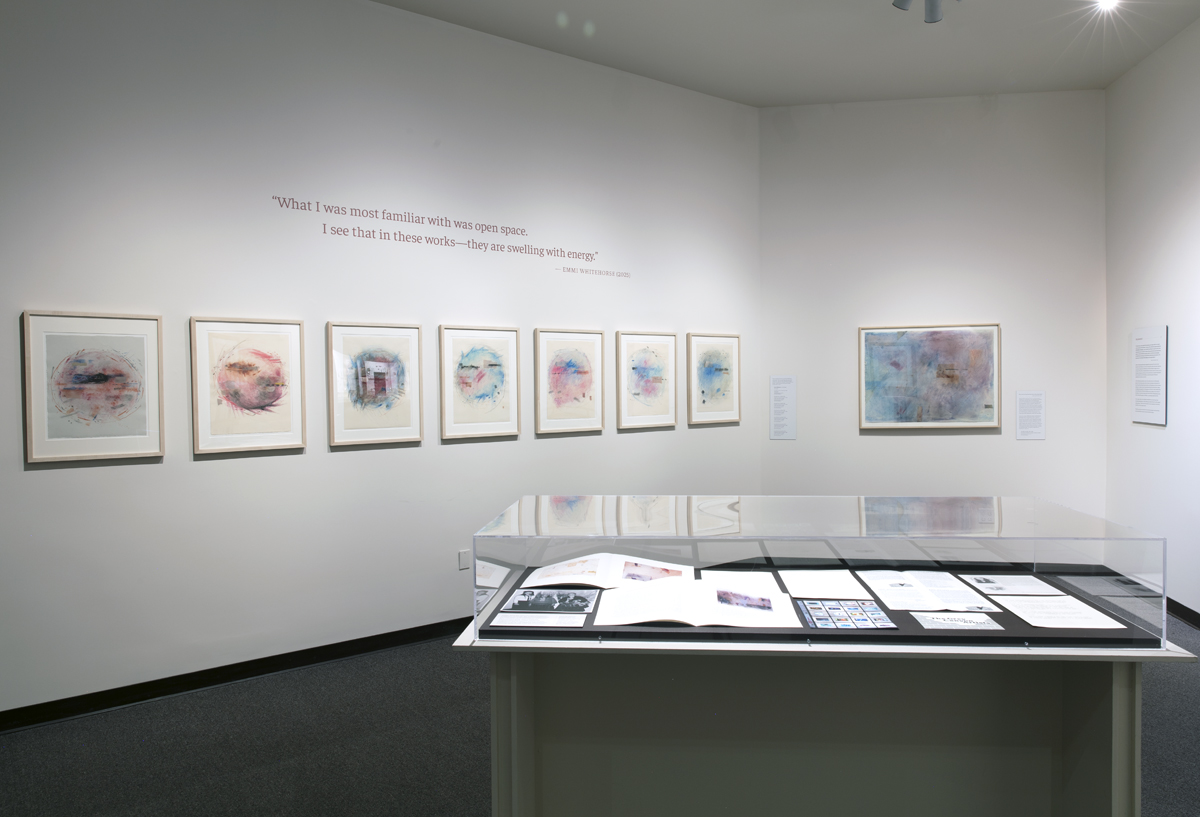
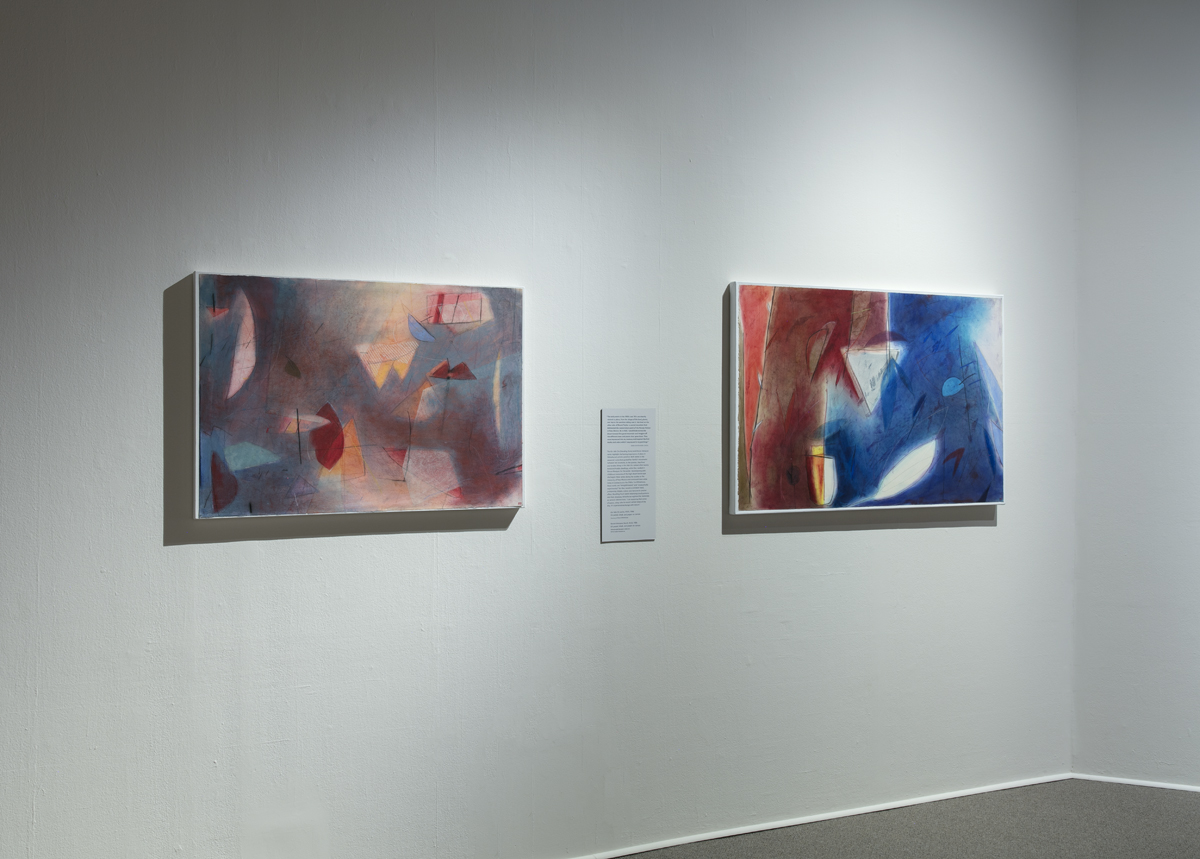
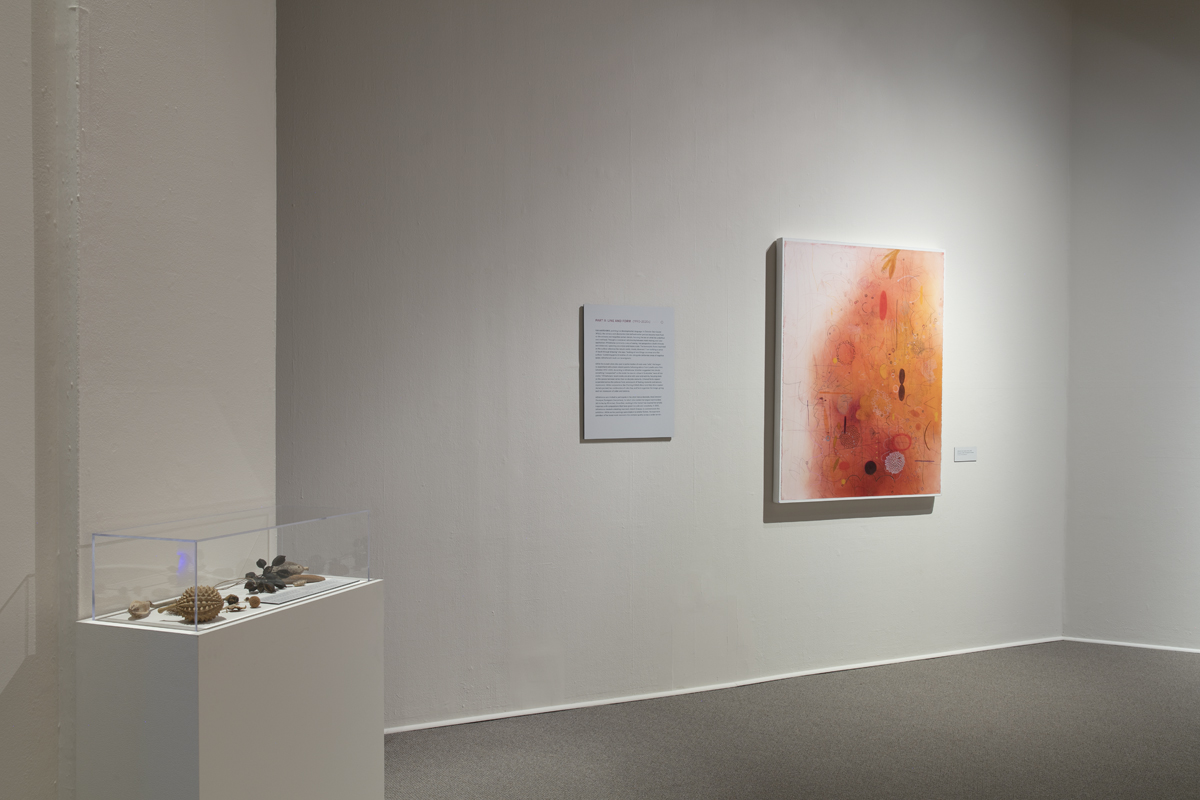
In her airy studio outside of Santa Fe, Emmi Whitehorse (Diné) is quietly brushing her paintings. “It’s pretty dusty here,” she explains, with a light swishing of soft bristles. “I’ve got to clean the surface of my canvases before they’re wrapped up for the Wheelwright.” Often described as atmospheric, Whitehorse’s abstract paintings—evanescent color fields in which captivating shapes, symbols, marks and gestures appear weightless—have been on view at the Wheelwright Museum of the American Indian since February as a two-part retrospective, Emmi Whitehorse: Intimate Landscapes. The show’s first round, subtitled Light and Space (1980-2000s) closed in June; part two, Line and Form (1990–2020s), closes in October. It’s her first museum retrospective, and her second major showing at the Wheelwright after a 1991 solo exhibition.
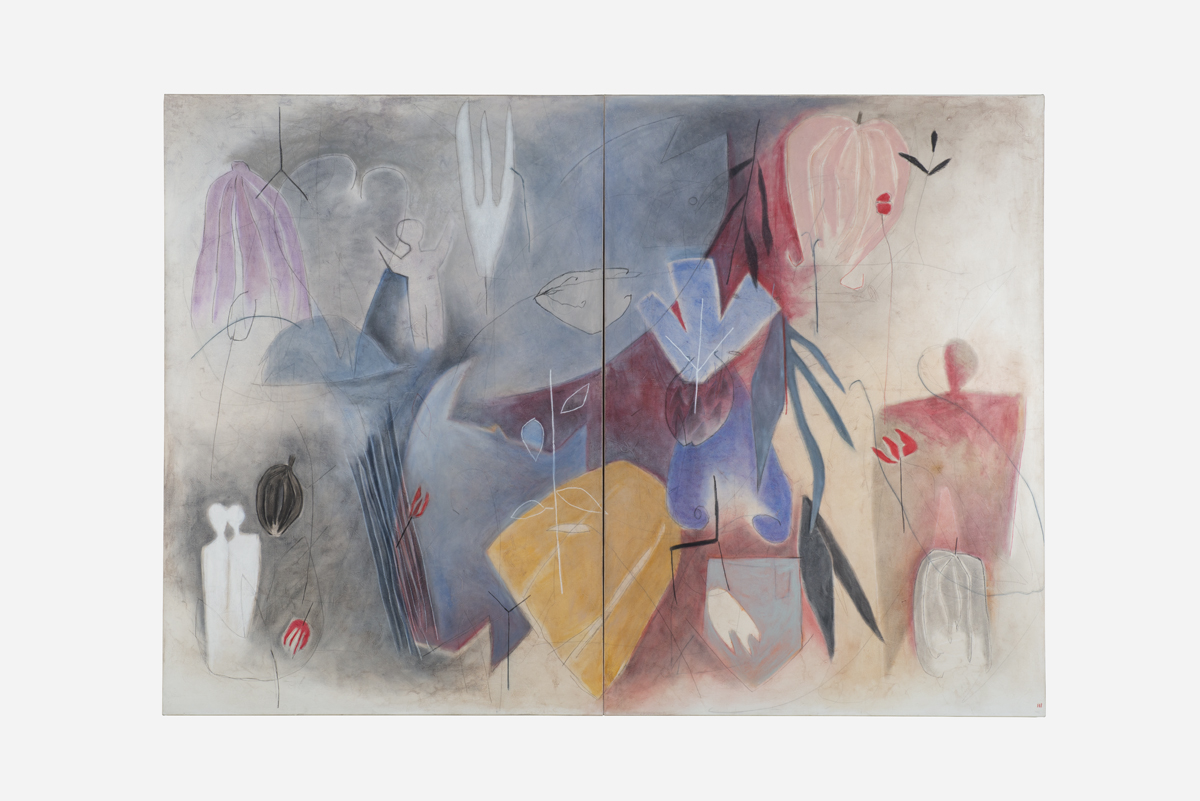
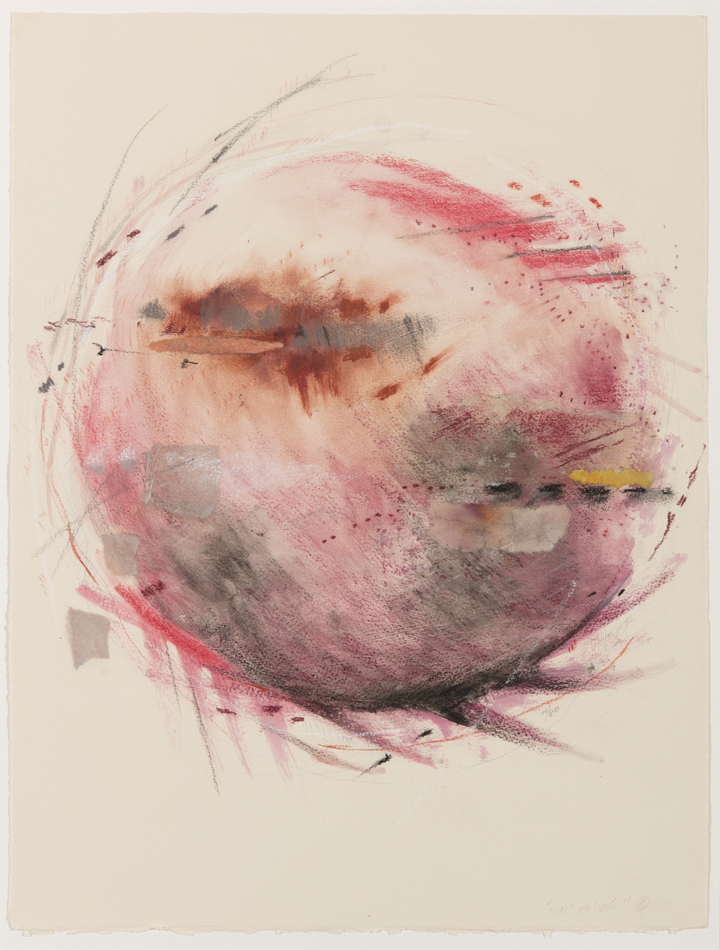
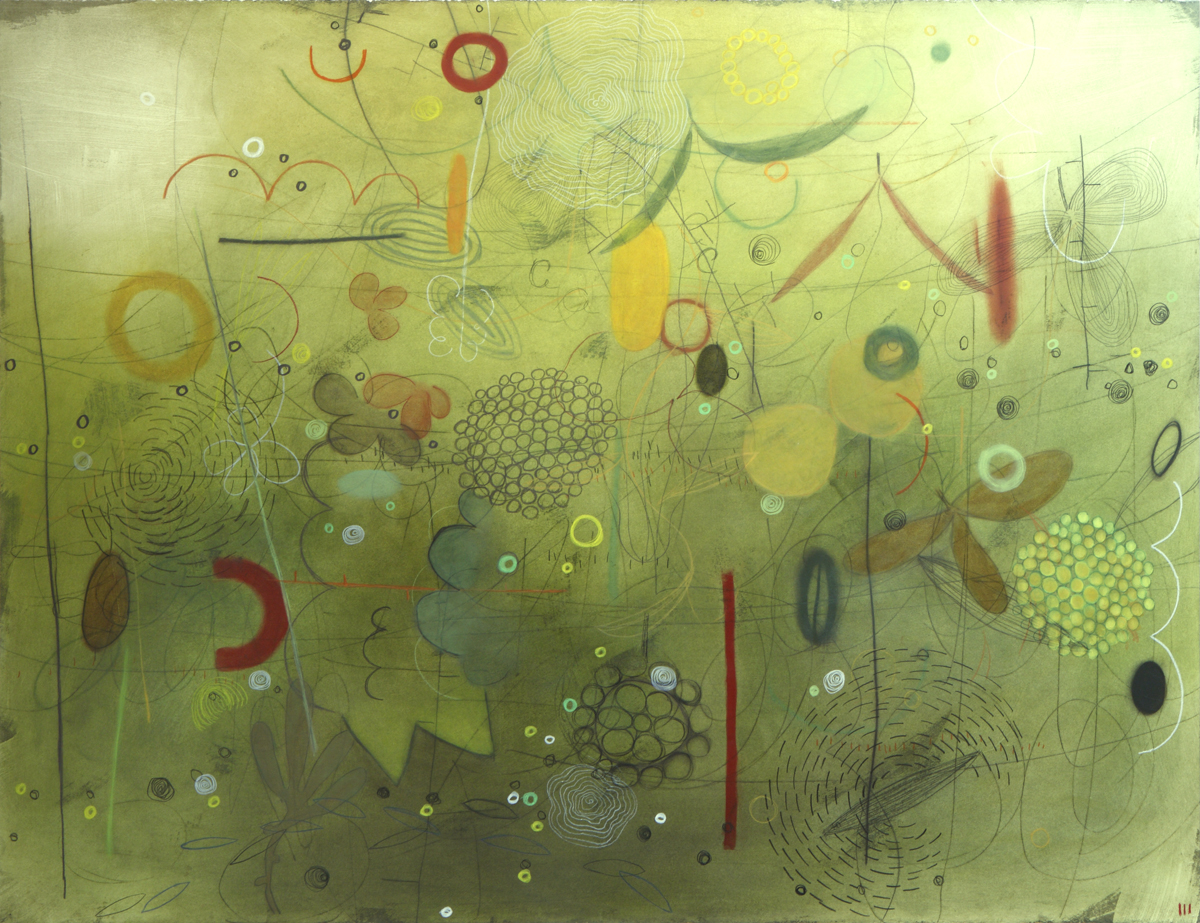
Whitehorse works on paper and then mounts it on canvas, using light oil washes, chalk pigments, pastels, graphite, and charcoal to craft layered, motif-rich compositions. “I’m interested in making a space you can float around in,” she says of the work. “It feels like you’re in a soup of organic matter.” Imagine a photograph of pond water, zoomed in to an almost microscopic level, “so you can see pollen pods, seeds, sprouts popping up, worm trails. That’s what I draw. It’s an opening, a small window, into how I see my world.” Her art is also, she continues, “intuitive, a personal language, which I create to remind people of the world we all live in and share.”
Whitehorse’s world is the Southwest. She was born in Crownpoint, New Mexico, and grew up in a sheepherding family living in a region that encompassed Mount Taylor (Tsoodził) and Chaco Canyon. In the summer, her family stayed at Whitehorse Lake, named for the white horses her family kept there. Her childhood was steeped in geological and Native history, surrounded by the dwellings and artifacts of the Ancestral Puebloans. “I’d collect fossils, leaves imprinted on stones, seashells embedded in rocks, arrowheads, pottery, pieces of dinosaur tails,” she recalls. Vestiges of such findings manifest in her work; a personal, artistic lexicon with universal resonance tied to land and water, seasons and the sky.
[Harmony Hammond] told me to go beyond the confines of a small square space, to just put a big sheet of paper on the floor and see what happens.
Her grandmother, a weaver, was also an early influence. Whitehorse recalls collecting and drying mustard plants, which they’d boil to create an ochre dye for her grandmother’s intricately woven blankets. She also found herself drawn to the “black, white, and gray cubes” her grandmother wove into her work, which “seemed to move in space. They pulsed in and out. I didn’t know the term optical illusion then, but I felt it. I think that instilled this idea of having the 3D effect and optical illusion on the flat surface,” she told Santa Fe Magazine.
Whitehorse earned her bachelor of arts in painting and master’s degree in printmaking from the University of New Mexico in Albuquerque, where artist Harmony Hammond encouraged her to expand her scope. “She told me to go beyond the confines of a small square space, to just put a big sheet of paper on the floor and see what happens,” Whitehorse recalls. “That totally changed the way I work. I could dive right into the landscape, rather than looking at it through a porthole.”
She also met the late Jaune Quick-to-See Smith (Salish member of the Confederated Salish and Kootenai Nation, Montana). “We would console each other, hang together,” Whitehorse says. “The school was very old European, male-dominated; not friendly to female artists. And we were brown.” With Larry Emerson, Conrad House, Paul Little, Felice Lucero, and Ed Singer, they started the Grey Canyon Artists. They showed their fine art across the country, leading the way for other contemporary Indigenous artists to exhibit outside of traditional expectations. “We were a force,” Whitehorse says.
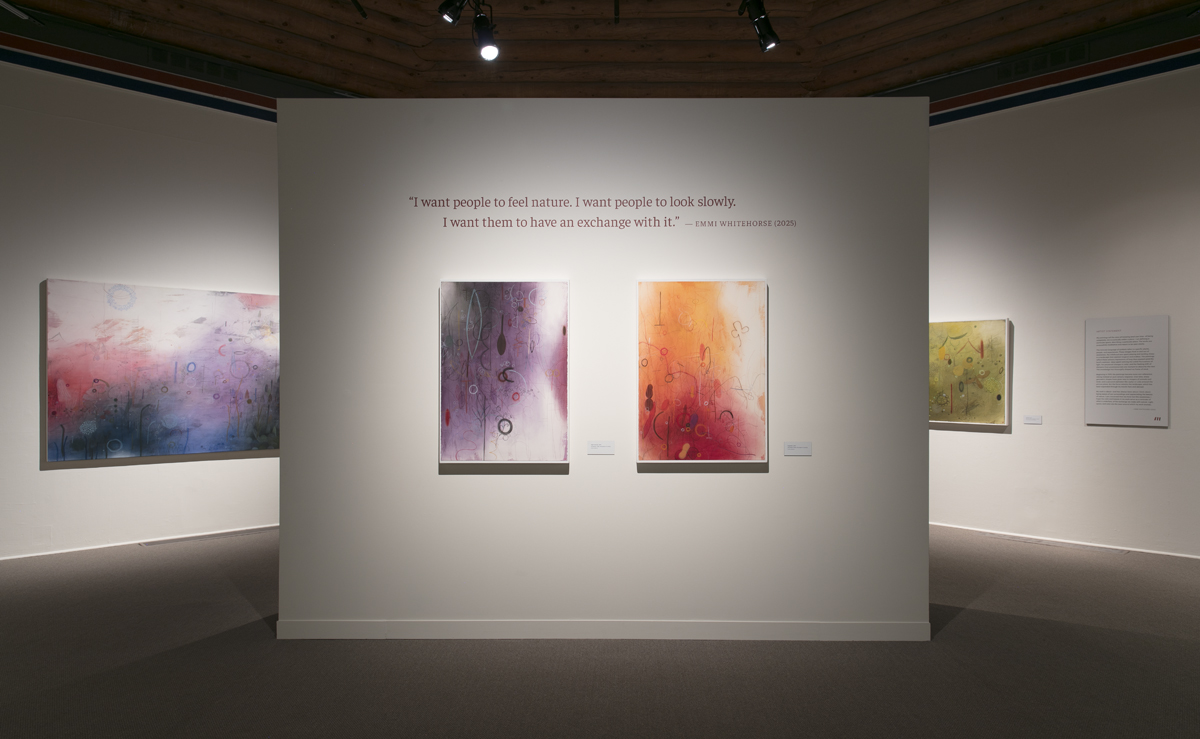
But their first show at the Wheelwright was a bust. “We were hissed at,” Whitehorse recalls of the show’s public reception. “People hated our work, because it was so contemporary, and outside the realm of what anthropologists thought we should be doing. They told us to go home and make pots, weave. It was very demeaning. We were shocked. But we figured, that’s one opinion. That was back in the early 1980s.”
Later, a new director at the Wheelwright “pushed the museum to not be stuck in the past,” she continues. “I can’t remember how or why, but I donated a piece. He loved it, and asked for other pieces to start a timeline of my work.” He also visited Whitehorse’s studio and selected numerous pieces, which were featured in the first part of the Wheelwright’s current exhibition. Whitehorse’s work is also in public collections throughout North America, Europe, Japan, Uzbekistan, and Morocco—including the Brooklyn Museum of Art, Heard Museum, Eiteljorg Museum of American Indians and Western Art, Muscarelle Museum of Art, and the Whitney Museum of American Art.
My work isn’t feathers and beads. It’s done by a Native person, but is a more naturalistic exploration of my backyard, my home.
In 2024, Whitehorse was featured in the 60th Venice Biennale, titled Foreigners Everywhere. The artistic director, Adriano Pedrosa, described Whitehorse as an Indigenous artist “frequently treated as a foreigner in… her own land.” Not only was her inclusion a rubber stamp of art-world arrival, she says. “But there were so many people, and they stopped. Took photos of the work. It was endearing to see people really looking at and spending time with the work.”
The following year, Whitehorse mounted a solo exhibition at White Cube in Paris; she’s now represented by White Cube in collaboration with Garth Greenan Gallery in New York, and will have a show in 2028 at White Cube in London. When I ask about her success in the art world’s international echelons, Whitehorse demurs. “I guess my work is a gentle reminder of where we live, the earth, and how precious and beautiful and unique it is.” It may also be a surprise for those unfamiliar with contemporary Indigenous art.
“My work isn’t feathers and beads,” she says, recalling her early exhibition experiences. “It’s done by a Native person, but is a more naturalistic exploration of my backyard, my home. And people get a sense of that.”