Massive mutant vehicles, novelty art cars, and custom lowriders—meet some of the makers devoted to this elaborate and often underappreciated art form.
This article is part of our The Road series, a continuation of the ideas explored in Southwest Contemporary Vol. 13.
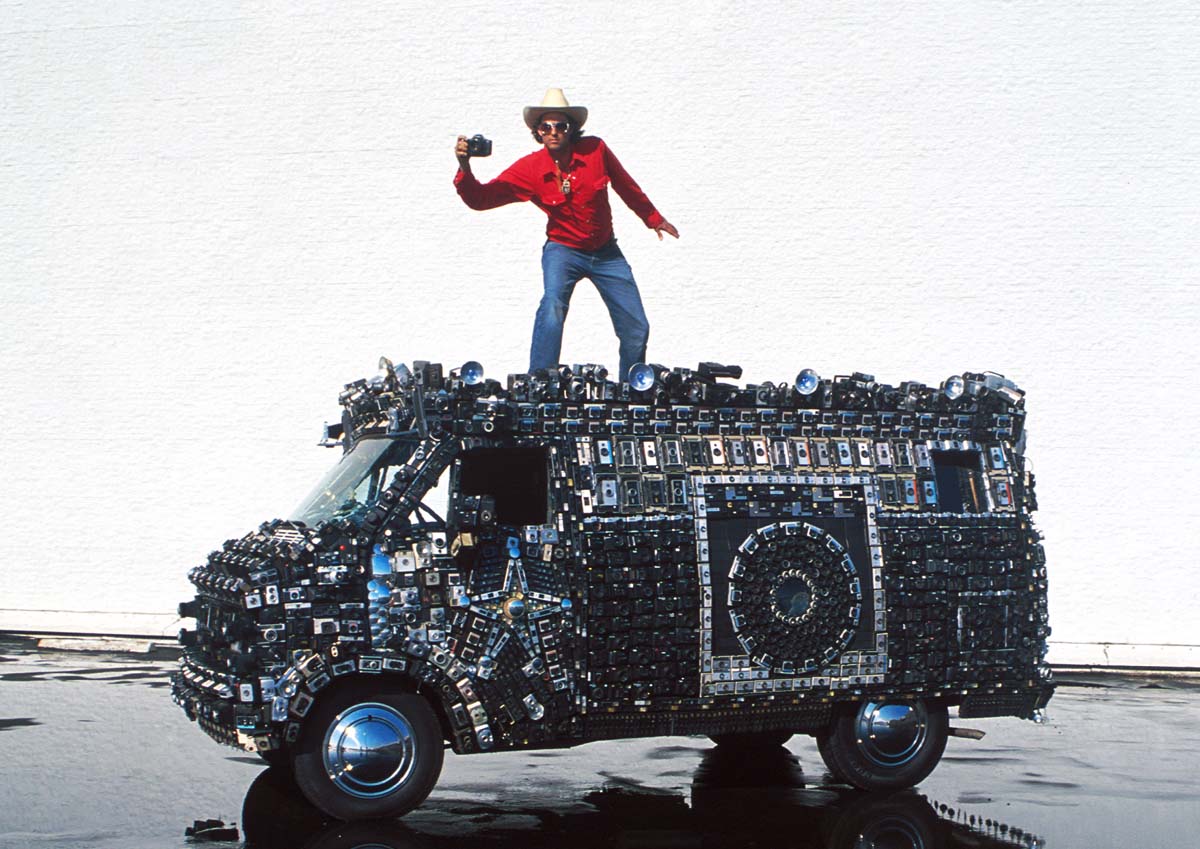
Picture this: a big, boxy 1972 Dodge van embellished with over 1,700 vintage cameras that make it glimmer like a disco ball in the blazing desert sun.
The Camera Van (1995), created by Harrod Blank, is just one of the amazing art cars you’ll find in Arizona, where there’s a long tradition of transforming vehicles, from lowriders to defunct firetrucks, into singular works of art.
Art cars have often elided the recognition of the “art world” proper, but that doesn’t minimize the elaborate, intensive, and all-consuming nature of the art form. Still, these cars are doing more than wowing crowds in settings like Burning Man, the Houston Art Car Parade, and the newer Electric Daisy Carnival in Las Vegas. Arizona’s art cars are also helping people embrace their creative side, while affirming the value of art outside the mainstream.
“Art cars are a great showcase for your creativity, and you don’t have to rely on anybody else,” reflects Blank. “It’s about making whatever you want, and executing your vision.”
Blank’s art cars join a long lineage of vehicular art. When Sonia Delaunay transformed cars into art pieces amid Parisian avant-garde society of the 1920s, she drew from the bold colors and geometrics of Orphism. When Keith Haring painted cars in the 1980s, he used his characteristic semiotics and line work. More recently, New Mexico–based artist Jesse Littlebird (Laguna, Kewa) created the Petrolglyph (2024) art car by painting Pueblo pottery designs on a 1973 Dodge Dart.
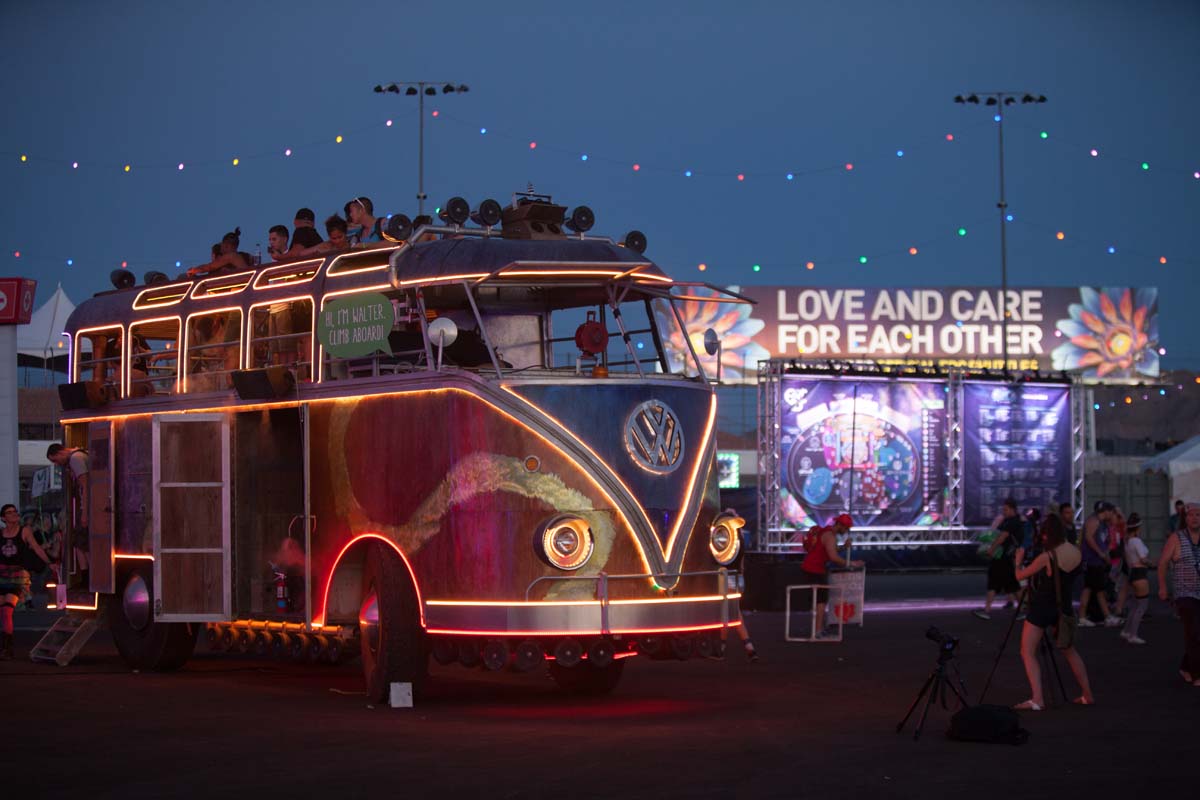
Early on, Kirk Strawn and his merry band of fellow makers transformed a fire truck formerly used to rescue airport crash victims into a 2:1 scale replica of a VW Westfalia camper. Think art car meets party bus.
“Walter the Bus was really the beginning of thinking big for us,” Strawn says of that first massive art car they unveiled in 2009, two years after he caught the art car bug at Burning Man.
Soon, they were building more art cars, and the community that grew up around the work inspired Strawn to start Walter Productions. Today, the Phoenix-based collaborative has several creative spaces—including Walter Studios on the outskirts of Roosevelt Row, which Strawn dreams of transforming into a “Big House” immersive art environment during the next five years or so, and a former industrial warehouse that’s home to a whole fleet of their art cars.
Once the fall art season kicks off, Walter Where?House will present a robust lineup of events where people can experience pieces like Mona Lisa (2016), Heathen (2013), and Walter the Bus.
DJs will perform atop Kalliope (2013), a massive art car that functions as a sound stage, named after one of nine muses in Greek mythology. They’ve also inspired Strawn’s next art car project, a sister car for Kalliope named Erato, which will have a stage for live music.
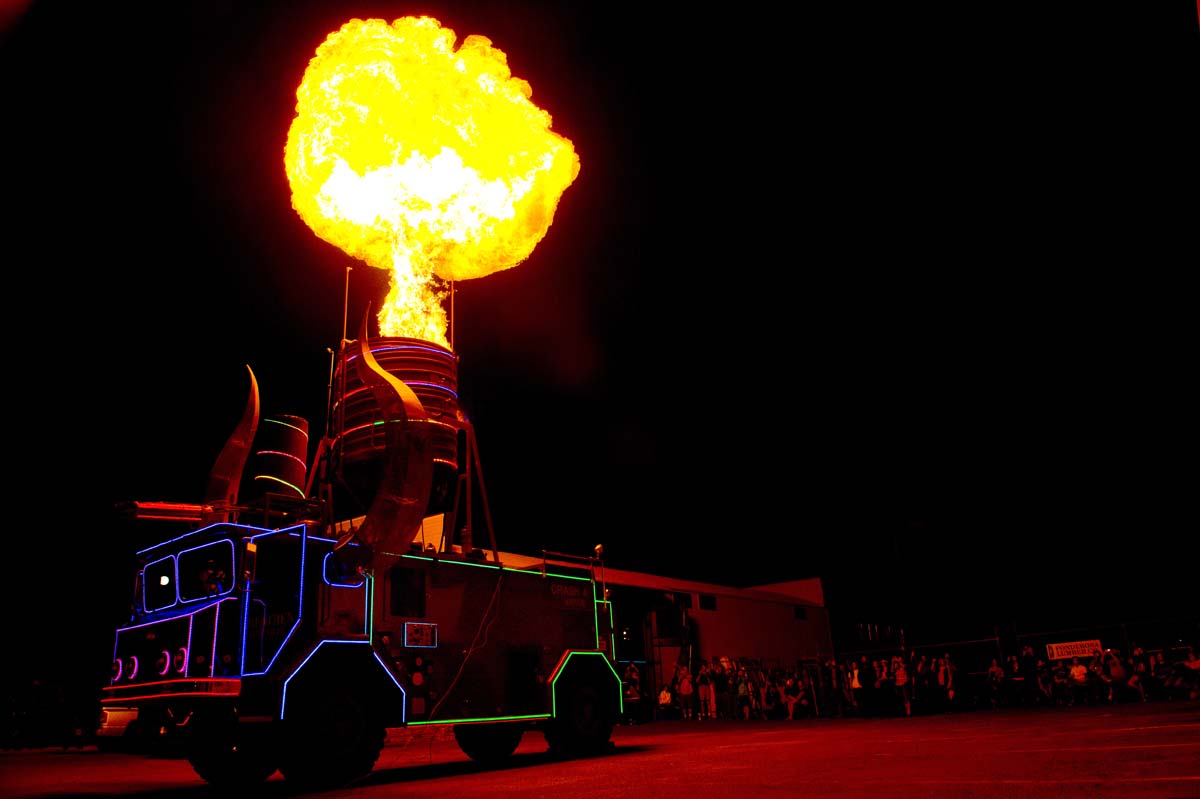
Making art cars at this scale involves a significant amount of time and money, according to Strawn. “Any good art car takes a year, and costs twice as much as you think it will,” he says. “In the past five to ten years, the scale, cost, and impact of art cars have increased, with some becoming multi-million-dollar extravaganzas,” Strawn says of the trends he’s seeing nationwide.
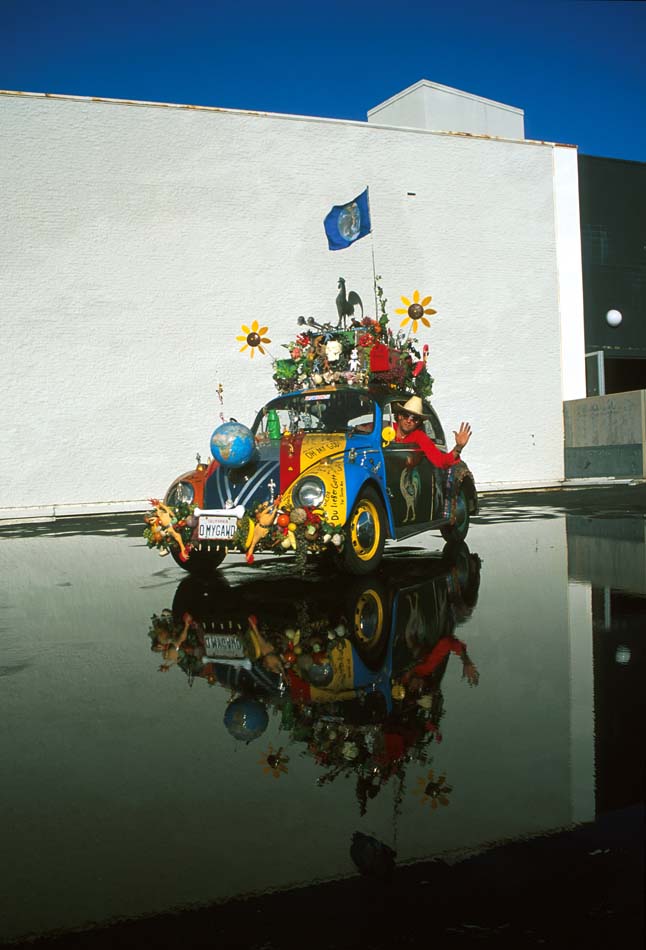
Blank, an artist and filmmaker with California roots, knows the ins and outs of art cars better than most. Blank’s first art car began as a beat-up white VW Beetle he bought from a ceramics teacher in Santa Cruz in 1977. “I painted a rooster on the door and that got some attention, which encouraged me to do more,” he recalls. Eventually it grew into the maximalist art car Blank dubbed Oh My God!
After Camera Van, Blank made an interactive mariachi-themed car called Pico De Gallo (1998), incorporating musical instruments that community members could play.
Every car is like seeing a person’s life, history, and creativity. It’s really a kaleidoscope of free expression.
Today, he’s a renowned keeper of the art car flame, having documented the art form in books and film. Blank says the Art Car World museum he founded more than twenty years ago is still a work in progress, but hopes to make final improvements during the next year or two. Located in the small border town of Douglas, it houses a collection of over three dozen art cars by a diverse array of artists with vastly different styles.
Typically, the museum is open Fridays through Sundays or by appointment. Blank recommends taking a tour, noting that docents share insights about specific artists and their cars, plus different genres and techniques. “Every car is like seeing a person’s life, history, and creativity,” he explains. “It’s really a kaleidoscope of free expression.”
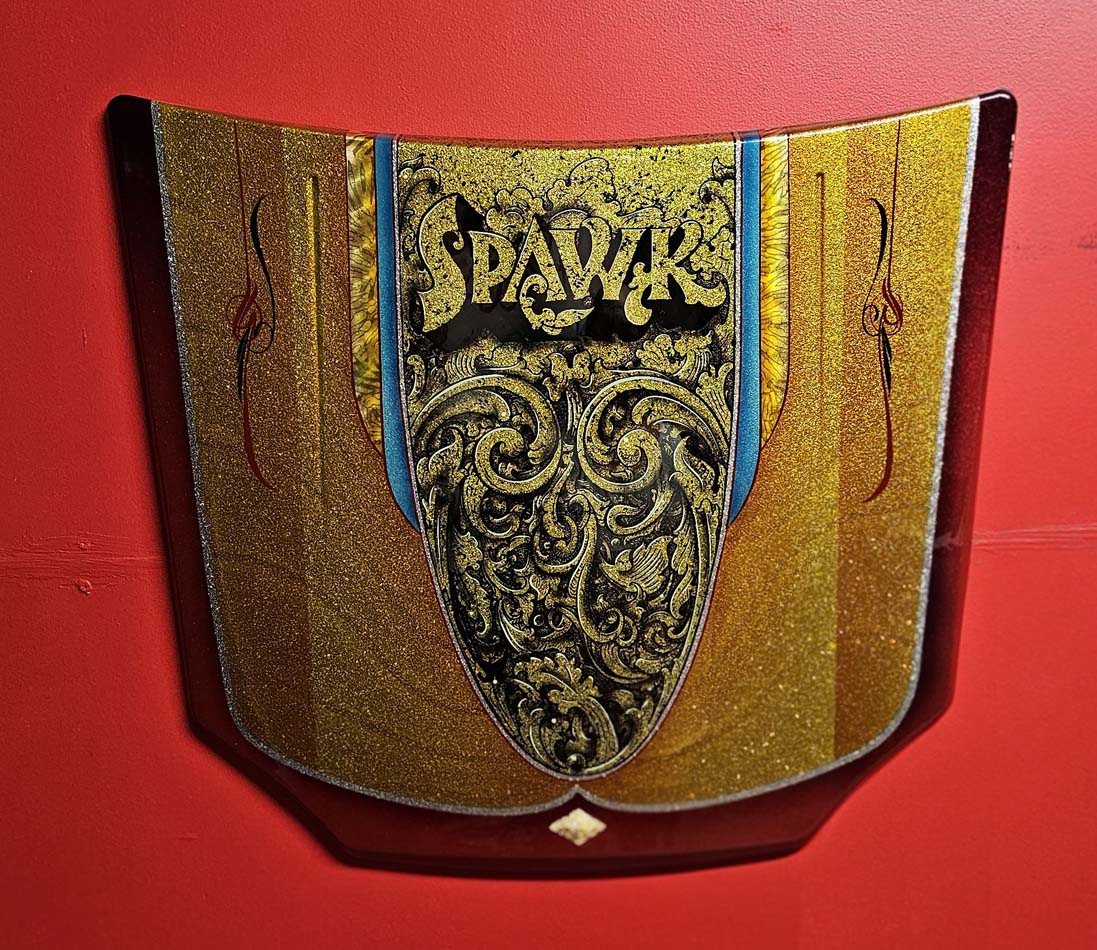
Arizona is also home to an array of lowrider art, although it’s rare to find dedicated lowrider exhibitions at formal art spaces. Following lowrider clubs on social media can help you learn about upcoming lowrider shows, and there’s a free Guadalupe Car Show with a sizeable lowrider showcase every April.
“There aren’t a lot of us doing this type of work,” says Javier “Spawk” Cordova, a Phoenix-based artist whose creative practice includes pinstriping, lettering, and other techniques. Reading letters his dad and uncle sent from prison, with their elaborate script and drawings of angels or the Virgin Mary, sparked his early interest in the art form.
Nowadays Spawk is sharing his skills, many learned from his mentor Eddie “ET” Torres, through workshops and demonstrations at the Third Rail PHX creative space. It’s located along a strip of Grand Avenue renowned for its offbeat art, where locals still recall the iconic Arizona Art Car Exhibit that went down during the 2016 Grand Avenue Festival.
At the same time, Spawk is trying to spread the word about lowrider art and bring it into more mainstream spaces. “There’s a lot of stigma about lowrider art, because some people still think of lowriders in the context of drug and gang culture of the ‘60s or ‘70s,” he says. “But there are a lot of people who appreciate it, and I’d love to see it be more visible in galleries and museums.”
Currently, the Tempe History Museum is showing Ranfla Vida, an exhibition about local lowrider culture. The show will be up through December 31, and curator Marco Albarran says related community programming with a focus on women in lowrider culture is in the works.
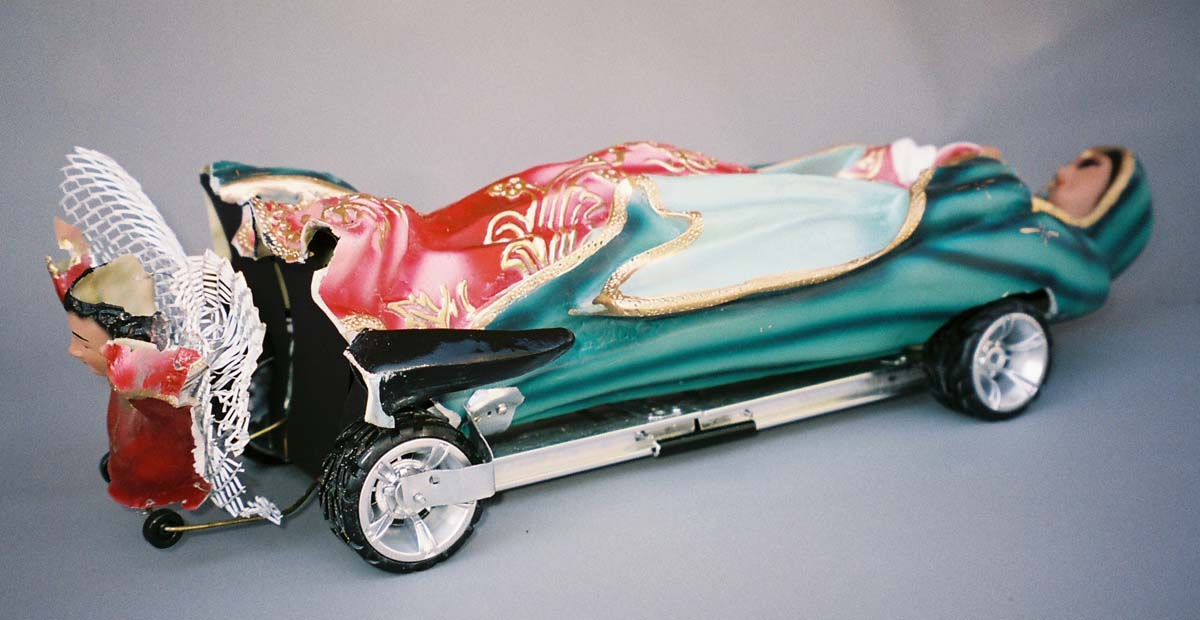
Meanwhile, some Arizona artists have been out there making intriguing art cars without much public fanfare.
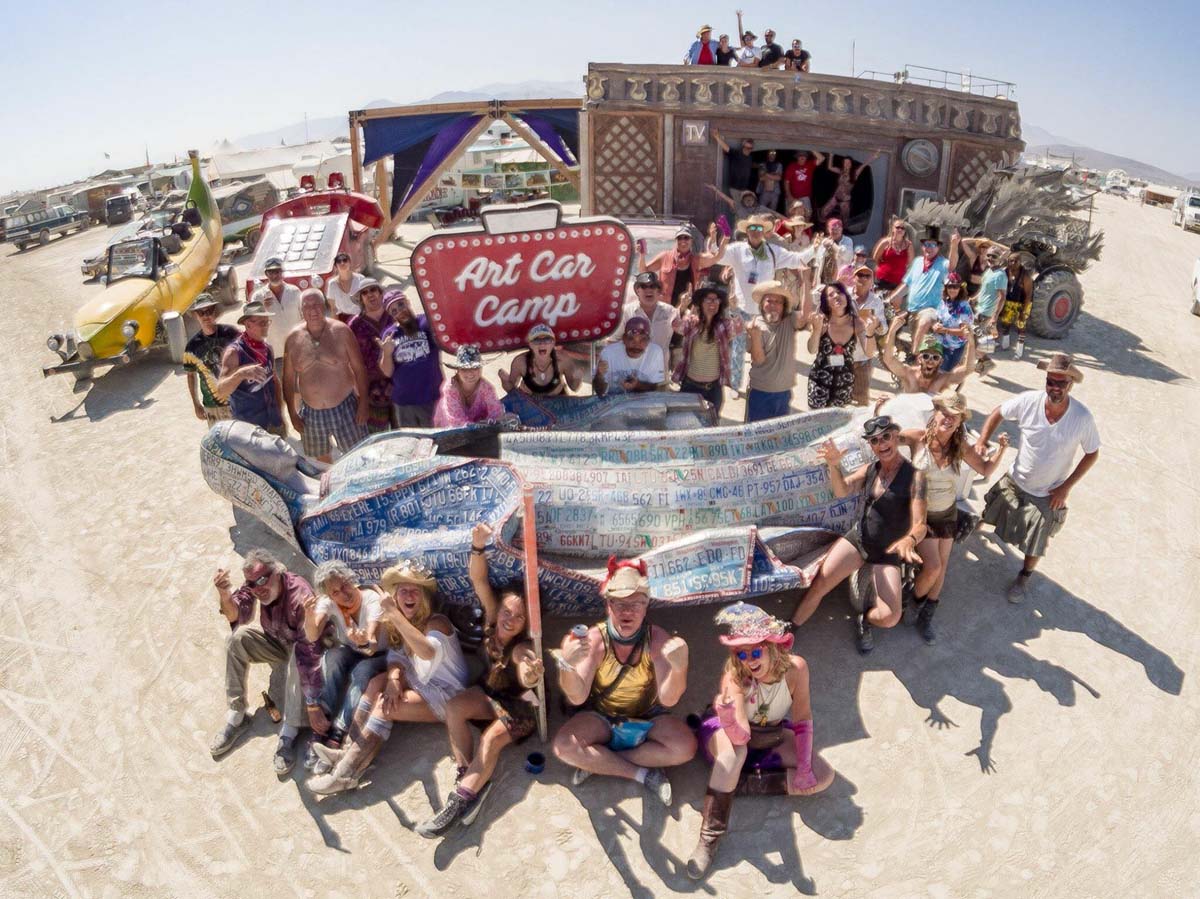
Jose Benavides recounts transforming about 500 license plates and 3,600 rivets into a sculpture of the Virgin of Guadalupe as a graduate art student, creating what would become his first art car—and the first art piece he took to Burning Man. When Benavides needs to carefully steer the seventeen-foot-long Madonna Car (1995) through a festival or exhibition space, he gingerly sits just below her shoulders.
“Now I’m working on the Lupita Car,” Benavides says of his latest project, which he plans to fund in part by selling giclée prints of the car’s design. This time, he’ll be working in the backyard of his Mesa home, incorporating license plates contributed by community members once he puts out the call. “She’s going to be a sparkle pony,” he says, explaining that the car will come out of a shell or container that opens up “when it’s time for her to perform.”
I’d like to place it in a really visible place like a high-end gallery, but I also like the idea of people spotting it in the middle of the barrio.
Benavides hopes to wrap the project by the end of 2027, and he’s already thinking about where the finished car might end up—inspired in part by seeing Liz Cohen’s hybridized Trabantimino (2002-12) lowrider in her 2021 Body/Magic exhibition at ASU Art Museum in Tempe. “I’d like to place it in a really visible place like a high-end gallery, but I also like the idea of people spotting it in the middle of the barrio.”
That direct connection between art cars and community members is a big reason Blank is so passionate about the art car movement, and eager to see more young artists undertake this type of art.
“It’s such a public art form,” Blank says of art cars in all their iterations. “You can drive them around from place to place, and when you have a medium like that you don’t have to rely on a gallery to reach people. That’s where the power is.”