Storey Gallery is exploring the essence of what a gallery can hold, uplifting queer histories and imagining the ways art will shape our future.
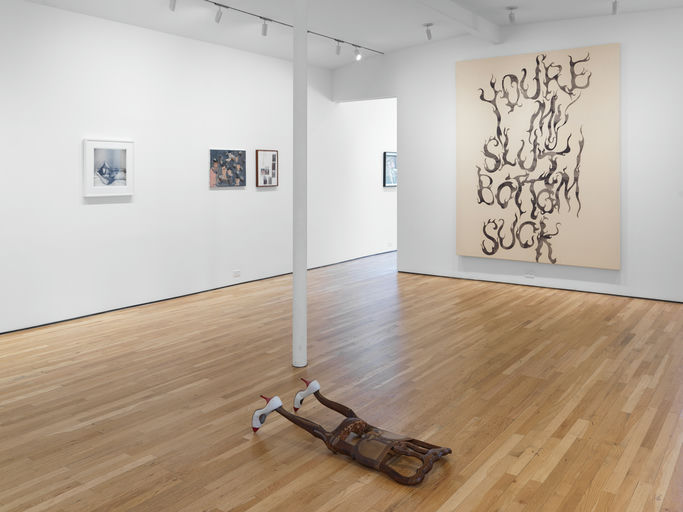
Storey Gallery was founded from a conviction that the gallery remains an essential cultural form: a place where artists are supported over time, histories are brought into the present, and exhibitions produce scholarship, generate ideas, and imagine what does not yet exist. I think of the gallery as a site of world-building: bringing people, artworks, and ideas into relation and creating conditions for new forms of thought and exchange.
Storey Gallery opened this September at 1 Rivington Street on New York’s Lower East Side. My history here extends back a decade. Beginning in 2016, I worked with galleries including Invisible-Exports, On Stellar Rays, and Simon Preston, and spent years with Candice Madey, whose commitment to artists shaped my understanding of what a gallery could be. I previously organized exhibitions at 1 Rivington, including Pacifico Silano’s After Silence in 2018. Returning here is not incidental—it is where I learned the possibilities of the gallery and can now articulate a vision shaped by my generation and a cultural and political moment.
That vision emerges from my work as an artist, curator, and researcher. For me, exhibitions are a form of research. They produce scholarship through relationships between objects, histories, and people, while bringing historical material forward without neutralizing it. I am interested in the exhibition as a speculative form: a space to ask not only what has been, but what might still be possible.
This is central to Storey Gallery’s commitment to queer artists and cultural production. The program moves across generations, bringing artists shaped by the AIDS crisis into dialogue with contemporary practices concerned with embodiment, desire, abstraction, memory, and political imagination. I understand queerness not as a closed category, but as a critical framework for how histories are read and futures imagined.
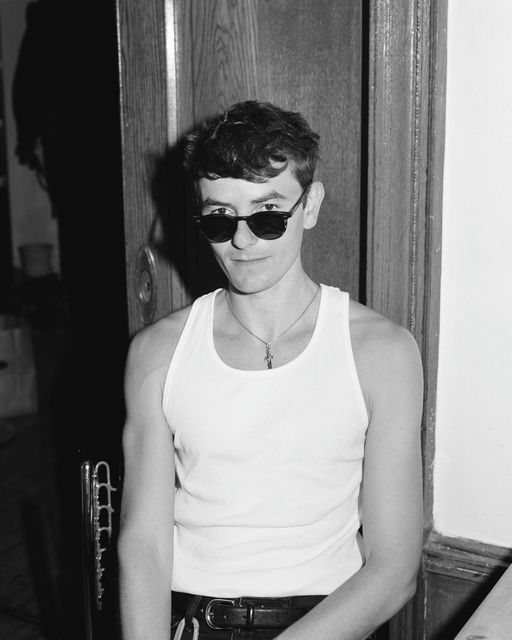
Storey Gallery is opening at an intense moment. We are living through political and cultural rupture alongside a contracting, uncertain art market. Those conditions have not diminished my desire to build; they have sharpened it. I wanted a space of my own, a vision, and a role in shaping the cultural landscape my generation will shake up and remake.
The Lower East Side remains fundamental to that project. Downtown New York has long been produced through proximity: artists and writers, galleries and publishers, performance and nightlife, commerce and experimentation. Its cultural significance comes from density, friction, reinvention, and spaces where new forms can take hold.
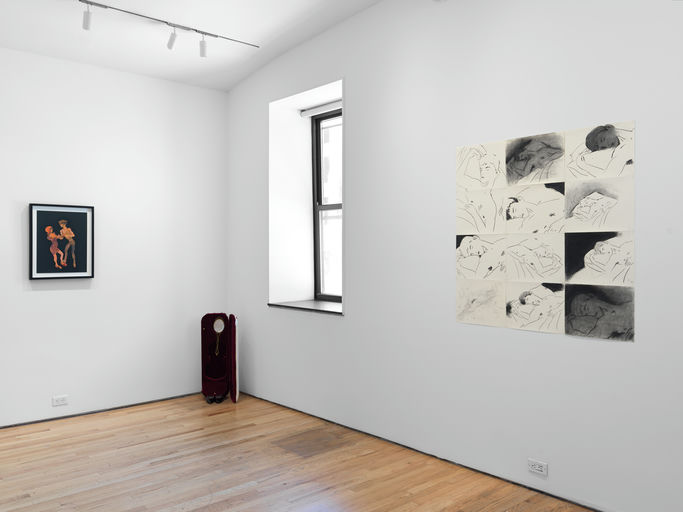
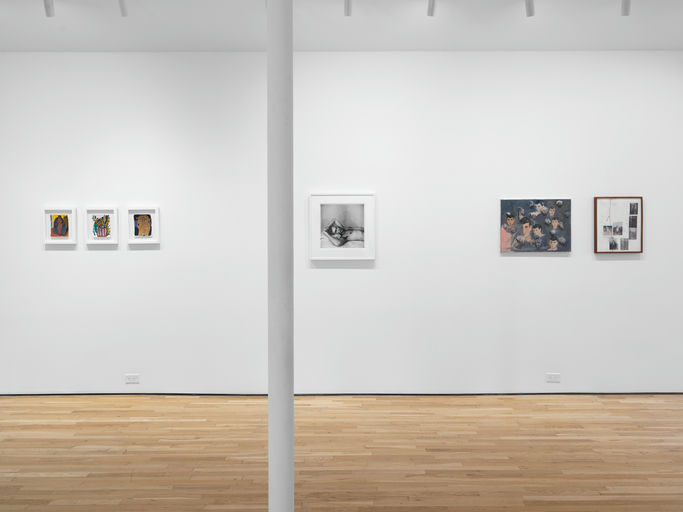
Our inaugural exhibition, ALIVE AT THE END OF THE WORLD, begins Storey Gallery’s program from this premise: histories of rupture are never entirely past, and art can hold both the evidence of what has been lost and the fact of what continues. Bringing together ten artists and works made between 1975 and 2026, the exhibition moves through memory, intimacy, embodiment, loss, and survival. Its title acknowledges catastrophe without conceding to it.
Opening Storey Gallery now is an assertion of belief: in artists, in the gallery model, in scholarship, and in the possibility that bringing people, art, and ideas together can change what becomes imaginable.
Storey Gallery is now open at 1 Rivington Street, New York, Wednesday–Saturday, 12-6 pm.
sponsored by