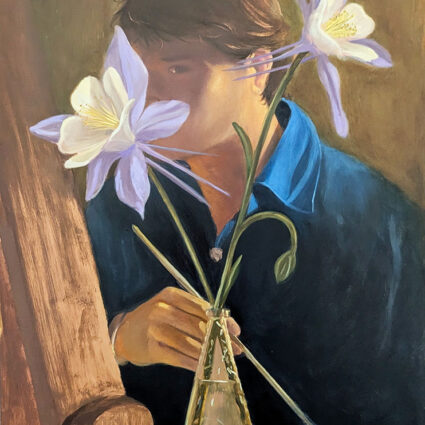
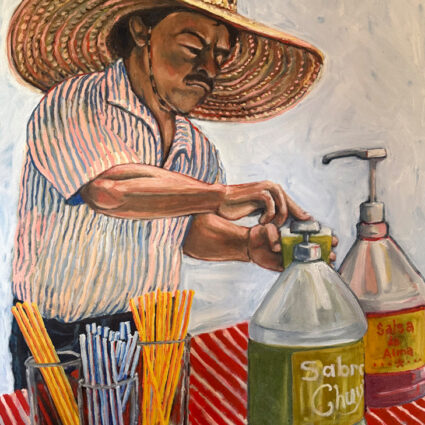
Daniel and Maruca Salazar’s retrospective Accidentally on Purpose – Pasó lo que tenía que pasar at Museo de las Americas celebrates fifty years of Chicano art and activism in Denver.
Accidentally on Purpose – Pasó lo que tenía que pasar
June 4–August 9, 2026
Museo de las Americas, Denver
On a sweltering June evening, in the warm and inviting Latin American art museum Museo de las Americas, Denver-based artists Daniel and Maruca Salazar stood proudly with their grandchildren before peers and community members to reflect on fifty years as Chicano artists and activists across Mexico and Denver, Colorado. Appropriately, the opening for their retrospective Accidentally on Purpose – Pasó lo que tenía que pasar felt more like a family gathering than an art exhibition: with kids running around, a blaring mix of American oldies and popular Mexican tunes, and more quesadillas and Tecates than cheese and wine.
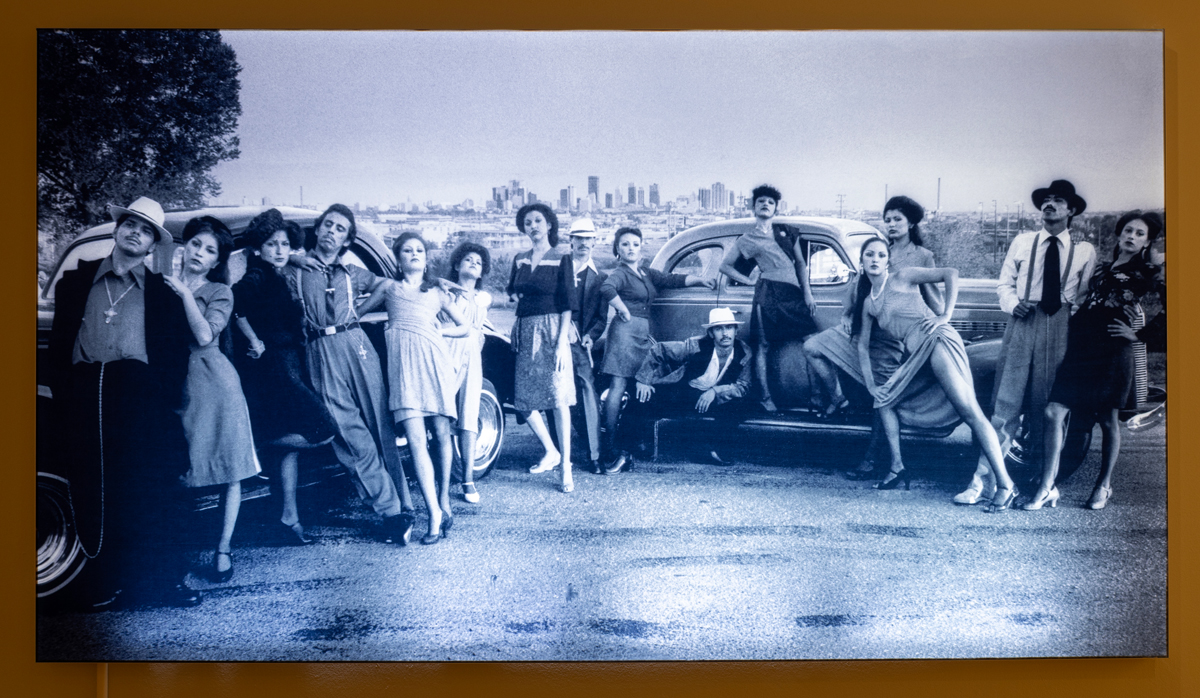
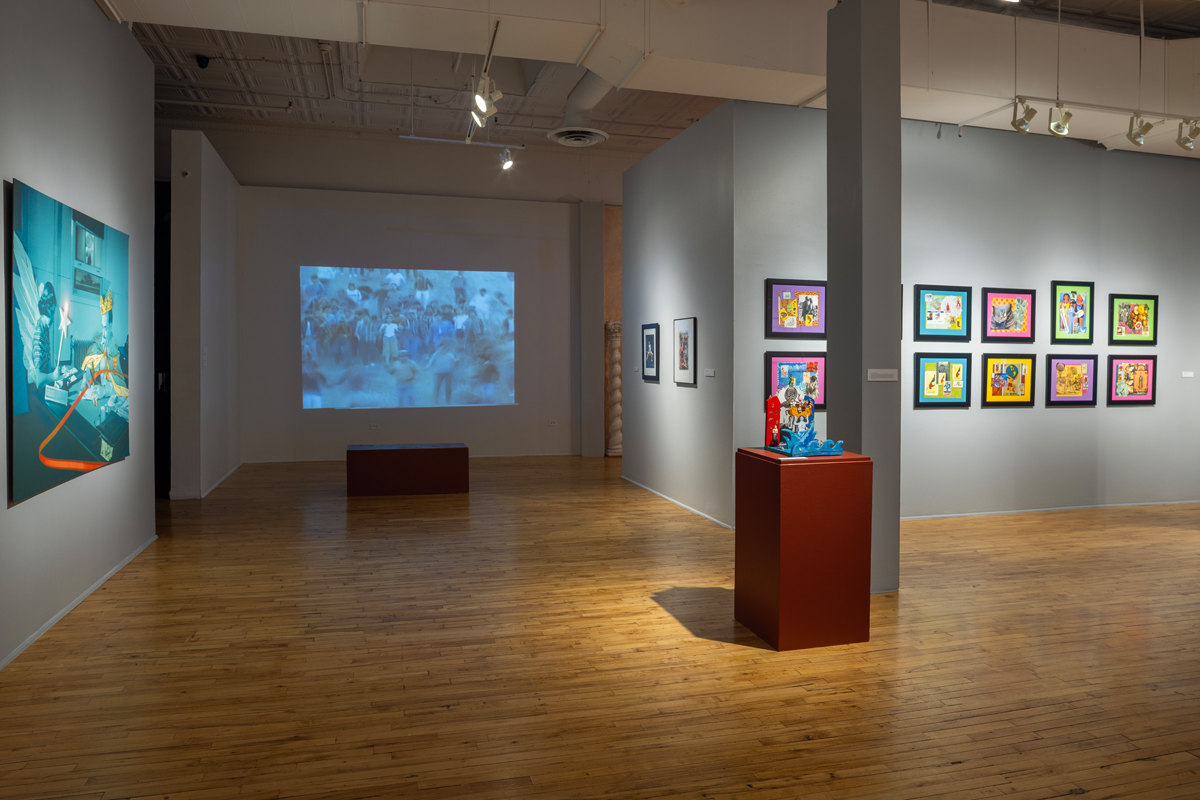
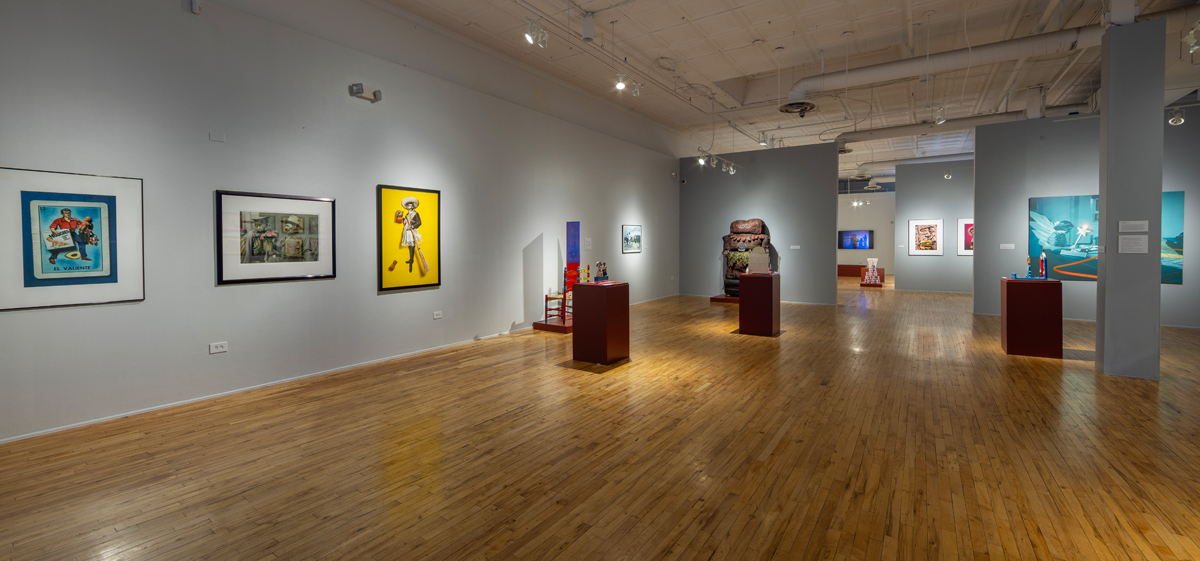
As far as retrospectives go, it’s not exhaustive, but rather a cherry-picked selection of animation, film, video, photography, installation, sculpture, and paintings that play to their individual and collaborative strengths, while reflecting the artists’ strong connections to the city. Daniel’s long history as an award-winning filmmaker and photographer is reflected in works that powerfully chronicle Chicano culture in North Denver. Take his epic photograph Westside Dreams, a proud and stylish piece that depicts the National Chicano Dance Theatre performing arts group, posed confidently and defiantly in zoot suit styles in front of Denver’s 1979 skyline. Maruca—a longtime Denver educator and arts coordinator and a former director of the Museo—is from Veracruz, Mexico, and her vivid folk art–inspired installations and sculptures reflect her poetic and political spirit. Combined, their works tell a complex love story, weaving together different yet related places, cultures, and identities.
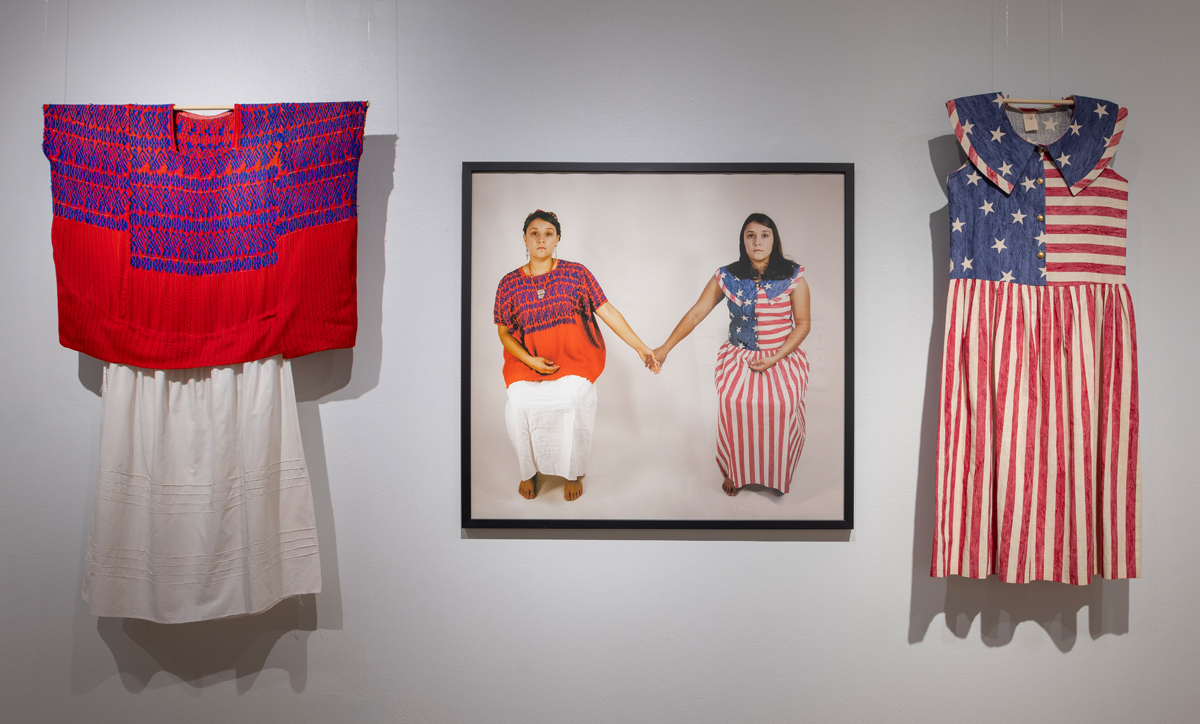
Their collaborative mixed-media installation American Me (2000) features a composite photograph of the artists’ then-teenage daughter as two versions of herself (representing her Mexican American heritage) seated and holding hands. The arresting photograph is flanked by the same Mexican and American folk dresses, giving the installation an archival quality that supports the exhibition’s historical themes, while alluding to the beauty and struggles of cultural duality.
As Denver grows increasingly gentrified and unrecognizable to longtime residents (and so-called “Colorado natives”), the historical nature of this exhibition could run the risk of seeming purely nostalgic to some. However, its strong cultural-political message reminds us that place, pride, and identity are not given, but created (and often fought for) over generations.