Esotericism and activism collide in A Queer Arcana, a wide-ranging exhibition of art and ephemera from the LGBTQ+ underground, part of the Palm Springs Art Museum’s Q+ Art Initiative.
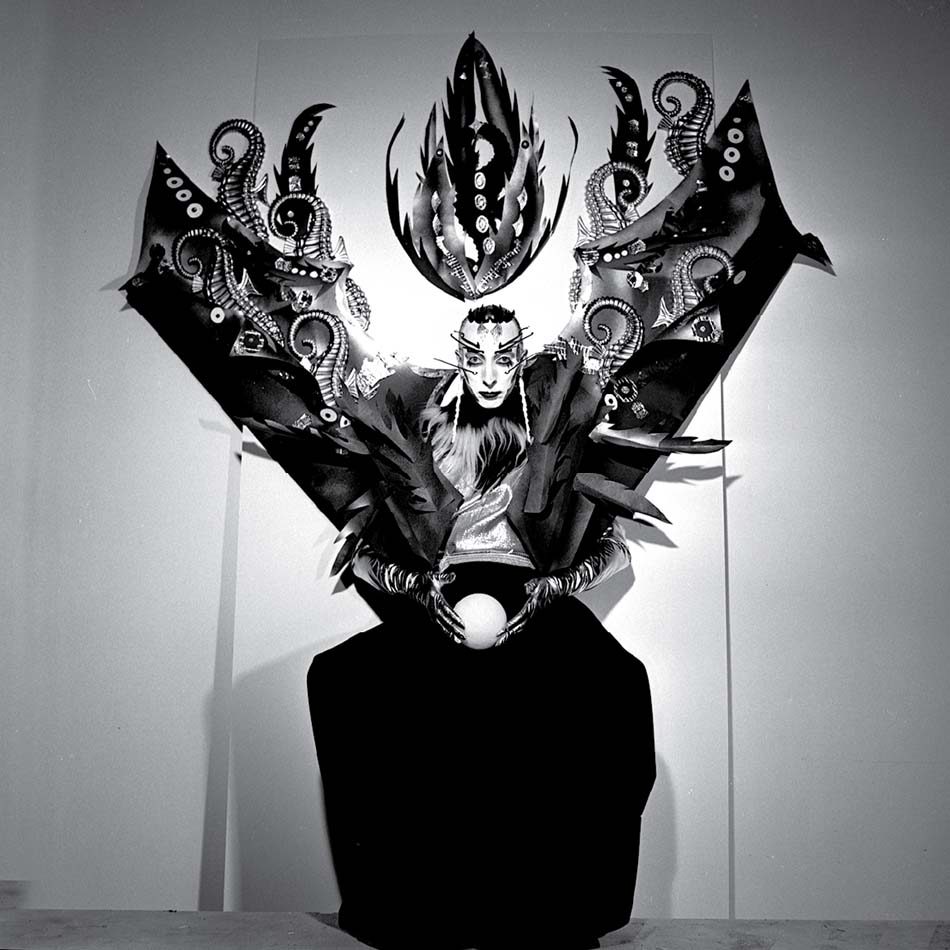
A Queer Arcana: Art, Magic, and Spirit
March 28–October 18, 2026
Palm Springs Art Museum
Intersections of the occult and the political are not new in U.S. history. From Salem, Massachusetts, to mid-century McCarthyism, to today: these erupt into “witch hunts,” where political enemies to the status quo are censored, blacklisted, or burned. In times of social repression, communication of opposing views or identities then goes underground, expressed through arcane modes and esoteric spiritual traditions. For queer folks, communicating amongst themselves, this has resulted in a rich tradition of worldbuilding, magic-inflected, occult-coded, and often very “witchy” art and literature.
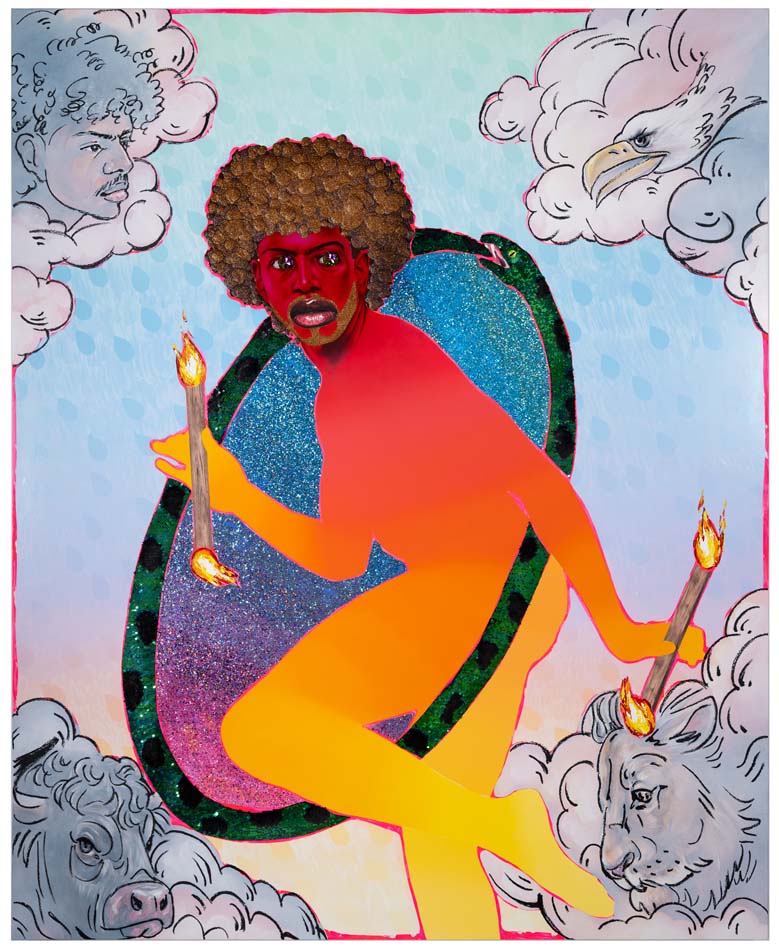
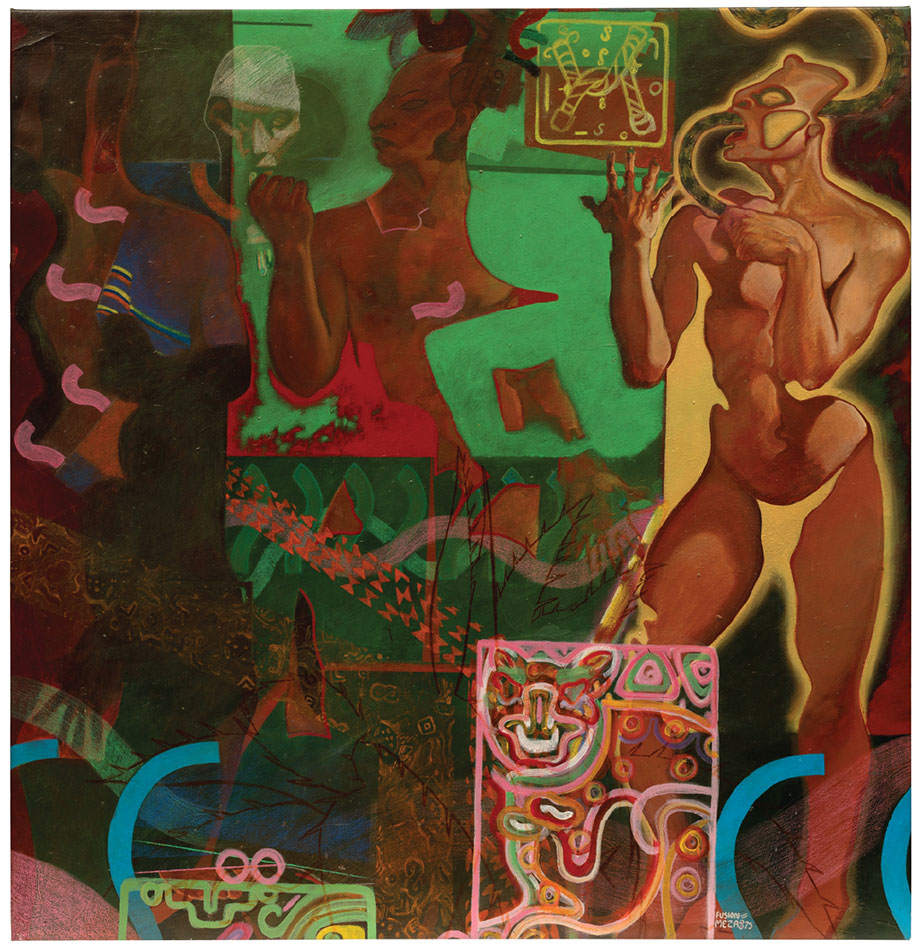
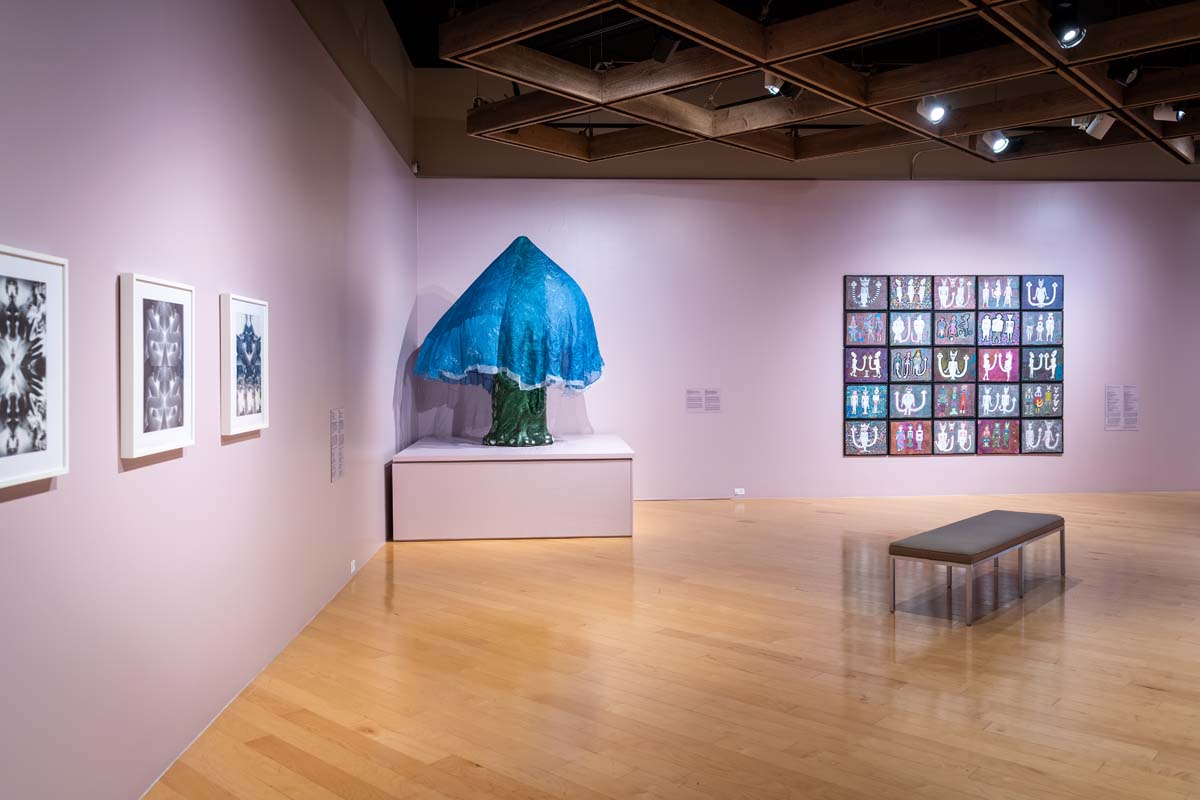
At the Palm Springs Art Museum, departing curator David Evans Frantz examines the intersections of the occult and the political in A Queer Arcana: Art, Magic, and Spirit through an extensive survey of modern and contemporary mixed-media works drawn from Southern California archives and private collections. Inspired by a range of spiritual traditions, with subsections organized by themes including “Out of Your Broom Closets,” “Magical Americas,” and “Sex Magick,” among others, the works in A Queer Arcana both defy condemnation and assert the power of the esotericism practiced by queer cultural producers.
Frantz finds power in historical documents buried in archival grade boxes and library finding aids. In A Queer Arcana, he mines everyday popular culture, books, zines, pamphlets, newspapers, tarot card decks, and more, and brings in artists across media to explore the visual language called upon in the print material.
At the entrance of the exhibition, the curator has placed display cases of zines and publications from private collections and the One Archives at the USC Libraries, including political publications from approximately 1970 through the early 1980s. In one case, issues of Mirage (1974), illustrated by trans activist and author Angela Douglas, draw on subjects ranging from the occult and paranormal to extraterrestrials as an incantation for the protection of transgender people and to spark activism.
Other publications in the case especially focus on witchcraft as a social-cohesion and world-building practice—magic is a tool for reimagining public life and extending civil rights to the LGBTQ+ community. One seminal work in this case is Arthur Stewart’s Witchcraft and the Gay Counterculture (1978), a quasi-historical text weaving paganism, magic, and the intersectionality of practitioners who were sentenced as heretics under emerging Christianity in the medieval period, amid colonization, industrialization, and capitalism.
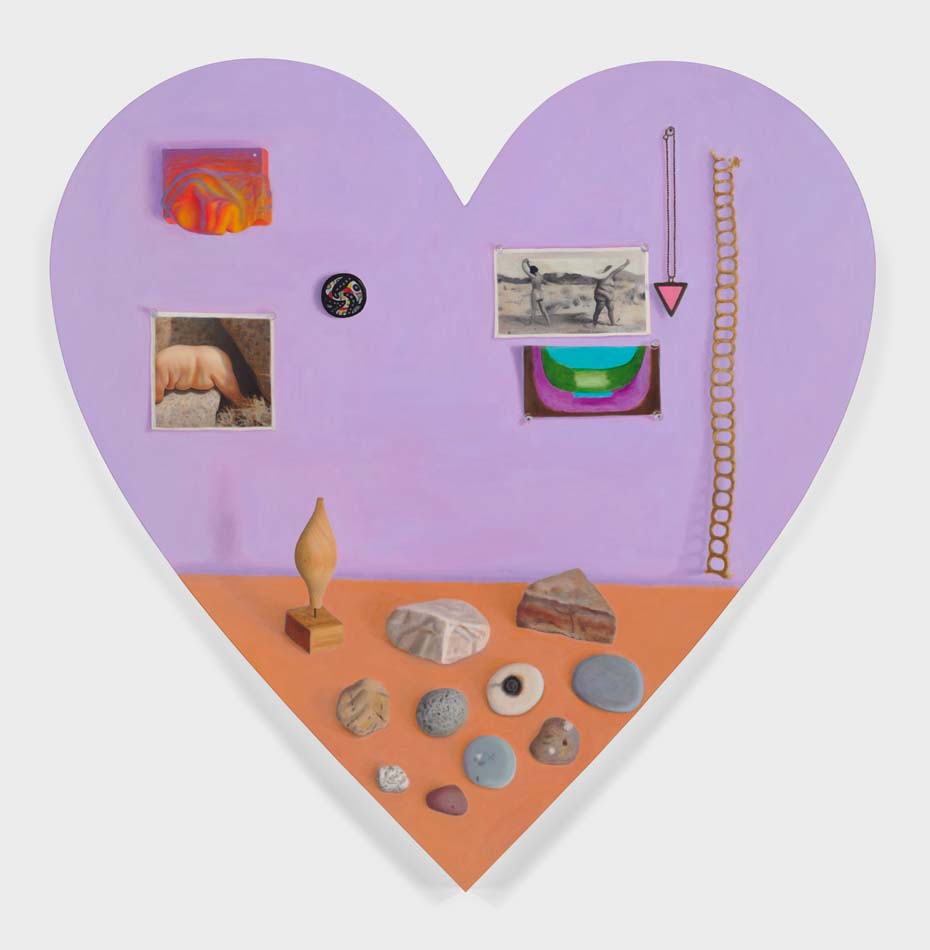
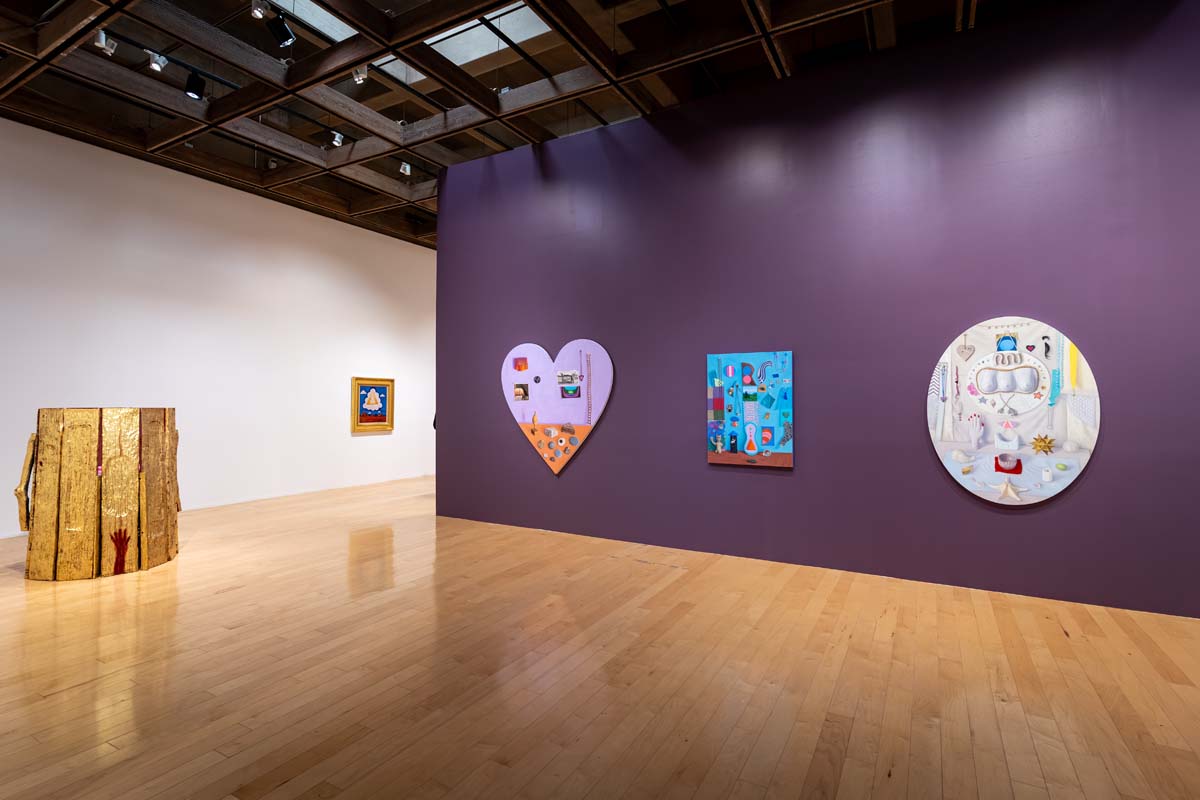
Beyond the vitrines and print materials, the next gallery space further forages from themes of witchcraft, the occult, and esotericism, including a series of paintings by Clarity Haynes. Here, Haynes’s works function as two-dimensional oil-painted altars, including one as a self-portrait depicting Rio, the pseudonym of Haynes’s younger self, engaged in sex work in a previous life. Altar for Laura Aguilar (2022) features an arrangement of items recalling Aguilar, with her nude photographic works as a backdrop to a tabletop with a collection of rocks evoking the Southern California landscape. Rather than functioning as passive memorials, these altars keep the spirits of these queer predecessors alive.
Within sightline of Haynes’s altars, the late Nancy Azara’s (1939-2024) painted wood and gold leaf sculpture, Circle with Seven Hands (1996), invites spectators to circle it but never quite penetrate beyond the golden planks surrounding the structure. A red handprint on the exterior echoes iconography from Haynes’s altars, but also invokes sacrifice and rebirth. As a co-founder of the 1979 New York Feminist Art Institute, Azara’s sculpture and larger body of work conjures spiritual meaning in the natural world and goddess worship, reflecting a throughline throughout A Queer Arcana: the seeking of alternative spiritual meaning in the face of Judeo-Christian worldviews.
In Candice Lin’s PPD (Personal Protective Demon) (2023), power is not just a spiritual occurrence but also a physical, carnal happening. Like Azara’s work, Lin’s kinetic sculpture similarly plays with the visible and the hidden, with a silk covering that parachutes and collapses over a phallic totem that cannot be entirely perceived by the viewer. Lin’s sculpture also embodies the Sex Magick theme, covered with grotesque phalluses inspired by medieval and Asian imagery.
A Queer Arcana positions the community not as victims but as empowered survivors.
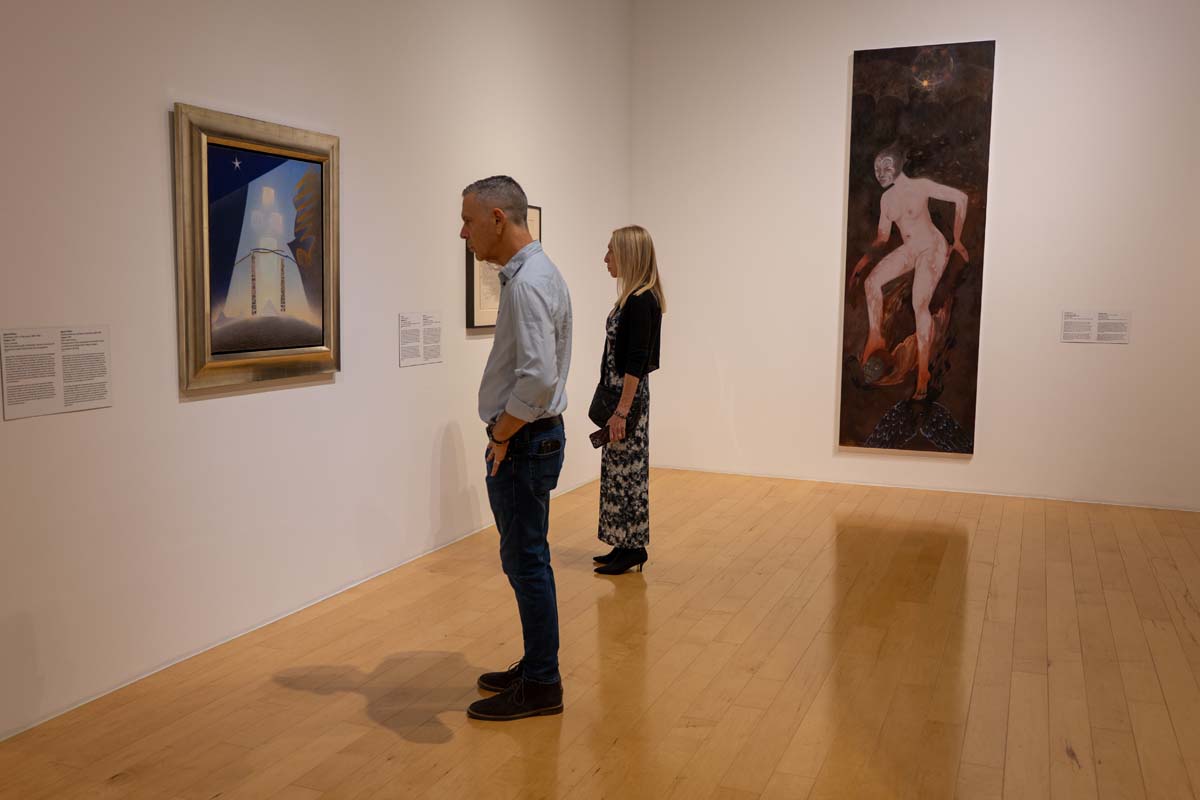
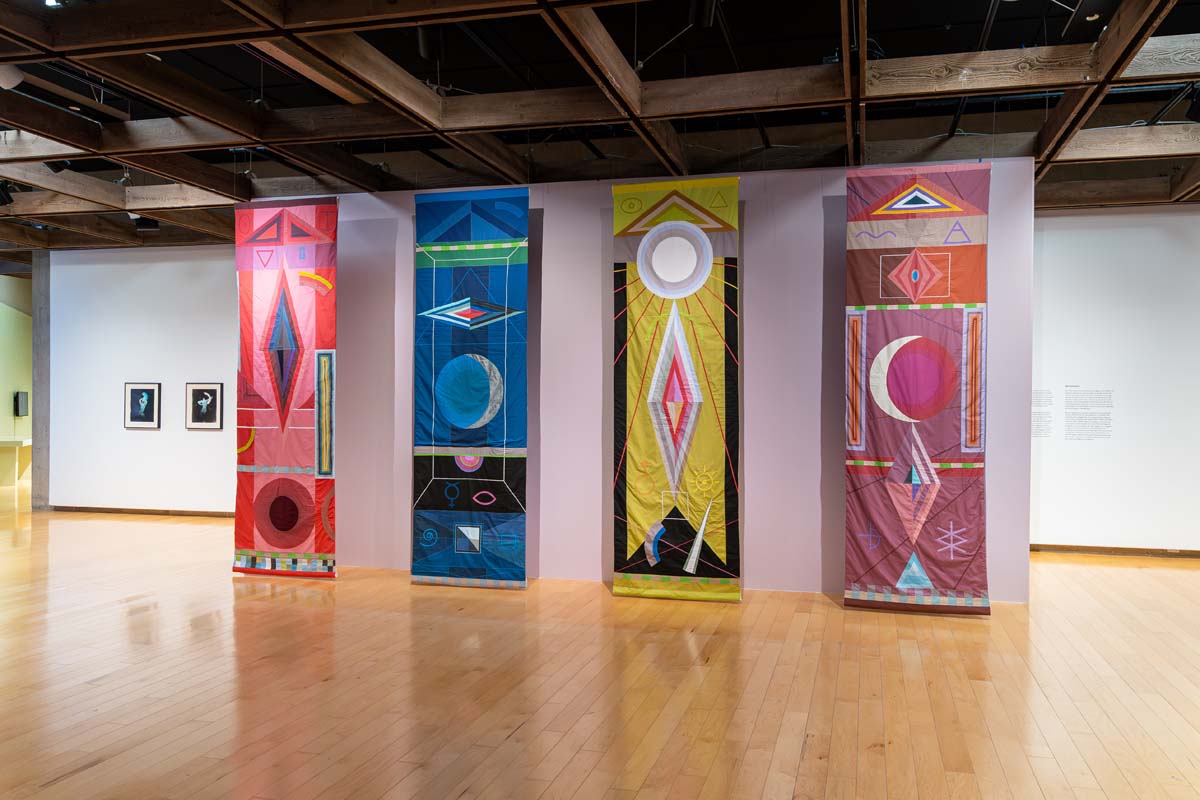
Beyond the spiritual and the bodily, A Queer Arcana also taps into the physical location and associated mysticism of the Palm Springs desert landscape, including a display of modernist works by Agnes Pelton and Marsden Hartley from the museum’s permanent collection. Both feature desert landscapes and mysterious symbolic forms like triangles and squares in a transcendent mist in the same vein as earlier works by Hilma af Klint—who is summoned later in the exhibition in a commission titled Ritual Geometries of Desire (New Moon, Waxing Moon, Full Moon, Waning Moon) (2026) by the collective Hilma’s Ghost.
In Palm Springs, demographics range from 30 to 50% LGBTQ+, and the Palm Springs Art Museum has become a national standard bearer in championing queer artists. In 2023, the museum founded the Q+ Art Initiative, a formal commitment to expanding the museum’s existing collections of queer art and developing programming and exhibitions of this work from early, Pre-Stonewall artists who may not have been able to identify as LGBTQ+ through makers expressing these identities in contemporary work. A Queer Arcana is the latest exhibition in this series, effectively shining a light on the creative production of these makers and possibilities of worldbuilding beyond heteronormative binaries.
Despite the villainization and suppression of queer, gay, and trans identities—identities which have always and will always exist—under Christianity, capitalism, and contemporary witch hunts and political persecution, A Queer Arcana positions the community not as victims but as empowered survivors, creating a world of acceptance and celebration for these identities through magic, healing, and spirituality.