An archeologist seeks the carvings of a 20th-century sheepherder, tracing stories of lust and loss across a threatened landscape.
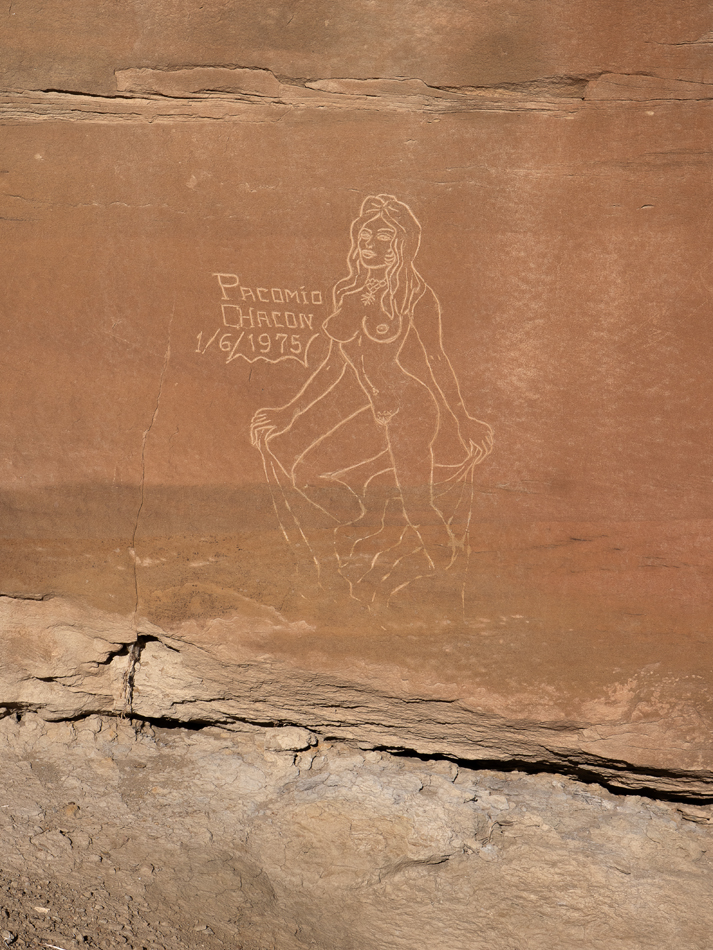
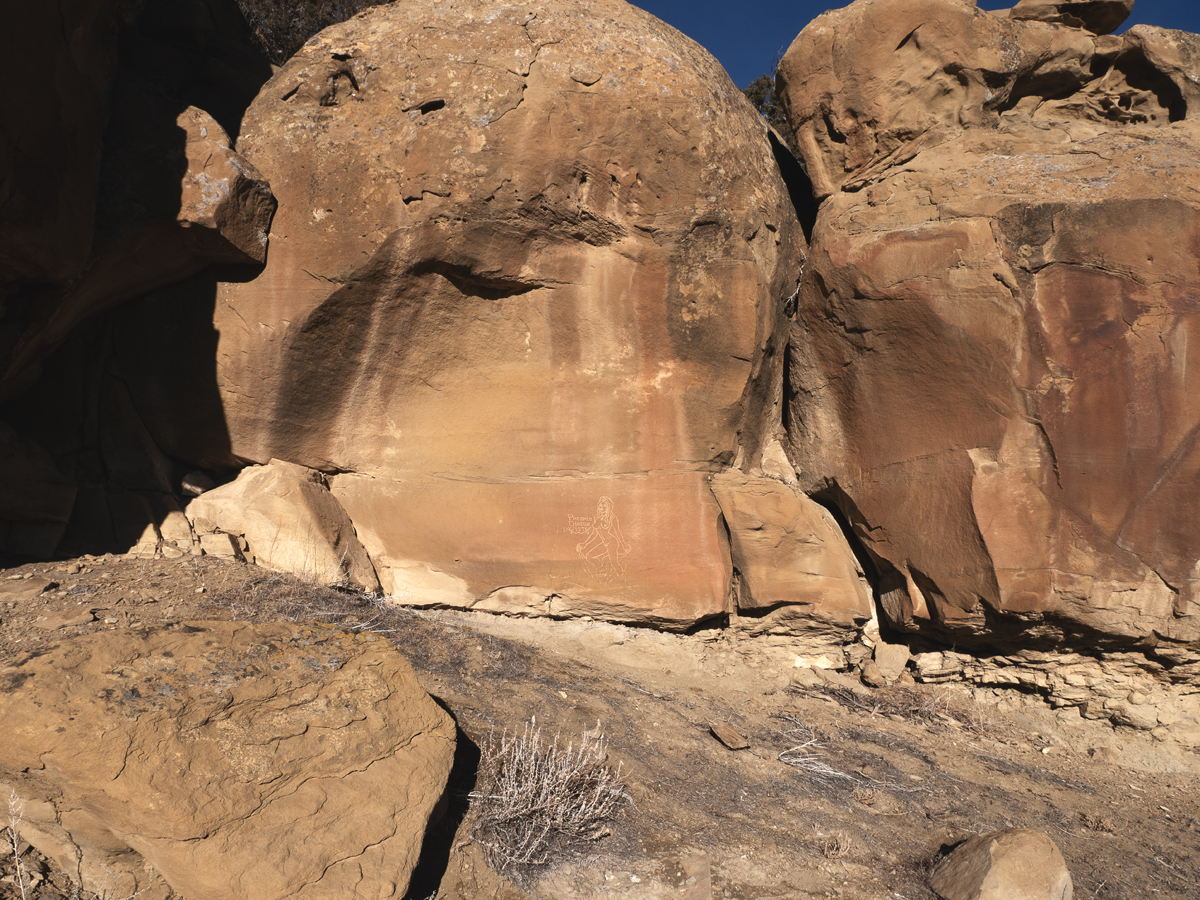
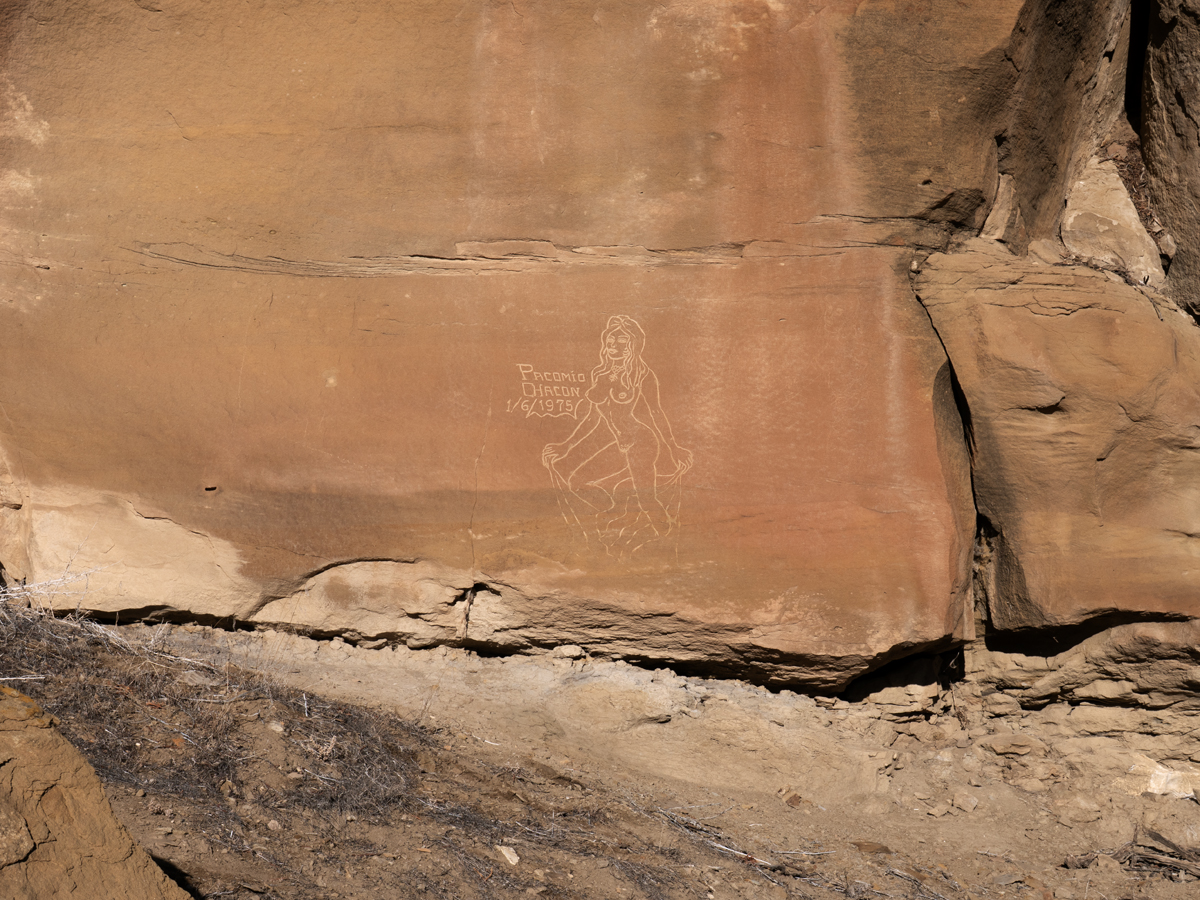
Part of my job as an archeologist involves recording a distressing quantity of 20th-century graffiti, which is legally considered “historic” after fifty years. It was in this capacity that I first encountered Pacomio “Paco” Chacon’s signature on a sandstone wall along the Old Spanish Trail south of Moab. It stood out. Here was a name that cut through hastily scratched initials, hearts, and other road trip detritus with lithographic precision.
The find came alongside a mystery. Near the name of another herder, Ben Enriquez, was the word “finado” in Chacon’s distinctive script. Archival research told an unexpectedly intimate tale. Both men hailed from small towns in Northern New Mexico, and were part of a broader migration of Latino and Basque sheepherders during the early 20th century. A year after nearly perishing when a fire broke out in his tent, Enriquez tragically committed suicide at a mountain sheep camp near Cortez.
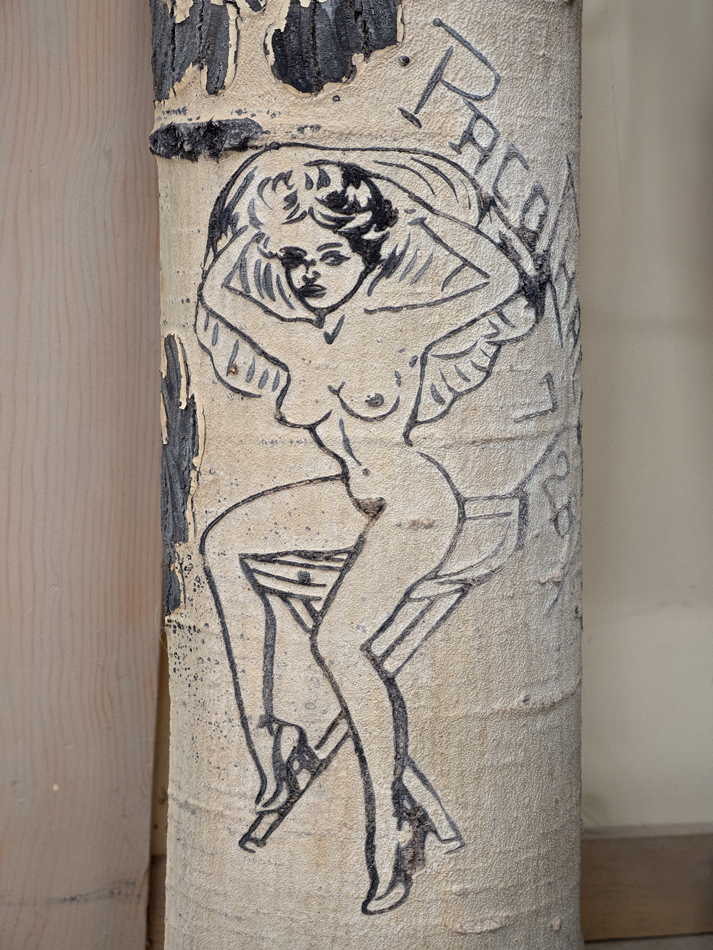
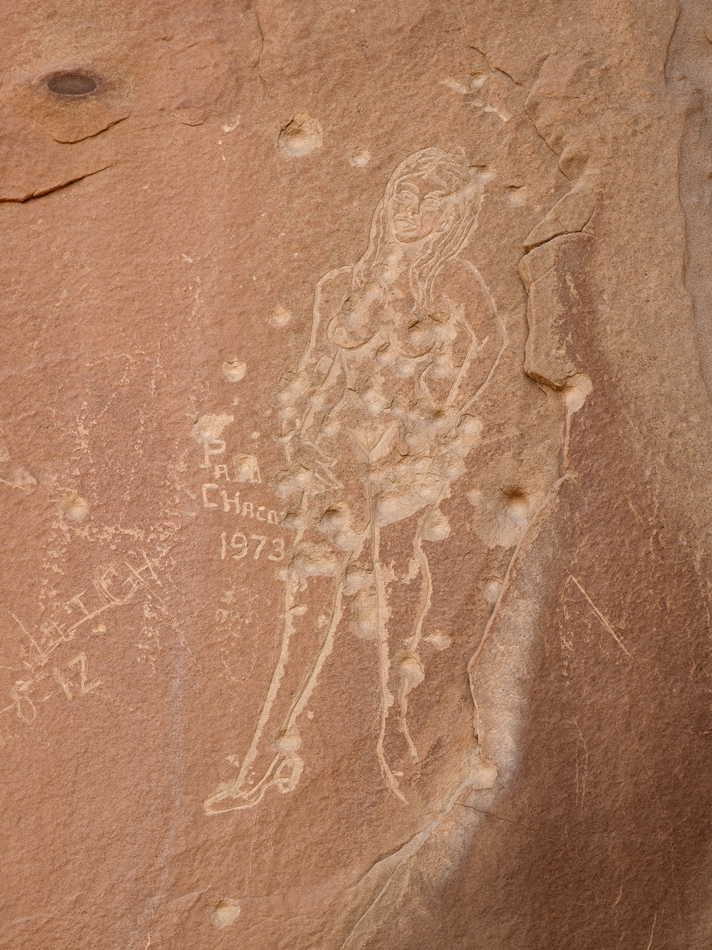
Chacon had created a memorial for Enriquez. His carvings, I later learned, do the same for an older way of life. Hours spent poring over scanned documents revealed that archeologists before me have been on Chacon’s trail for decades. The accompanying photographs showed that besides having impeccable handwriting, he was a prolific carver of nudes.
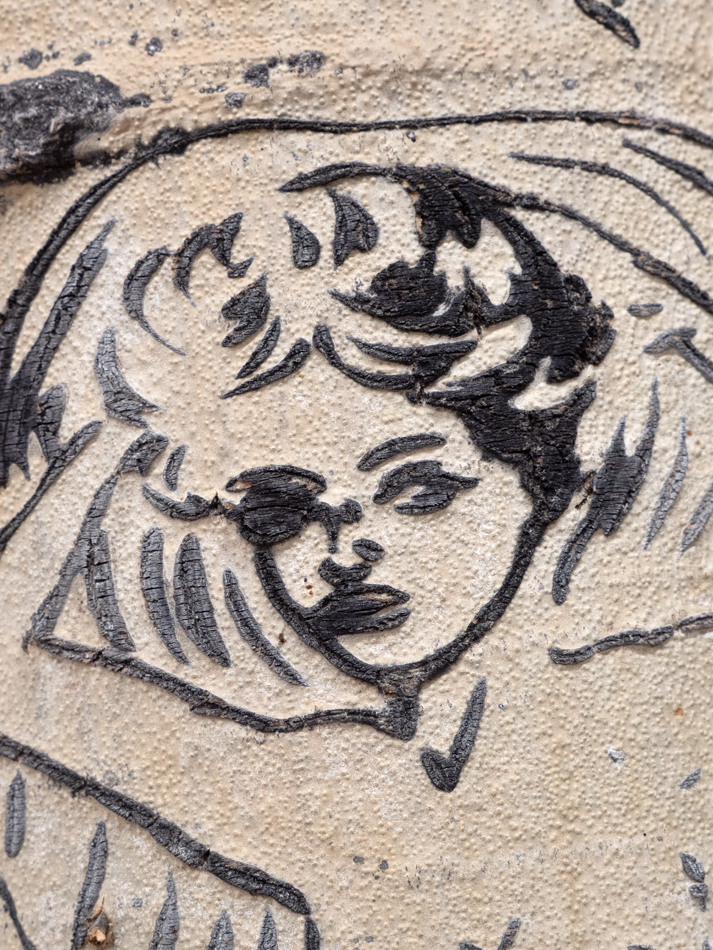
Most of the anonymous sheepherder carvings I’ve documented in my career are merely horny—truncated body parts, furtively scratched with stark anatomical frankness. Chacon’s carvings, conversely, appear to spring forth animistically from sandstone and aspen trunks as if conjured from an ethereal plane. Exposed to the elements, they feel like avatars of wild landscapes, beholding the artist and his loneliness with humor and pathos.
Confronting what remains of Chacon’s corpus has left me with a feeling of accelerating entropy, and… that I am arriving on the wrong side of it.
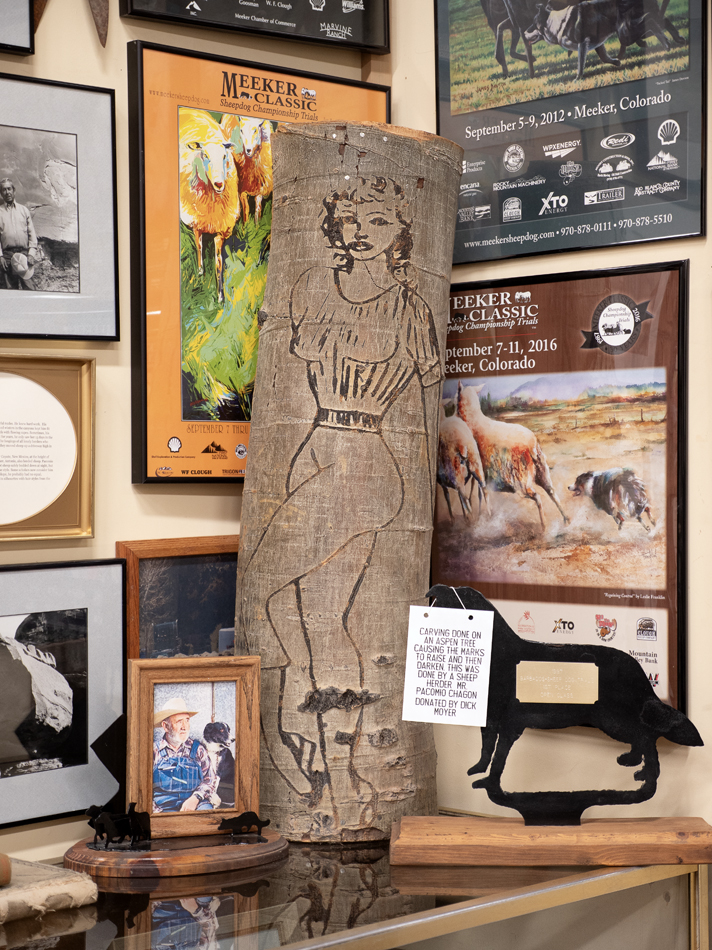
Chacon’s work, composed between the 1930s and ‘80s, spans hundreds of miles from southern Utah to northern Colorado. Steve Baker, a Colorado archeologist, was his most prolific documentarian, eventually befriending him when both men were old. Baker’s book, My Name is Pacomio, is a paean to hard work and an exhaustive folio of Chacon’s far-flung corpus, which encompasses dozens of plein-air sandstone and aspen carvings. Baker’s melancholy at his friend’s passing in 2009 haunts its pages.
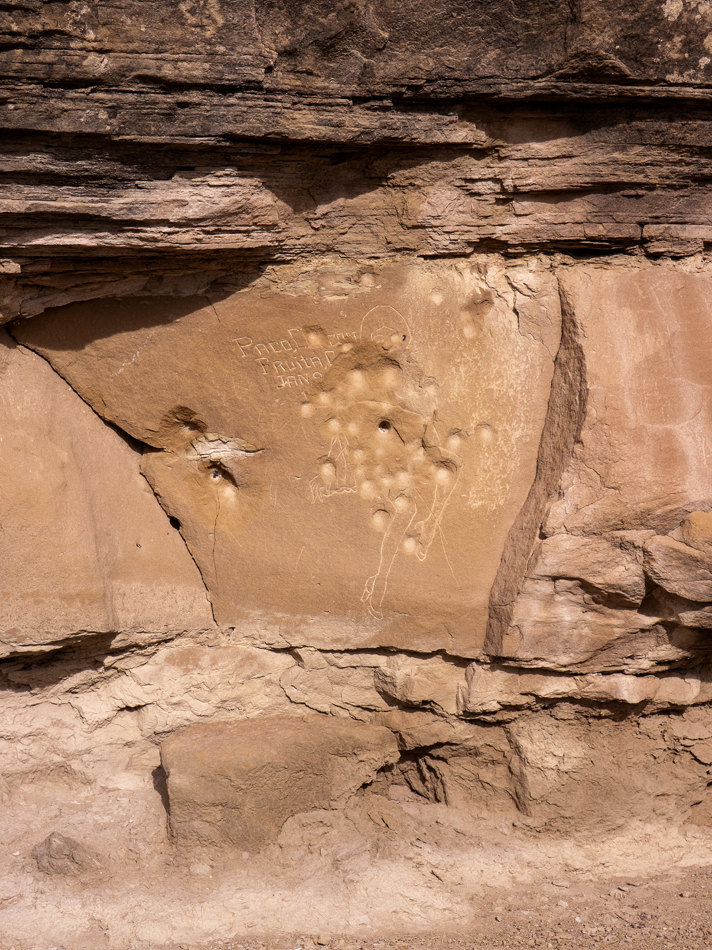
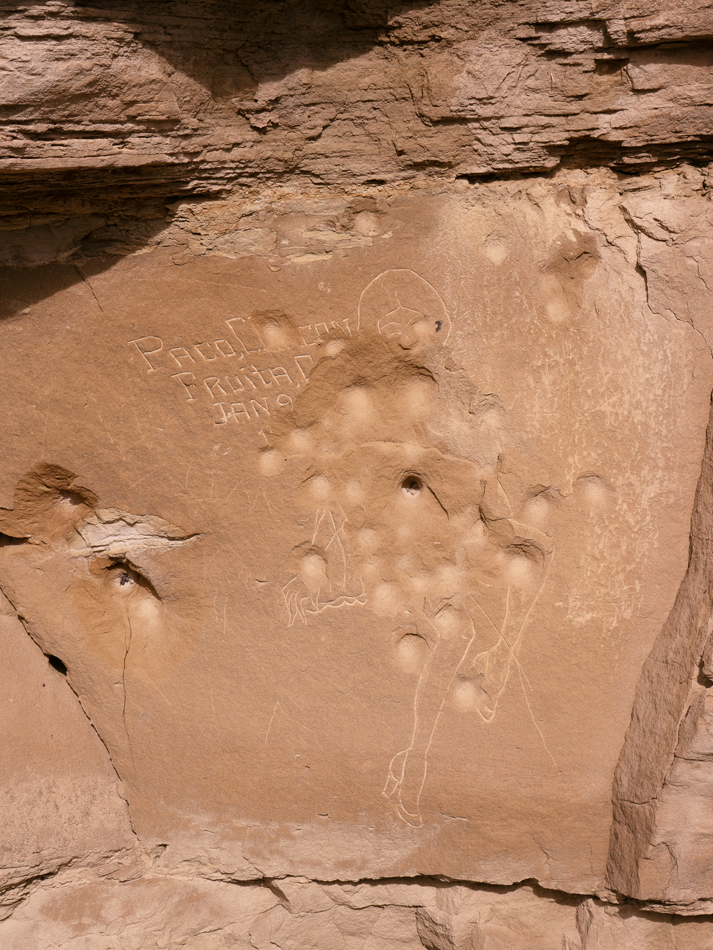
From a biological perspective, carvings in aspen bark are living wounds; lines emerge from the tree trying to heal itself. Chacon’s work is enmeshed this way in landscapes and their ecologies. Viewing it now, it is hard not to think of our present disequilibrium. Drought and disease are leading to mass die-offs of aspen groves. Preserving Chacon’s carvings, ironically, has required cutting them down. Some of the more durable sandstone pieces, meanwhile, have fallen victim to the bullets of modern highwaymen, inspiring Baker to name one vandalized panel Murdered Lady. Confronting what remains of Chacon’s corpus has left me with a feeling of accelerating entropy, and, as an archeologist, that I am arriving on the wrong side of it.
Not far from my first encounter with Chacon’s inscription, the Deer Creek wildfire burned ferociously last summer in the foothills of the La Sal Mountains. A rare fire tornado spread flames and black smoke unsparingly near landscapes where Chacon once herded sheep. In past summers, I operated a chainsaw on a wildland fire crew, and occasionally still return to the fireline as a laborer or scientific advisor. A few days into my assignment at La Sal, I found myself thrust into a familiar fugue state that I imagine Chacon knew well: bone tired after miles of hiking, my inner world merged with the outer one. I thought often of a lonely aspen grove a few minutes up the mountain road.
A month prior, I had trekked through tall grasses with a defunct map labeled “Sheepherder’s Trail” in hand. The “Paco” signature was not known to exist here, but I found other Chacons and many of his contemporaries: names like Maestas, Trujillo, and some too gnarled to read. Entombed in bark, the script showed its age. Archeologists are constantly reminded that time, like fire, spells finado for material traces. Old trails become hard to follow, and can disappear completely unless we choose to remember them.