Contemporary art is gaining ground in Cedar City, Utah. Inside the former Mormon frontier town, ten years after the founding of its flagship art museum.
Cedar City is best known as a gateway to southern Utah’s national parks and skiing adventures at Brian Head Resort. The ancestral home of the Southern Paiute tribe, the present-day city was occupied by Mormon settlers in the mid-19th century who fled religious persecution in the East. The city is nestled in striking red rock vistas and, over the last two centuries, has fostered a legacy of artists who were drawn to the region’s transcendent beauty and have expanded its identity beyond its frontier past and religious foundation. While its small network of galleries and museums often celebrates either pioneer history or the work of Mormon artists, institutions like the Southern Utah Museum of Art and a burgeoning community of artists are driving an emerging contemporary art scene.
The late artist Jimmie F. Jones, best known for his luminous realist paintings of Southwestern landscapes, was instrumental in laying the cultural roots of Cedar City. He was born there and returned in the 1990s, where he exhibited work at the Braithwaite Fine Arts Gallery—the first art gallery in Cedar City, which was founded in the mid-1970s and originally housed in a converted basement classroom at Southern Utah University.
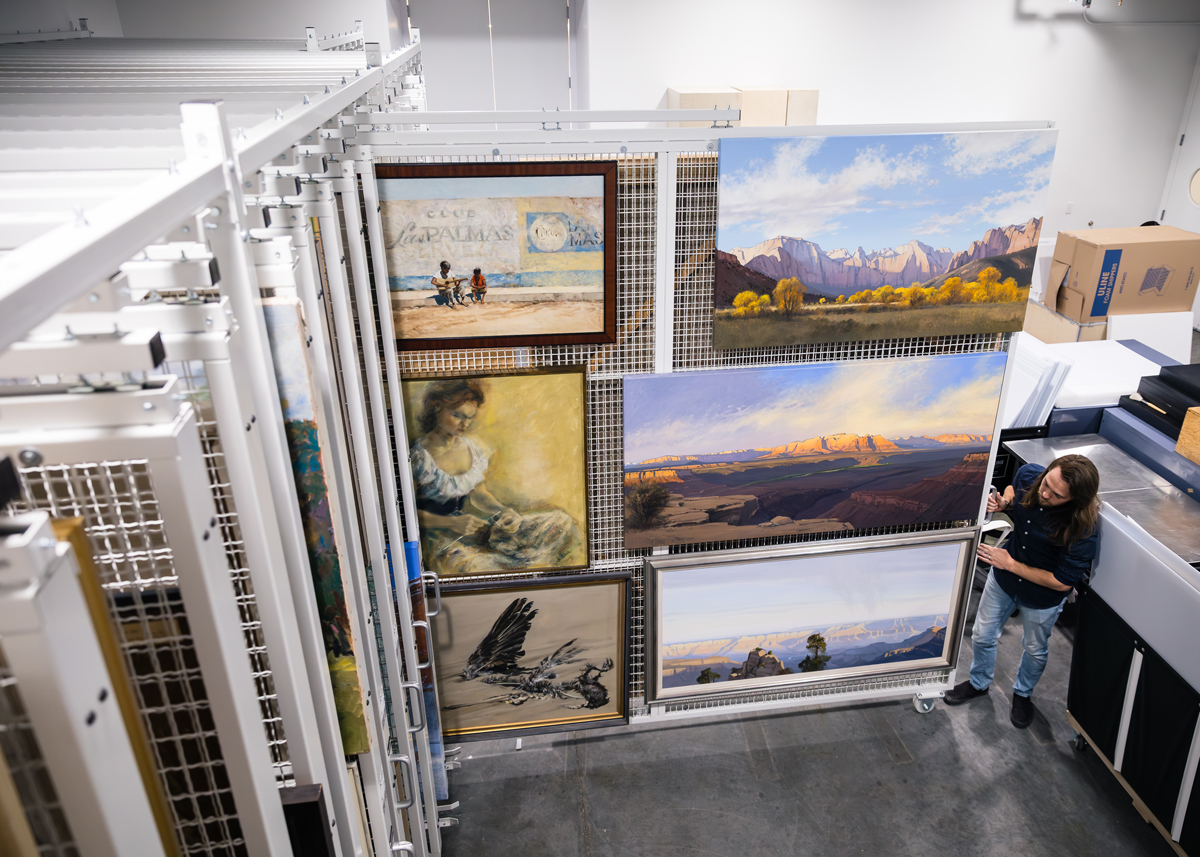
Jones thought his hometown deserved a more elevated art experience, so before his death in 2009 he bequeathed his final fifteen paintings, his studio in the Rockville mesa overlooking Zion National Park, and his entire art collection to help kickstart the Southern Utah Museum of Art, which replaced the former basement gallery.
Jones believed that this community should not have to travel to metropolitan areas like New York or Los Angeles or Chicago to see art.
“Jones believed that this community should not have to travel to metropolitan areas like New York or Los Angeles or Chicago to see art,” says Becky Bloom, the director of SUMA. “The core of his vision is that we could bring art to this area because he also grew up in this area wishing for that exposure.”
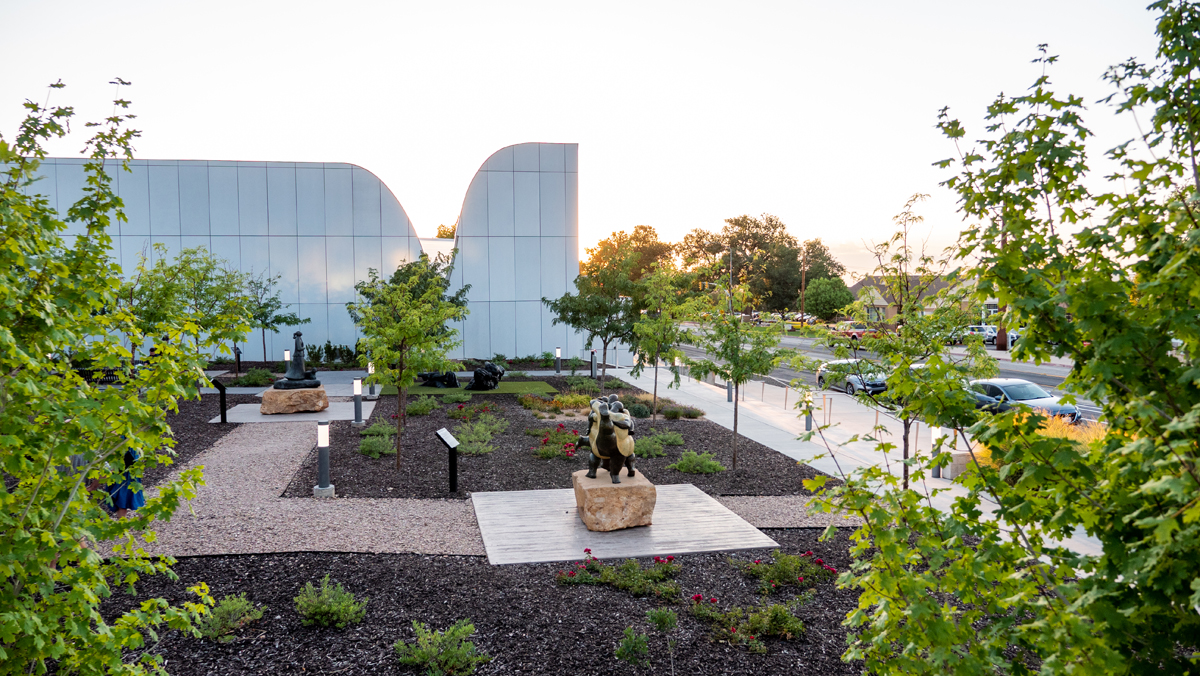
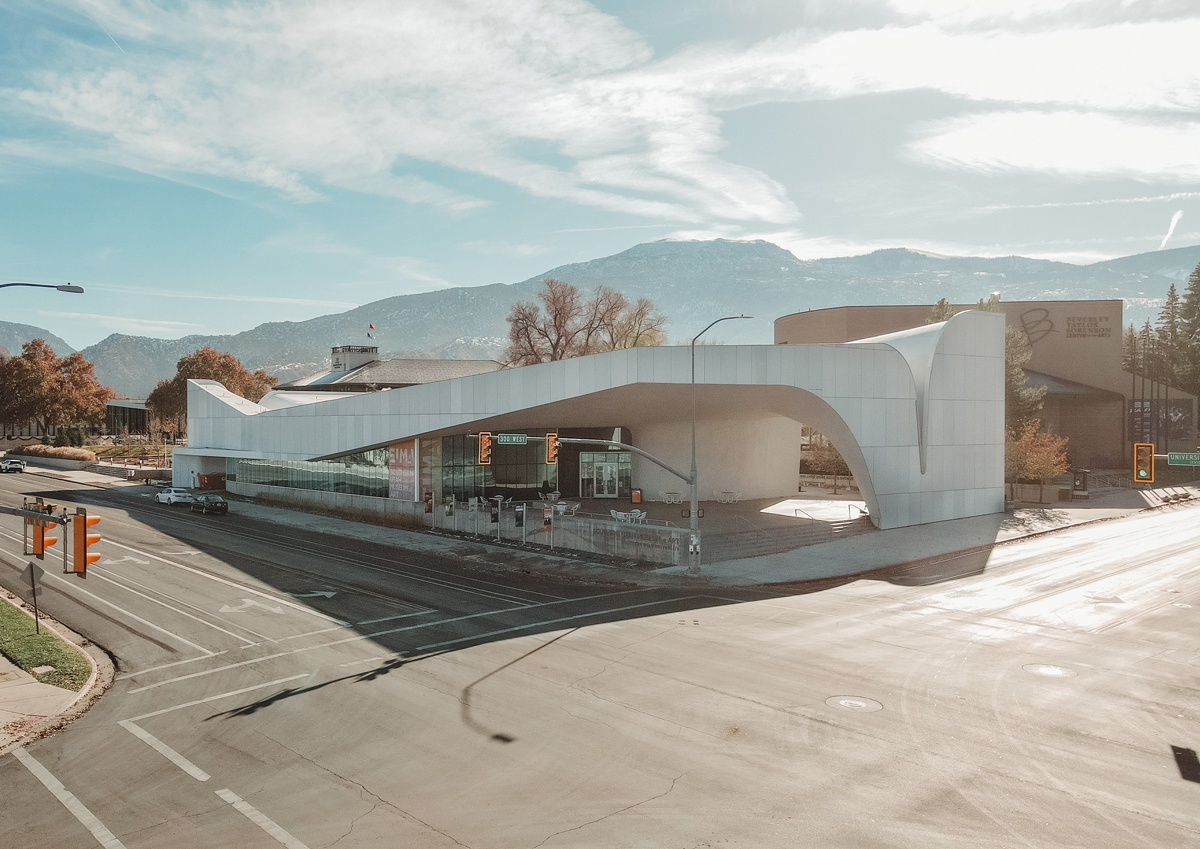
With Jones’s gift, the 20,500-square-foot museum opened in 2016 as part of the larger $40 million Beverley Taylor Sorenson Center for the Arts, a complex that includes theaters for the Utah Shakespeare Festival and shared public spaces for arts programs. The building was designed by the Los Angeles–based firm Brooks + Scarpa and has become a downtown landmark, with minimalist lines and a sloping roof canopy that echoes the cliffs of Zion National Park and the desert horizon.
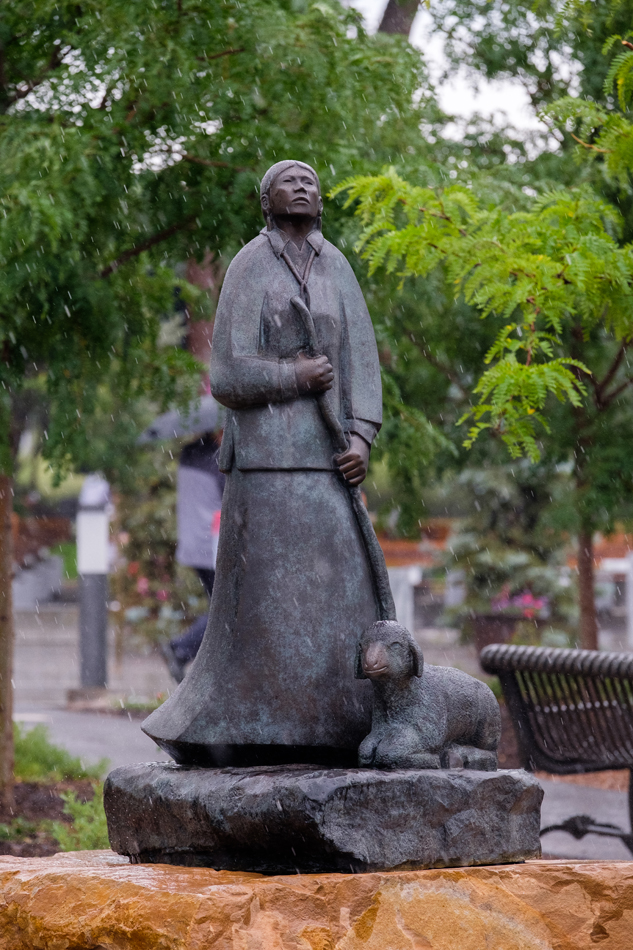
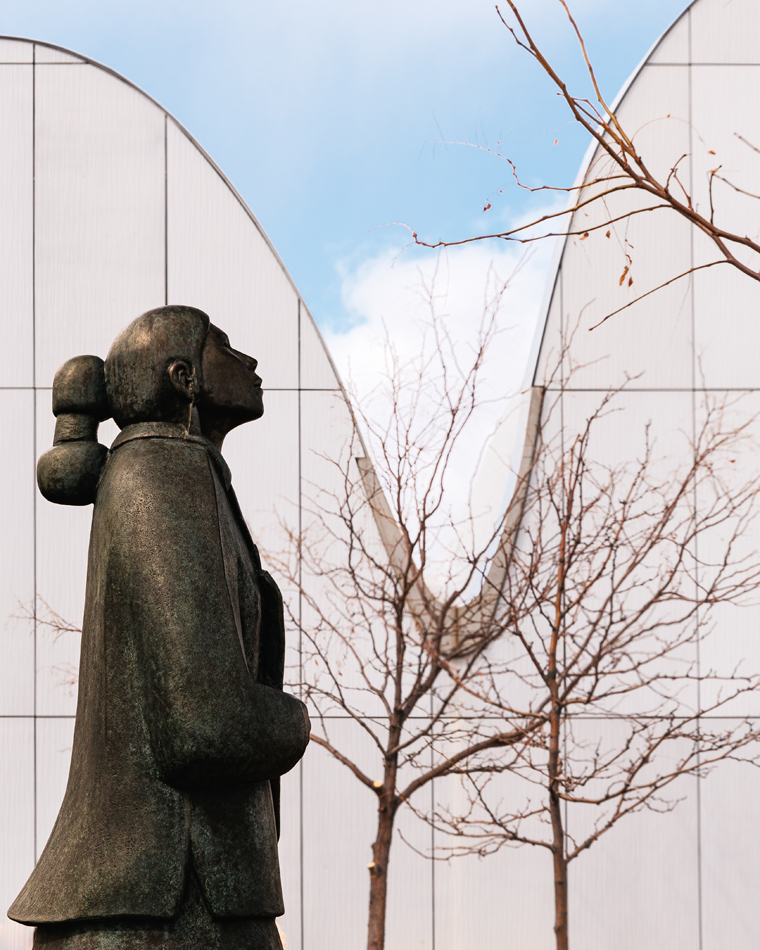
Outside the museum, a sculpture garden features works by celebrated American artists. A centerpiece is Allan Houser’s (Chiricahua Apache) 1993 bronze casting Raindrops, which was acquired and installed with support from the Cedar Band of Paiute Indians and tells of Apache relationships with the land and animals, showing a Native American woman with sheep at her feet.
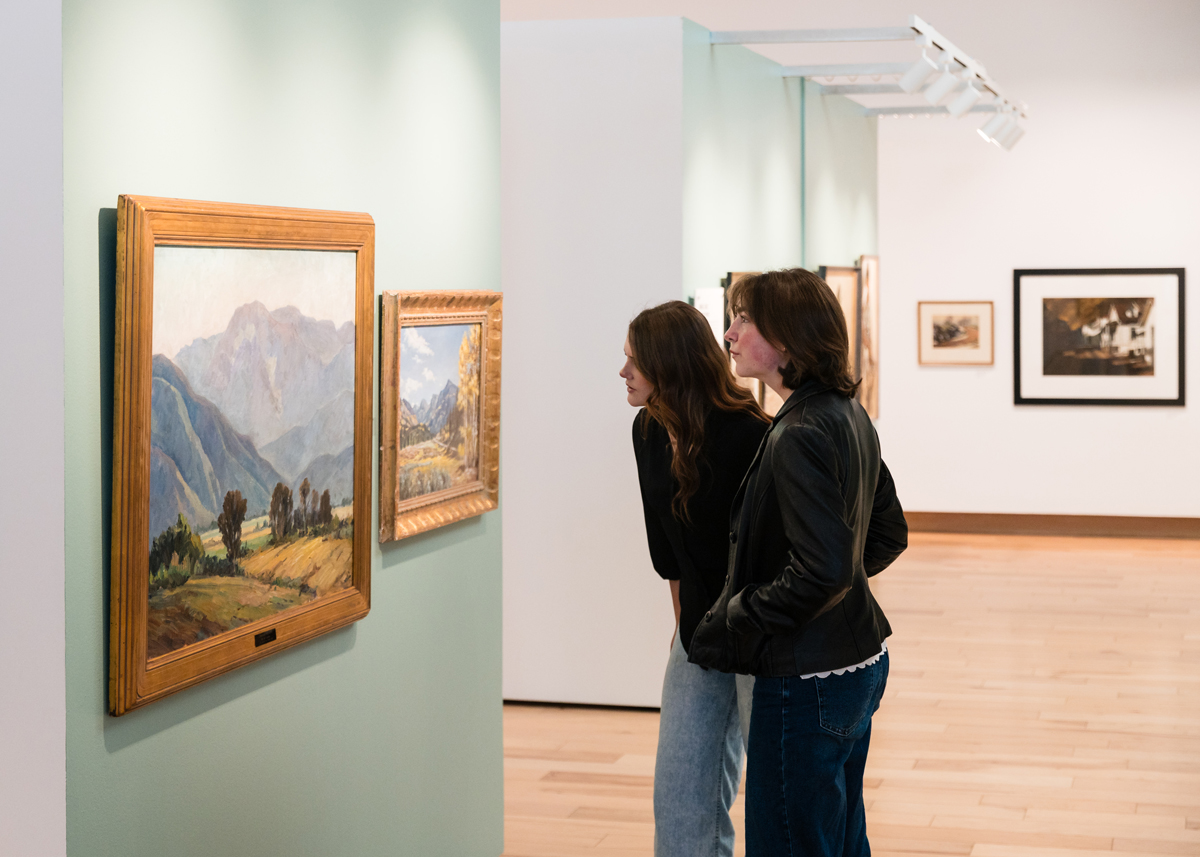
The museum has grown to hold around 2,000 works but still does not have an acquisitions budget and actively seeks donations. Going forward, in its collection and curatorial framework, it hopes to prioritize contemporary Indigenous artists, and this year it will feature some prominent names like Jeffrey Gibson, the American representative of the 60th Venice Biennale, and Marie Watt.
“We have this mix of traditional, beloved art, but also we want to push boundaries,” Bloom says. “Something that we want to keep alive is this sense that the art here will be unexpected. I think a lot of people assume we’re going to be showing landscapes of Southern Utah, and we do have a lot of that. But again, it is about bringing in these other ideas. We’re seeing more temporary exhibitions and loans because of this.”
A survey of the present-day artist community in Cedar City reveals a strong network of artists, most with ties to the Mormon church. After Jones, who descended from Mormons and took on religious commissions in his lifetime but was never outwardly religious, the traditionalist realist painter Del Parson is perhaps the best-known artist of the region.
The market is fickle, but when I’m not selling work, it’s somewhat a relief because I can keep making what the hell I want.
Parson has lived in Cedar City since the late 1980s, rising to fame for his 1983 painting Christ in Red Robe, which was commissioned by the Church of Jesus Christ of Latter-day Saints and widely circulated in its marketing materials. The so-called “Mormon Jesus,” in contrast to Michaelangelo’s Catholic version of Christ, gained recognition within and outside the community over speculation that Parson had modeled the image of Jesus after himself; Parson publicly denied this. He and Jones were part of a progressive movement that began in the 1970s as the Mormon church sought to champion contemporary art to convey a more approachable image of faith.
With a population of around 36,000 people, more than 50 percent of whom are members of the Church of Jesus Christ of Latter-day Saints, Cedar City plays host to a contemporary art scene in which secular and religious art coexist. “We see participation across denominations,” says Sara Penny, the vice president of the Cedar City Arts Council, which was established in the 1980s and works to promote art in the region through events and artist grants. “Our visual artists build each other up and elevate their art through cooperation. Several of them paint together regularly and critique each other’s work.”
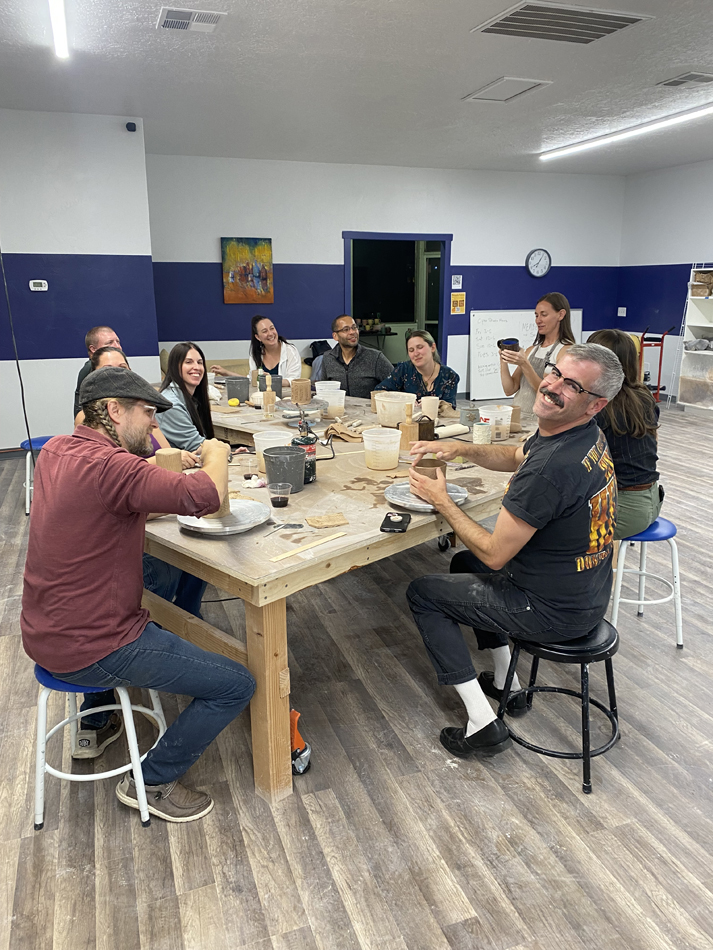
Another prominent local artist, the ceramicist Russell Wrankle recently founded Shape Theory Ceramics, a community studio in downtown Cedar City that offers long-term and short-term classes, bringing in local and international students. While his own work borders on the macabre, featuring surrealist anthropomorphic figures, Wrankle, as a non-Mormon who grew up in the region, believes that conflicting religious or political ideas dissolve within the studio space, and that such places present untapped market potential while also allowing artists to slow down and work without the high costs and constraints of larger neighboring cities.
“The market is fickle, but when I’m not selling work, it’s somewhat a relief because I can keep making what the hell I want and not worry about the market,” Wrankle says. “There’s a certain freedom in that. Galleries sometimes want you to make things in a particular style or for a particular client but I don’t have to play that market game as much working here.”
Wrankle lived near Zion National Park as a child and worked as a full-time potter in nearby Toquerville for around two decades, where he sold ceramic tiles and other wares to tourists from a gallery in the front room of his home. Around 2008, when the economy crashed and Toquerville became a ghost town, he came to Cedar City to take a teaching position at the university. He plans to eventually add a gallery space to his expansive studio, aiming to bolster a growing ecosystem of contemporary art galleries in Cedar City like Artisans Gallery, Kolob Gallery, and the Gold River Gallery, which primarily sell the work of regional artists.
Whether or not an established art market rises [here] in the future, it is these ancient sites that will forever embody the sense of wonder of the region.
Beyond the gallery walls, no visit to Cedar City would be complete without venturing outside, where ancient art like pictographs and petroglyphs fill the landscape. Around twenty miles from downtown, Lion’s Mouth Cave, a sandstone alcove, features a remarkable panel of anthropomorphic figures and sinuous patterns and forms dating from 500-1500 CE.
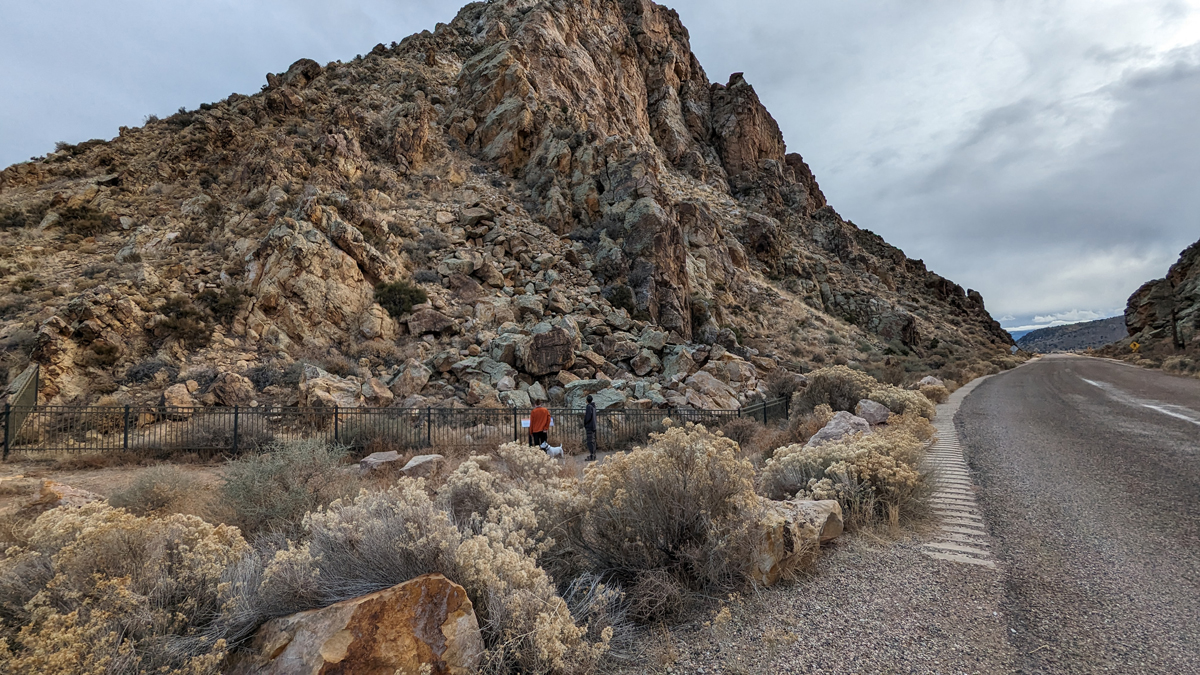
And just twenty minutes from Cedar City, the Parowan Gap petroglyph site stands as one of the most treasured heritage sites in the Southwest, with vast archaeoastronomical panels that align with the rising sun and winter solstice. Parowan Gap’s rock art was created over a long span by multiple Indigenous groups, with most panels generally attributed to the Fremont culture (around 700-1300 CE). The site remains culturally significant to Paiute and Hopi peoples and also bears Mormon pioneer names and initials carved in the 19th century. The petroglyphs rise within two sandstone ridges facing each other with a road in the middle, immersing visitors in an otherworldly mix of anthropomorphic figures, animals, spirals and other abstract symbols.
As Cedar City continues to grow its footprint in the contemporary art world, and whether or not an established art market rises there in the future, it is these ancient sites that will forever embody the sense of wonder of the region that has drawn generations of artists and continues to shape its unique artistic spirit.