Yes &…, curated by Tobias Fike and Donald Fodness, advocates for human ingenuity in the face of AI ascendance. But is that a sufficient curatorial framework?
Yes &…
January 29 – May 3, 2026
Boulder Museum of Contemporary Art
It’s a badly kept secret that artificial intelligence has seeped into art spaces. Like some Dickensian villain who, toothless and foul-smelling, steals from a church’s coffers, misuse of AI leeches from art, as evidenced by recent drama at Denver Art Museum. With data centers like CoreSite further threatening Colorado neighborhoods, it is unsurprising that guest curators Tobias Fike and Donald Fodness designed an exhibition that bristles at the inhumanness of machine learning.
Yes &… at BMoCA features eighteen artists and recommends a generative and imperfect approach to art. No single medium characterizes the show, but Yes &… coheres under loose “human-centered focus.” From exposed zip ties to visible brushwork, the exhibition triumphs in that which is imperfect and assembled.
The exhibition takes its cue from improvisational theater, wherein participants ad lib to prompts in agreement and addition. In theater, quick-witted improvisers create comedy, depending on the participants’ abilities to respond in real time to input. Fike and Fodness, who work under the moniker “TAD” (an acronym for their first names and also for the workers’ compensation program “Temporary Alternative Duty”), curate analogous to the titular “yes, and…” framework by showing art that responds to stimuli in generous and intelligent ways. Each artist contributes two works, which may or may not connect aesthetically or materially to each other. But like a “yes, and” train of thought, the exhibition grows meaningfully when viewing artistic visions in concert.
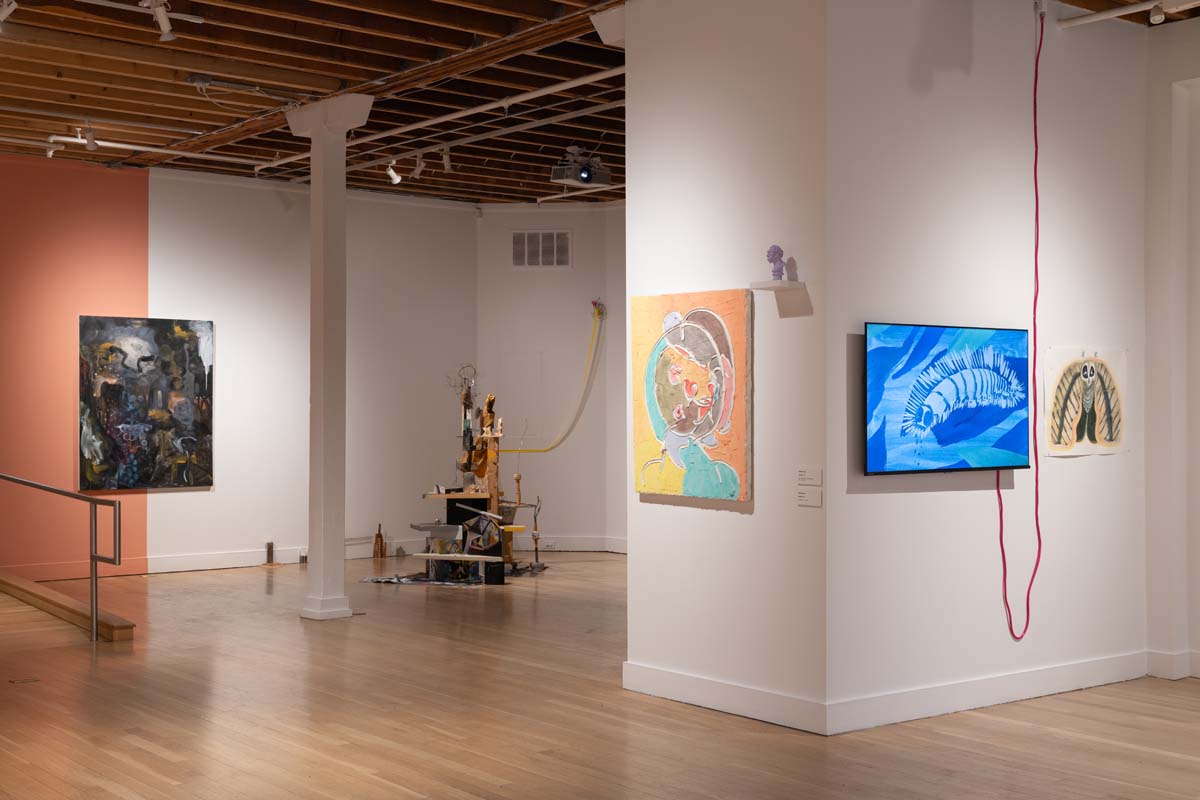
MOTH (2019) by Allison Schulnik and Stone Fruit (2022) by Lilli Carré are both “yes, and…” extravaganzas. Shulnik’s 3:15-minute animation greets visitors with 1,540 gouache paintings set to Nedelle Torrisi’s recording of “Gnossienne No. 1” by Erik Satie. Water snake teeth morph into mushroom landscapes which become spores before flower buds take on caterpillar forms. Towards the back, Carré’s two-minute loop uses the “straight ahead” technique to animate without planning, resulting in a similar cornucopia. Both works read like a dreamscape run-on sentence.
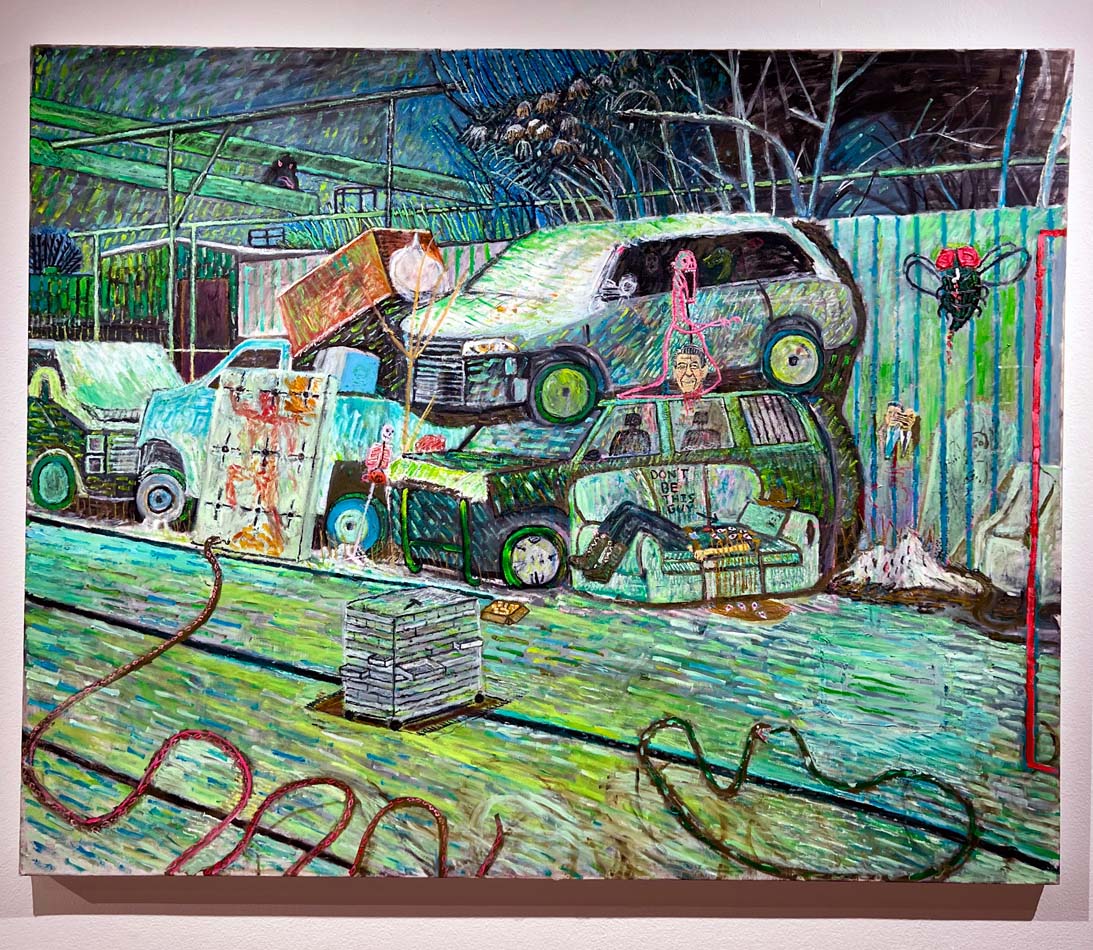
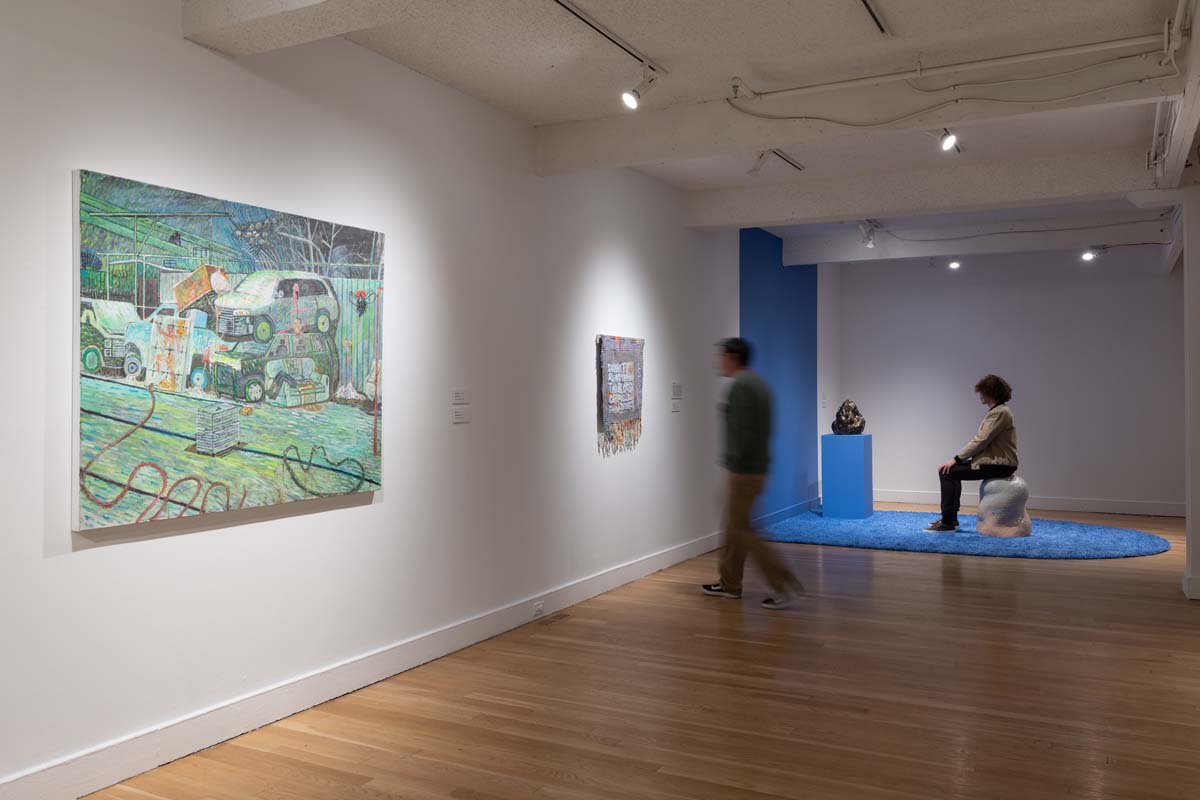
Elsewhere, paintings reference each other referencing art referencing history. Xi Zhang’s acrylic Christina’s World (2017) emulates the 1948 work by Andrew Wyeth. In Wyeth’s muted (if charged) original, the young Christina dominates the frame, while Zhang’s elderly counterpart crawls through a hoarder’s yard in fluorescent oranges and lilacs. Christina’s World is also visually similar to Lydia Farrell’s two green oils in the second room. Yet I already understand Zhang’s inspiration. I’ve appreciated Farrell’s work for years and therefore expect an I Spy game of cultural references in their paintings (Ronald Reagan makes more than one appearance in Hungry Ghosts [2024]). But without this context, could I still appreciate these works?
One remarkable element of Yes &… is its invitation to viewers to improvise alongside artists, a usually implicit request in galleries made explicit by TAD. A digital zine provides on-the-spot peeks into the artists’ lives. As the curatorial duo point out, this information may or may not affect how visitors experience the exhibition, but the context still feels important, if only for the intimacy it affords the work.
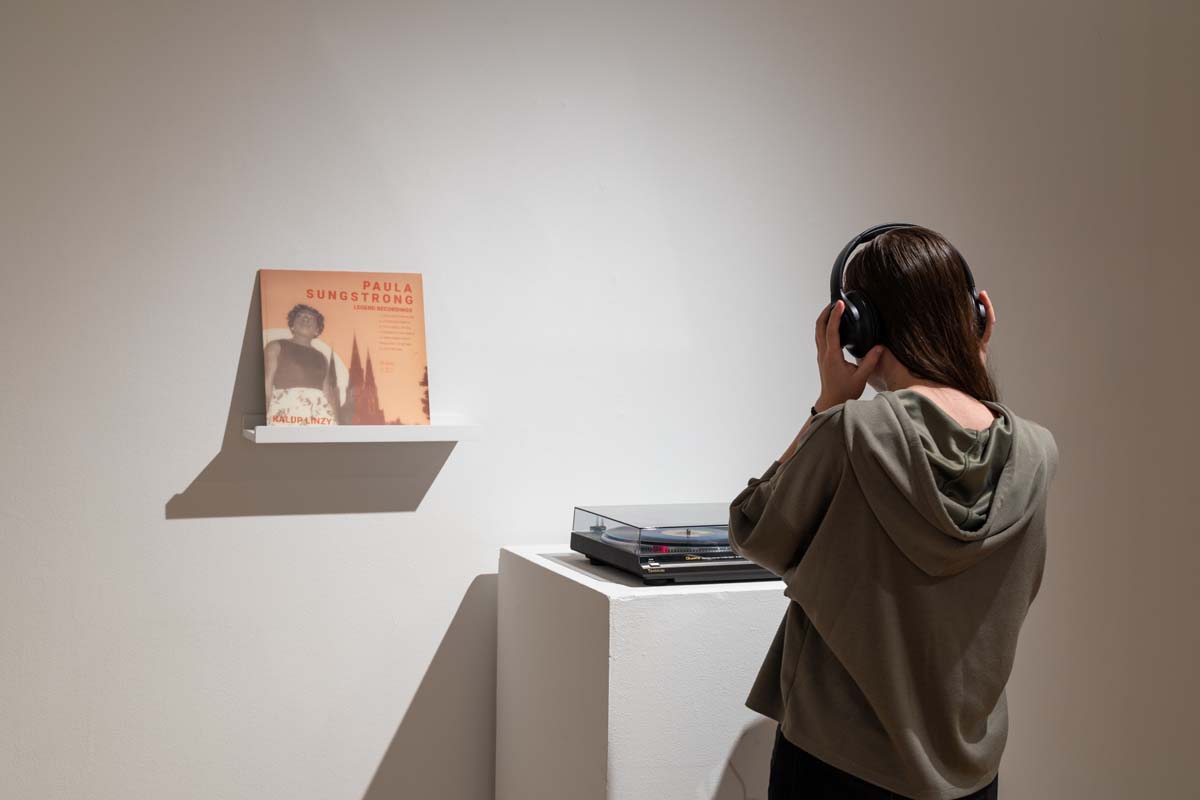
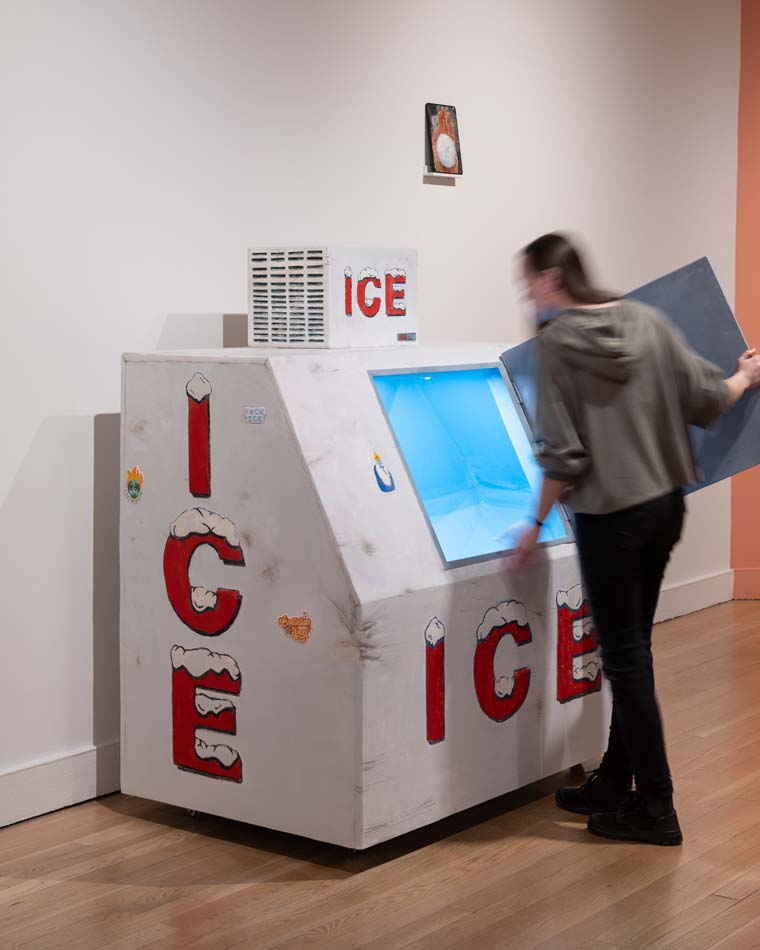
Similarly, several artworks request interaction. Kalup Linzy’s Paula Sungstrong Station (2020)—a bluesy record by the fictional Sungstrong played on loop invites listeners to take a seat. Conrad Bakker exhibits a functional turnstile in Scroll (2025) and downstairs his deliciously political Untitled Project: Ice Merchandiser (2025-26) instructs viewers to remove a piece of ice from the chest for a hashtag-worthy selfie.
Yet the main context for Yes &… is the philosophy of humans looking at things humans have made. “As artificial intelligence becomes increasingly ubiquitous,” TAD write in their introduction, “this exhibition turns our attention to qualities that underscore the inherently human character of art.”
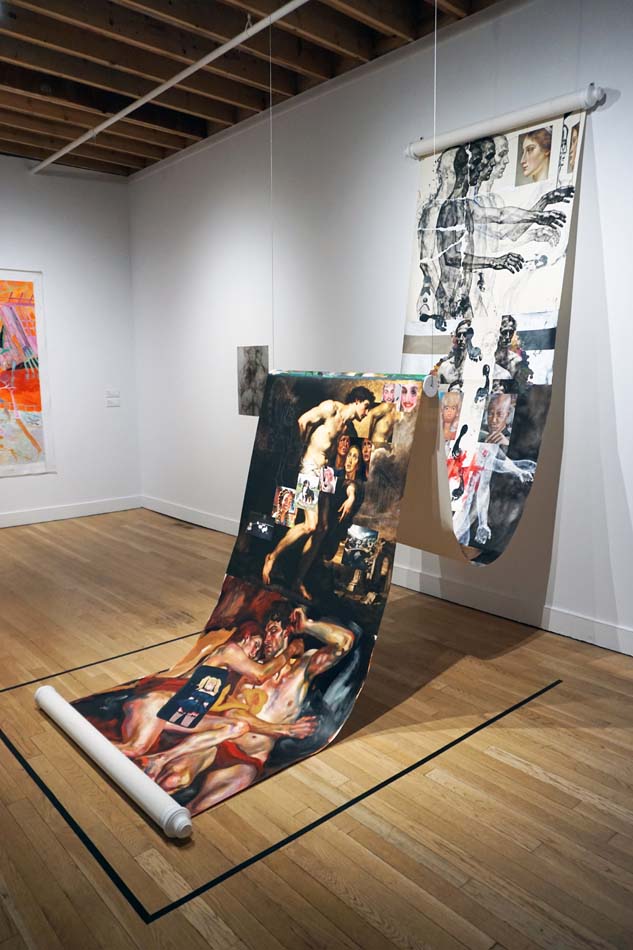
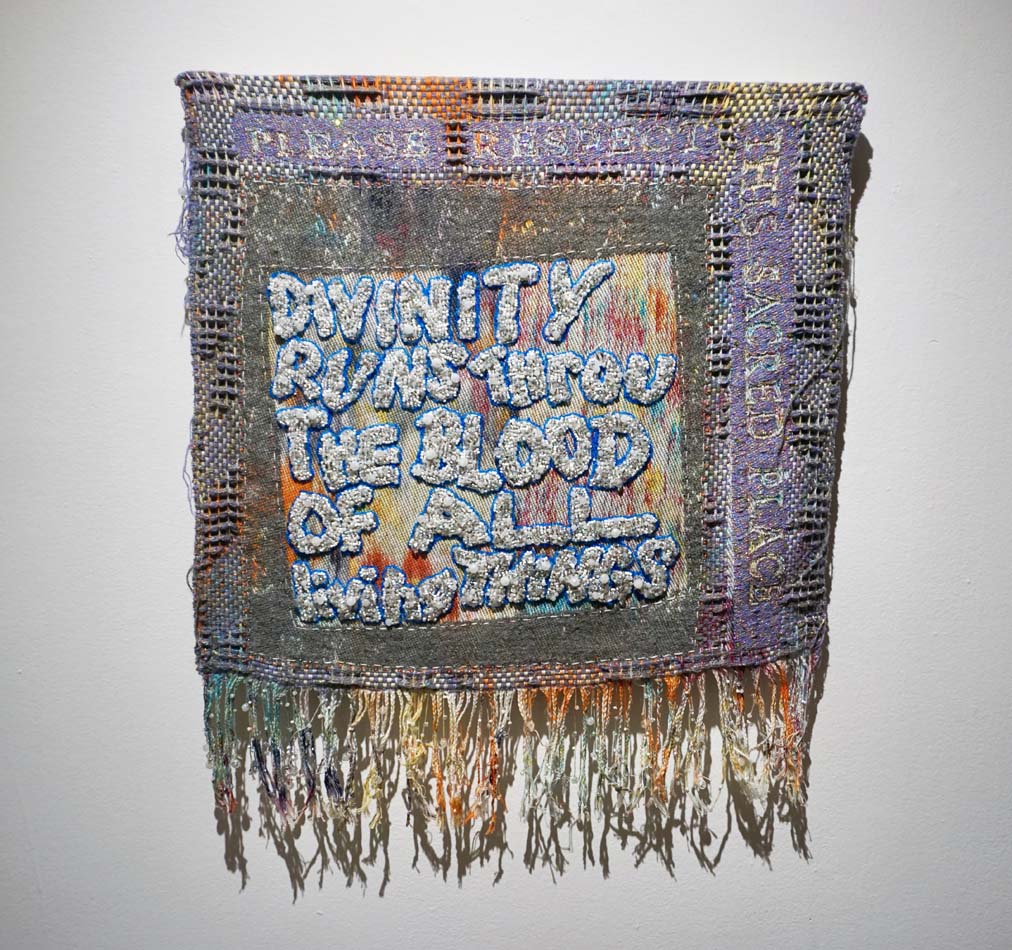
And they mean it. William Cobbing squelches mud in Inner Horizon (Porthcew) (2024). Hannah Purvis’s Scrolling (2025) mimics a social media doomscroll in medias res and collages it for posterity. Tali Halpern’s hand-woven blood runs throu (2024) hangs so stiffly from the wall that it feels as though I could chew it like glitter-filled gum. These works and many others have fundamentally tactile qualities that beg the questions: Could AI do this? Would you want it to?
The exhibition is less anti-AI diatribe as it is pro-human, a hairsplit take that may be a way to check artificial intelligence’s presence in our galleries moving forward.
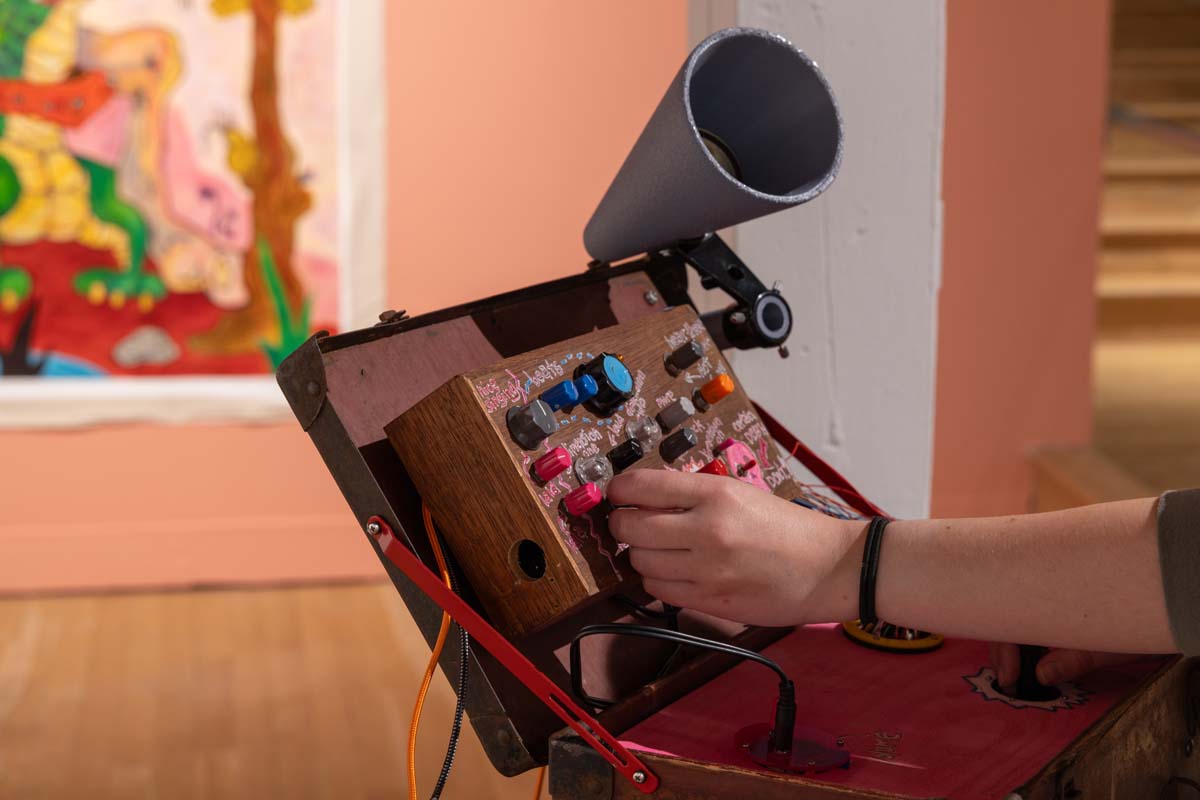
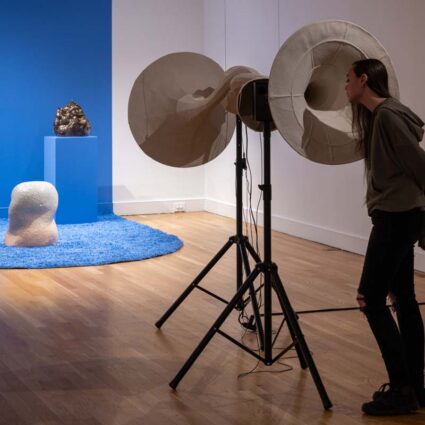
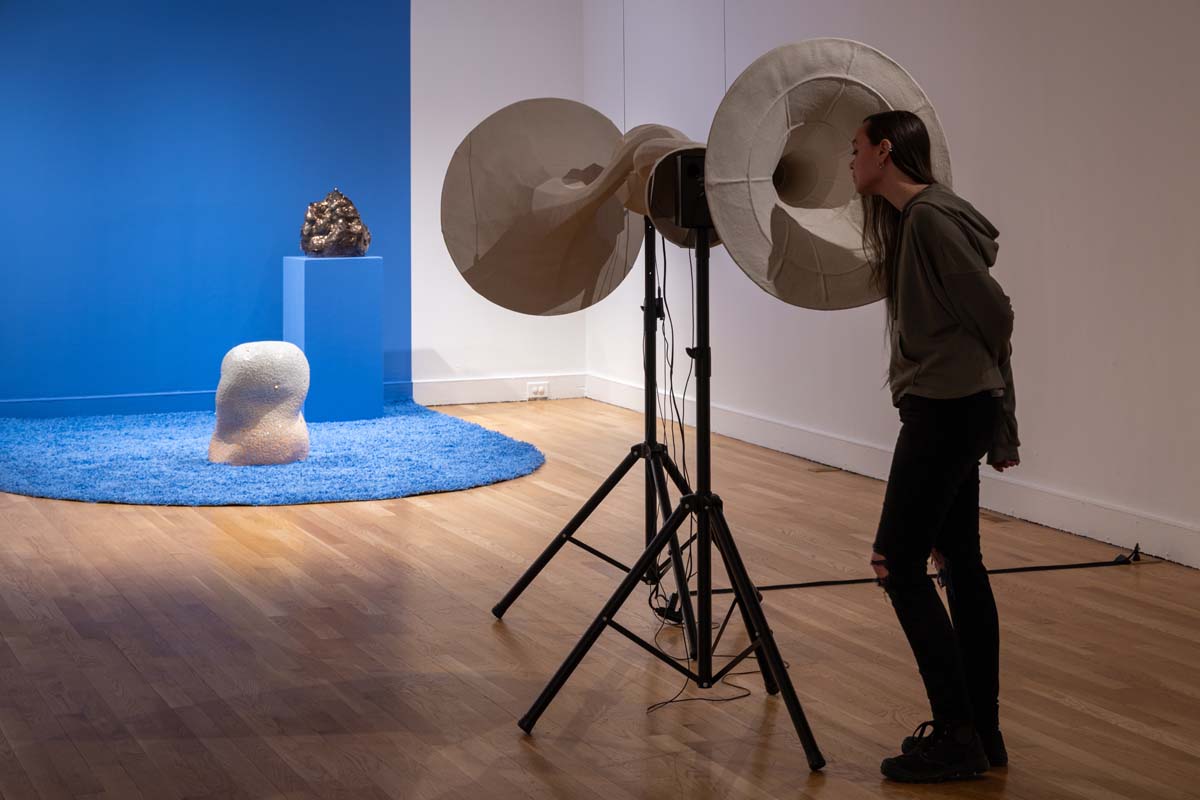
This is not to say that Yes &… is anti-technology. Some of the contributing artists freely admit to using AI “as an outsourcer,” even if they shy away from it as a collaborator. Furthermore, many of the works on view interface with and rely on digital formats to come to life. I’m Here For You (2025) by Chris Lavery, for example, consists solely of technological equipment—a deconstructed gramophone connecting two phone-sized screens. Technology isn’t necessarily the bad guy. And Yes &… isn’t Luddite enough to kick it to the curb.
With so much evidence of human creation in Yes &…, human context is offered as the foil to AI, revealing that the limitations to machine learning lie in so-called imperfections. According to TAD, the “filtration system” that artists provide differs from AI by reshaping input into “outputs that bear [the artists’] unique fingerprints.” Ubiquity is not an asset, then. AI can only play the uninspired version of “Yes, and…” providing answers that are rote, uninspired, or even stolen.
What results in BMoCA’s Yes &… is therefore unpredictable output marked by human hands. The exhibition is less anti-AI diatribe as it is pro-human, a hairsplit take that may be a way to check artificial intelligence’s presence in our galleries moving forward. “Technology is the active human interface with the material world,” said science fiction author Ursula K. Le Guin. But as Yes &… asks, do we know what to do with it?