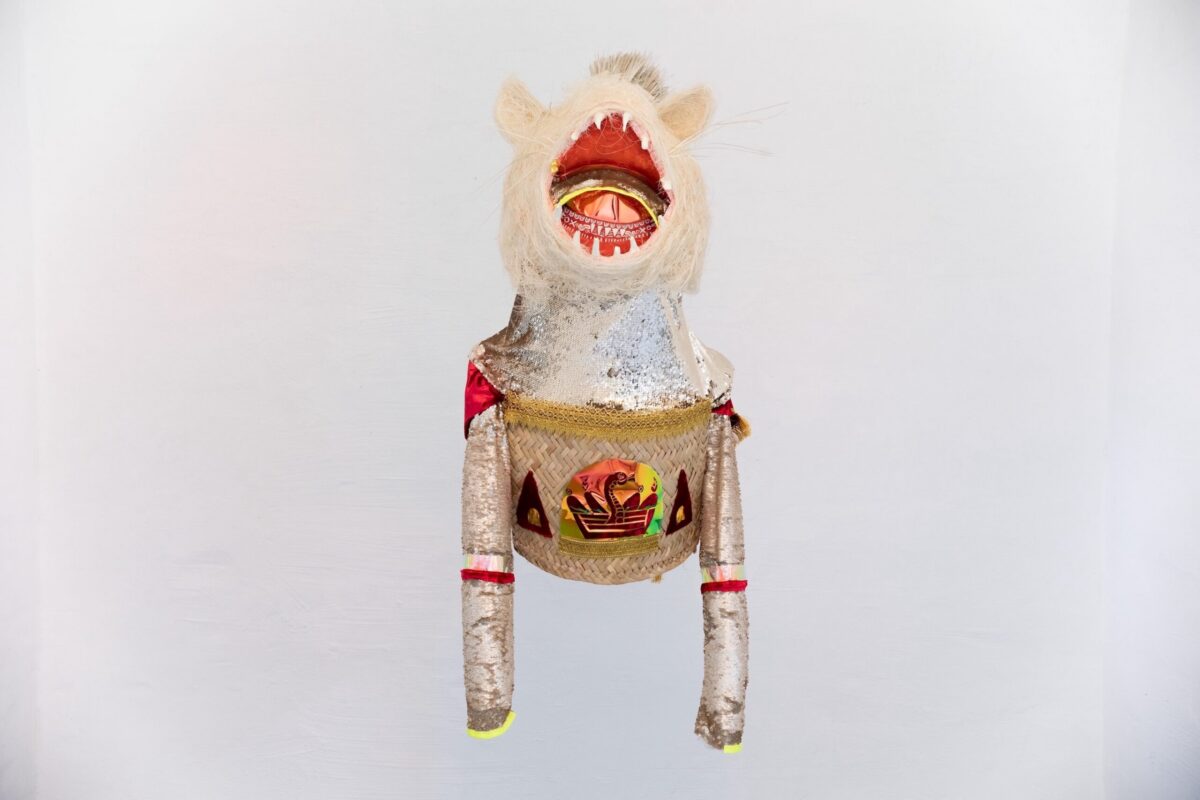
Facing Change: Mexican Masking Today combines contemporary artworks with a curated selection of twentieth-century Mexican masks to consider the complex forms that masking takes across the Mexican diaspora.
Masking—an act that creates a fluid interplay of new personas and chosen faces—has been a consistent presence in Mexican communities from precolonial times to the present. Masks have been used to express identity and opinions, resist oppression, celebrate spirituality, connect societies together, complicate binary interpretations of culture, and alter the shape of popular entertainment. The evolution of masks does not move in a direct line; rather it recurs and transforms as people search for new ways to negotiate their sense of self and their community identity in defiance of the forces that try to negate them.
The exhibition was curated with a team of collaborators that included specialists in history, art history, and anthropology. The Museum’s Executive Director, Alisha Kerlin, celebrates the network that came together as the exhibition was being created. “We believe that university museums can bridge academic collaboration and community outreach, and will continue to look for partners who believe in what we are doing.”
Facing Change examines popular forms of Mexican masking, such as lucha libre wrestlers and payasos (clowns), and asks how diaspora artists have used these masks as a language that enables them to talk about personal thoughts and feelings in public spaces.
Artists include Marcel Alcalá, Azul, Judy Baca, Jesús Barraza, Haide Calle, Melanie Cervantes, Federico Cuatlacuatl, Karla Diaz, Carlos Donjuan, geo, Lourdes Grobet, Joel Hernandez, Mari Hernandez, Graciela Iturbide, Brian Martinez, Narsiso Martinez, Brian McNamara, Josiah O’Balles, Luis A. Reyes, Griselda Rosas, and Javier Sanchez.
October 23, 2026 - May 22, 2027
Marjorie Barrack Museum of Art
www.unlv.edu/event/art-exhibition-facing-change-mexican-masking-today