With Artist Hopid Unveiled, the Museum of Northern Arizona celebrates the shared cultural voice of the groundbreaking Indigenous artist collective founded in the 1970s.
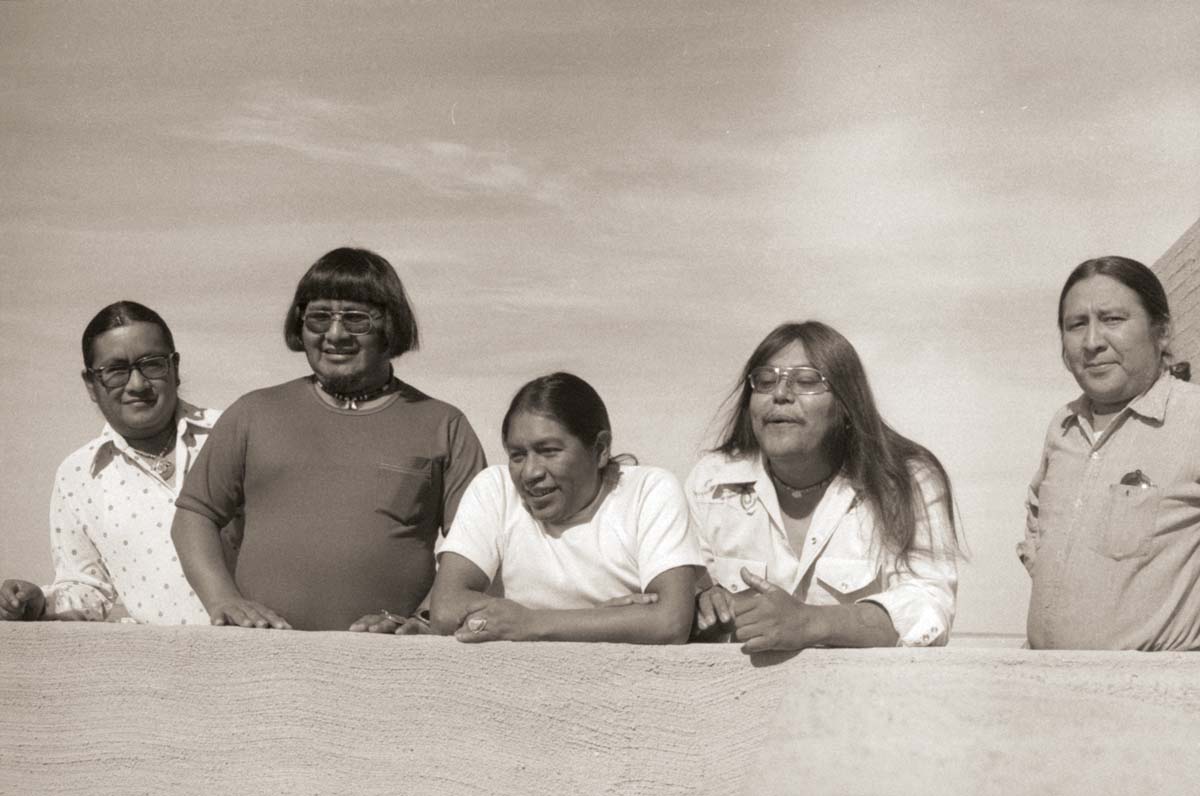
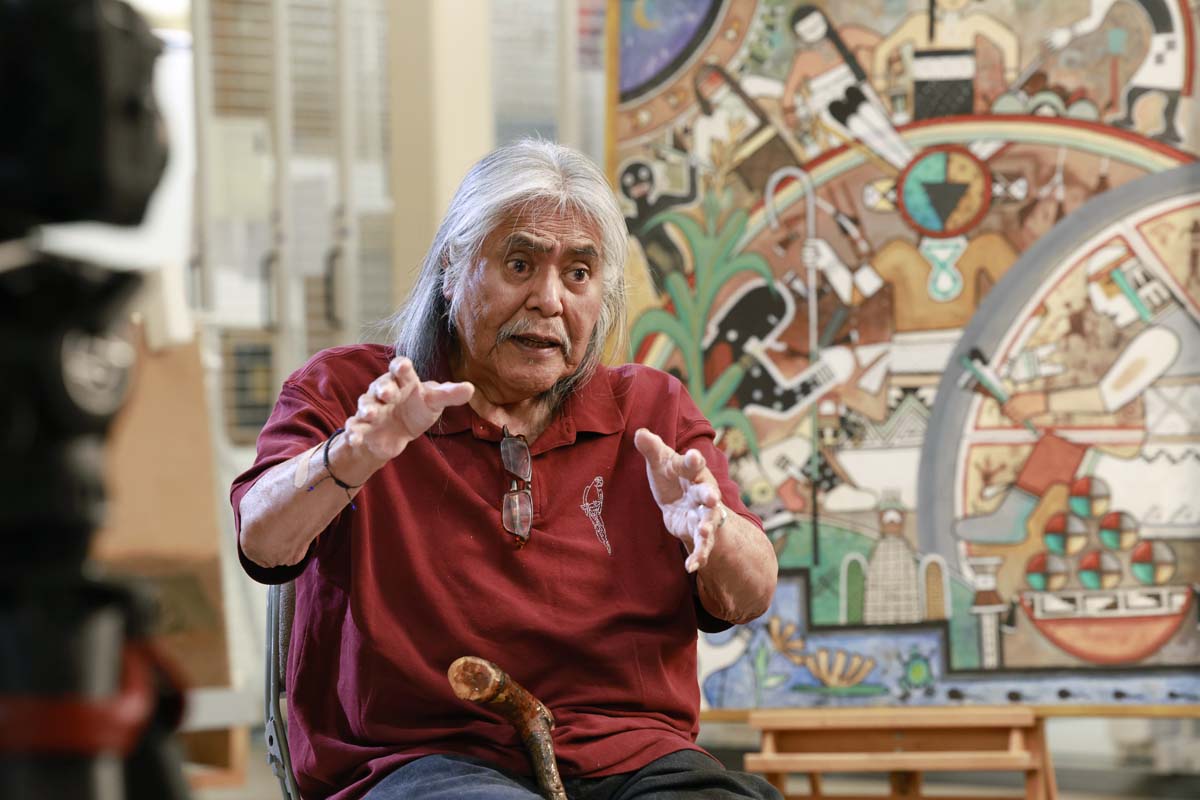
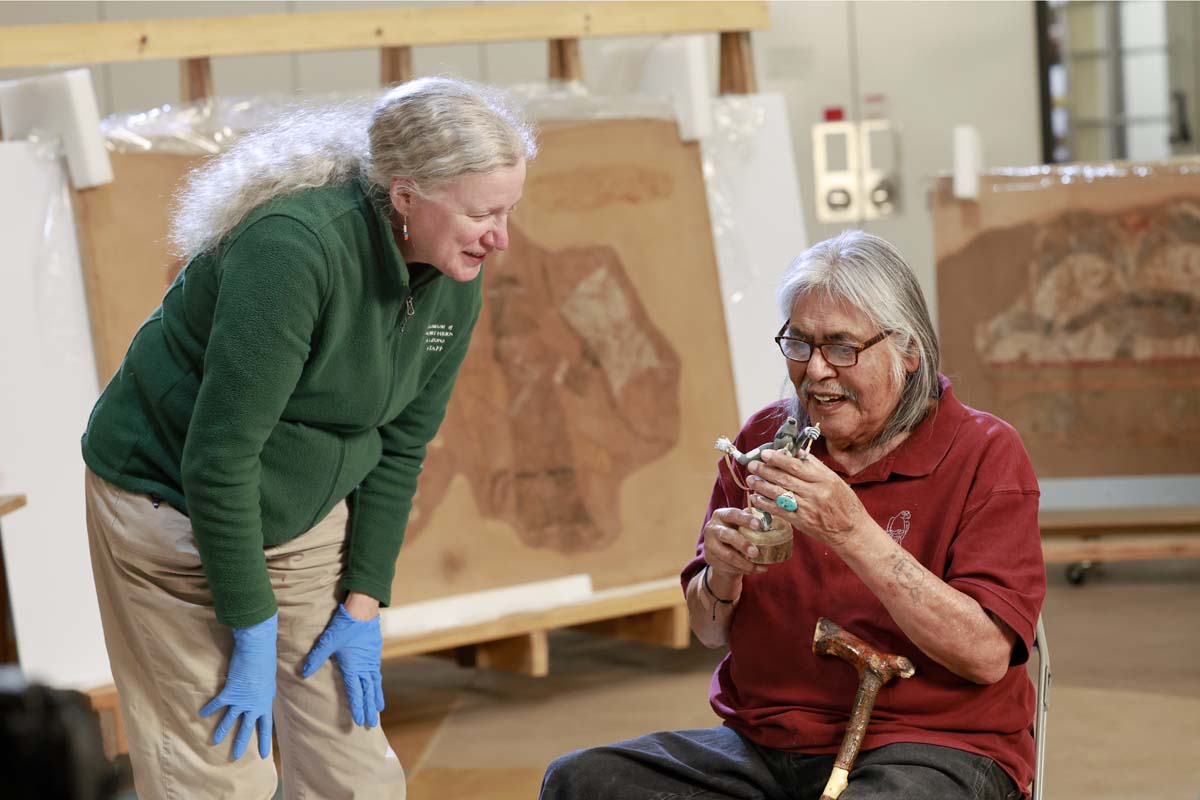
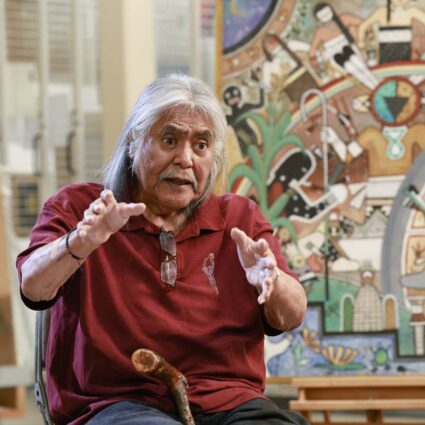
Painter Neil David Sr. (Hopi/Tewa), the last living member of the Hopi collective Artist Hopid, settles into his seat surrounded by family. He can no longer see, but his memory is clear, his smile bright, and he can picture in his mind’s eye the vibrant, spiritually and symbolically rich artwork around him; he was present at its creation.
It’s opening night of Artist Hopid Unveiled, an exhibition at the Museum of Northern Arizona in Flagstaff celebrating the work of Hopi artists Michael Kabotie (1943-2009), Delbridge Honanie (1946-2017), Terrance Talaswaima (1939-1988), Milland Lomakema (1941-2021), and David (b. 1944). In 1973, the artists banded together to collaboratively forge a new artistic style rooted in Hopi cultural knowledge, but also to reach non-Hopi viewers by incorporating influences from Western contemporary art.
In a 2006 issue of MNA’s journal Plateau, Kabotie and Honanie explained: “We wanted Hopi and non-Hopi to know that our worldview is about seeing that everything is connected and that no part is unimportant.” They were intent on forging a “new visual language,” they wrote, through a process of reinterpretation and experimentation that would put a “new twist” on traditional designs.
They were intent on forging a ‘new visual language’ through a process of reinterpretation and experimentation that would put a ‘new twist’ on traditional designs.
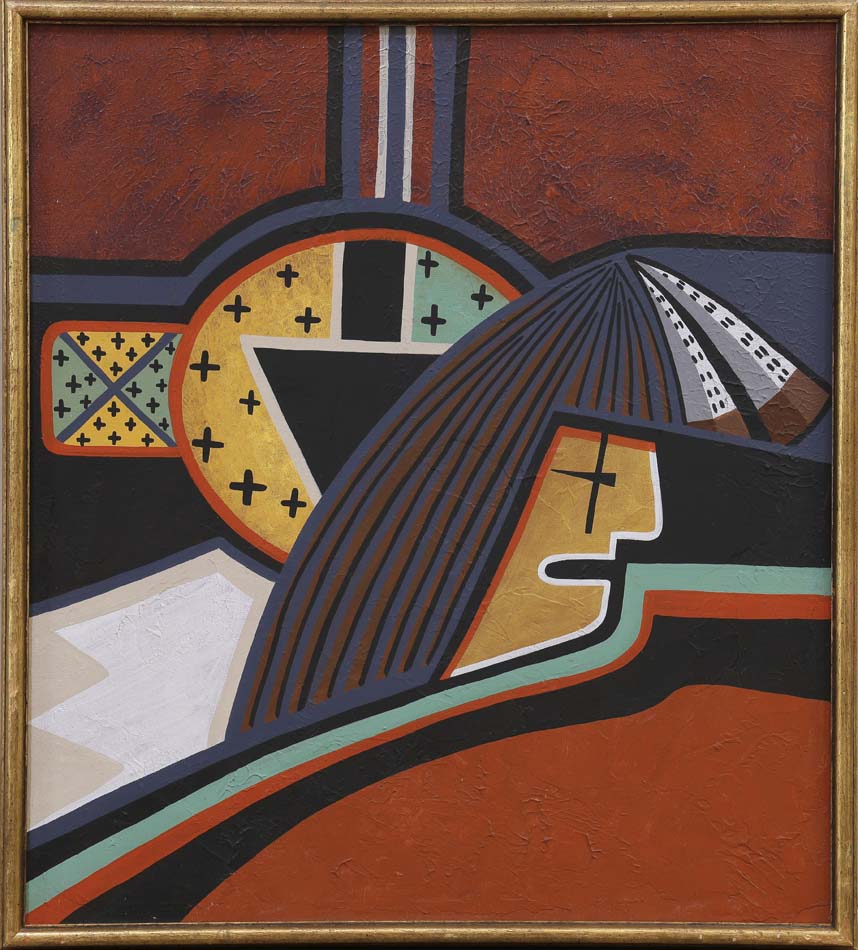
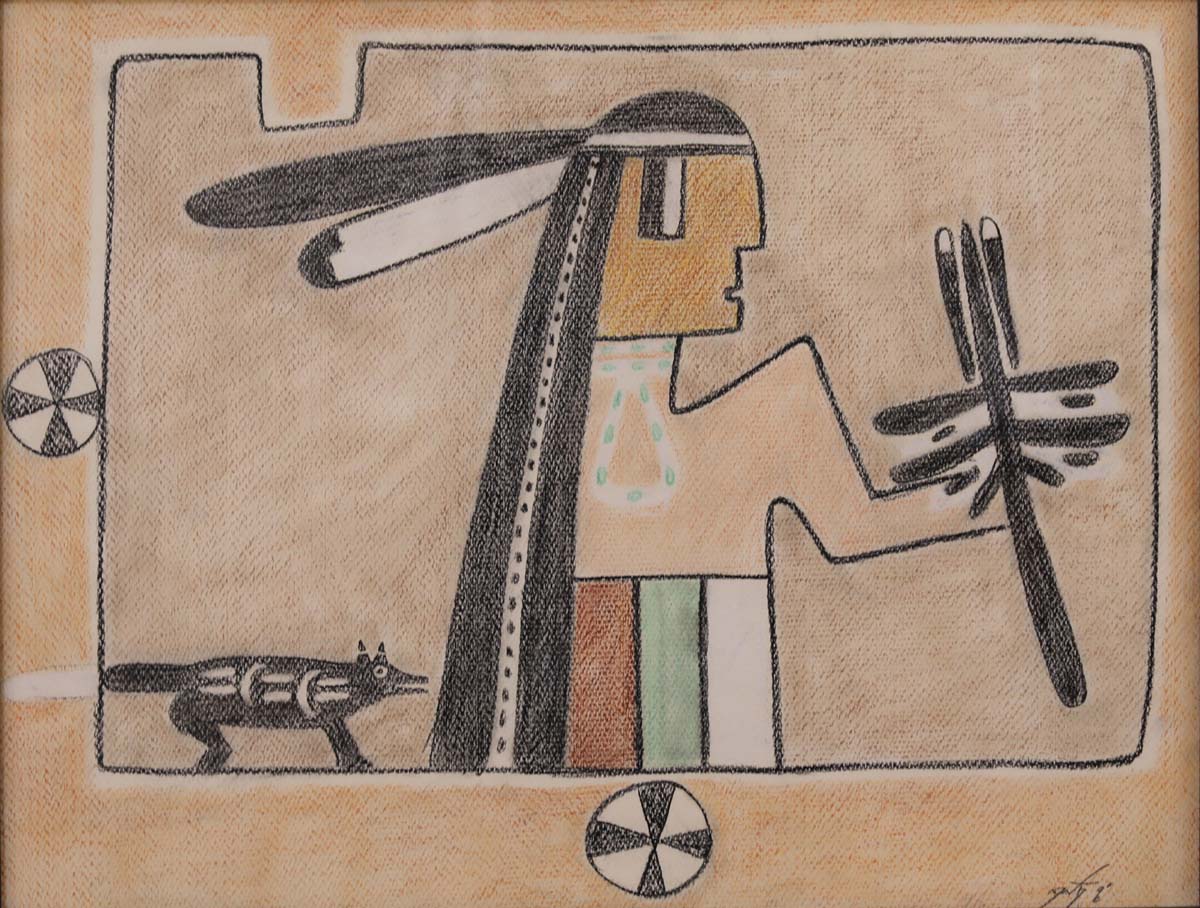
The opening celebrated the first of three thematic installations: Tending the Source closes September 8; Ancestral Echoes runs from September 12 to December 6; and Enduring Images runs from December 11, 2026, to April 30, 2027. The paintings in the first installation, largely acrylic on canvas, are packed with Hopi iconography, while inflected with humor and a flat style that conjures references to Cubism.
In David’s Awatovi Ceremonials (1974), for instance, the canvas is energized with movement. Rainbows arc, a farmer bends while planting, corn tassels reach skyward, tadpoles swim into frogs, a circular migration symbol urges a collared figure onward, the moon moves through its cycles. The colors are earthen, the background hushed, infused with spirit. At the top of the painting a legendary Tewa warrior maiden stands ready to defend her people, her hair in a butterfly whorl on one side, hanging loose on the other. When asked why, David explains, “When the attack came, she didn’t have time to finish getting her hair fixed.”
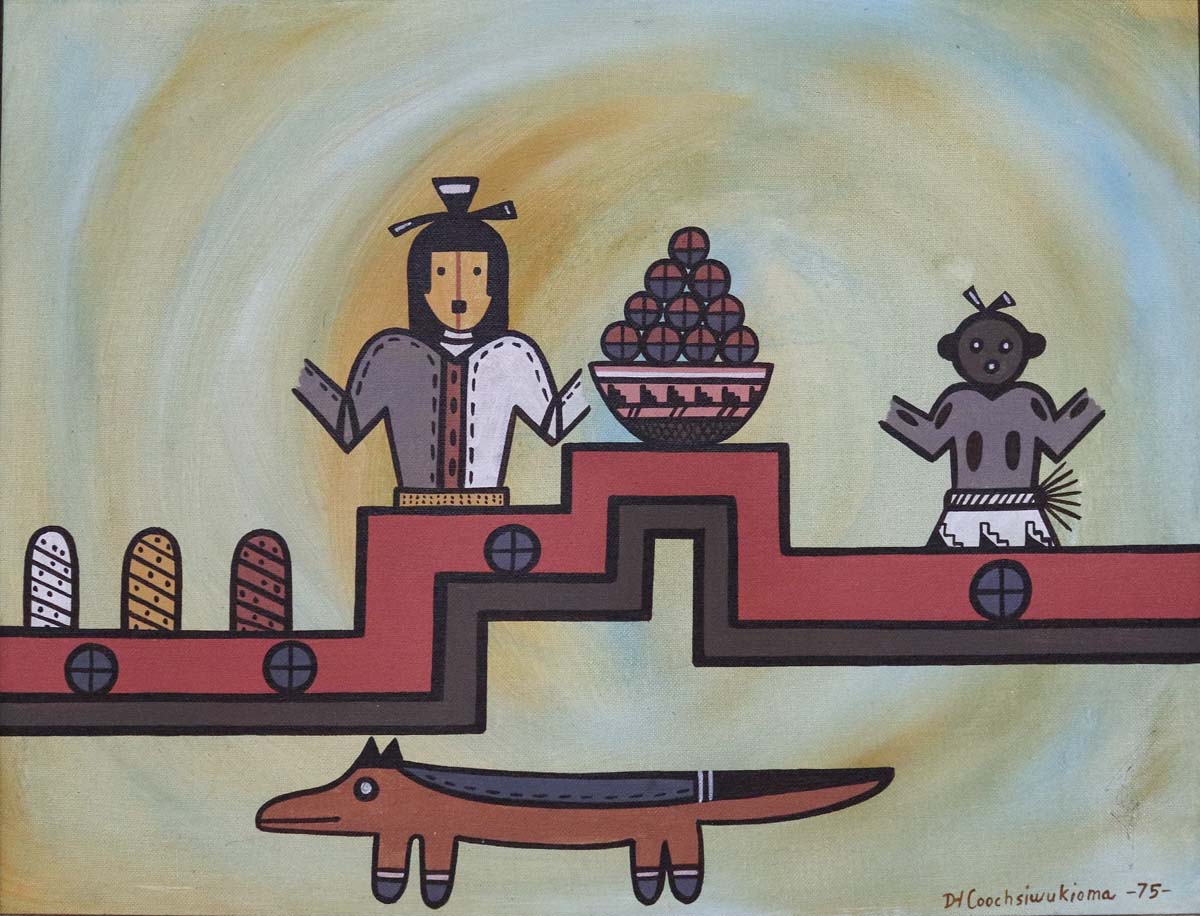
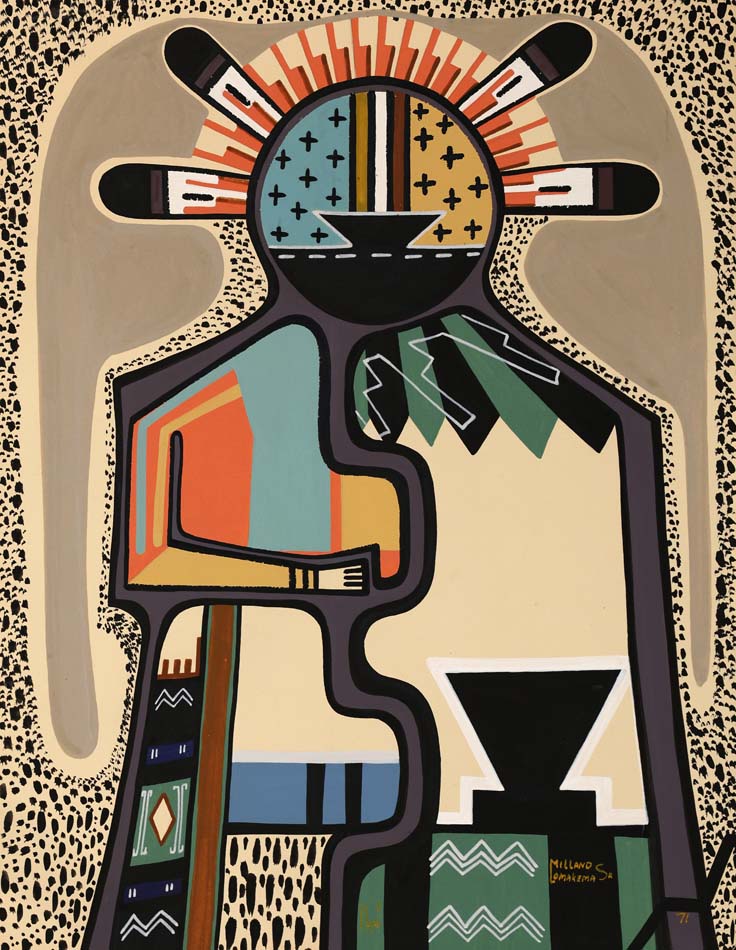
Lomakema’s paintings are quieter, but no less dynamic. Bold patterns and curving negative space draw focus to figures festooned with blanket and pottery symbols, feathers, and star shapes. Honanie’s Awatovi Woman Ceremony (1975) plays with scale and perspective, as various figures, creatures, and Katsinam merge with a color-field-like cosmos. In Talaswaima’s delightful Bean Dancers (1975), two women gripping greenery face each other on a turquoise and terracotta background, pausing for a kiss.
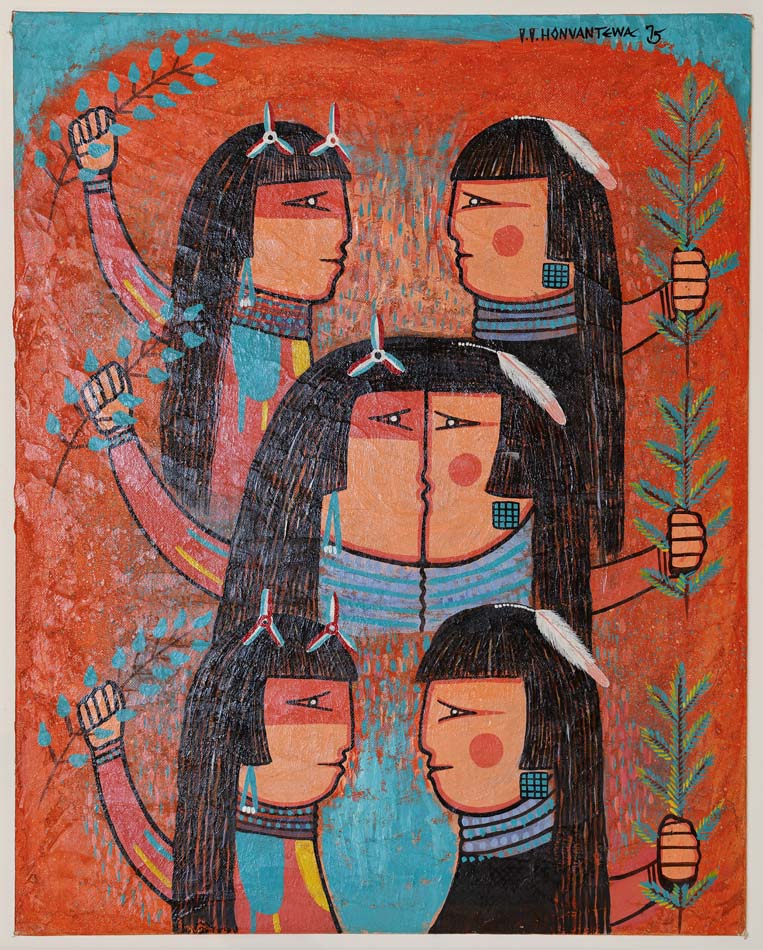
acrylic paint, 16 x 20 in. Courtesy the Museum of Northern Arizona.
Rain, lightning, clouds; bear, eagle, badger; pictographs and clan symbols; pueblos and landscapes appear in the work, which was also informed by art popular at the time, including Surrealism and psychedelia, according to press materials. When the artists formed Artist Hopid, they outlined five goals, included on a plaque in the exhibition:
1. To utilize the artistic talents of the Hopi to instill pride and identity. 2. To educate the Hopi, non-Hopi and the non-Indian to the aesthetic and cultural values of the Hopi. 3. To experiment and test new ideas and techniques in art, using traditional Hopi designs and concepts. 4. To control their artist talents and markets. 5. To research and document Hopi history and events through the visual arts for posterity.
The five artists, all from the Hopi mesas, became acquainted as youngsters during ceremonies, David says. “We all grew up making art,” he adds, and were largely self-taught. David, for instance, took one art class in the eighth grade, he explains, then was set to attend the Institute of American Indian Arts in Santa Fe, but was drafted.
Kabotie’s father, Fred Kabotie (Hopi, c. 1900-1986), was a painter and silversmith, commissioned by the Museum of Modern Art in New York to reproduce the lost murals of Awatovi Ruin in 1940; he subsequently won a Guggenheim Fellowship in 1945. Fred Kabotie also started a Hopi arts and crafts guild on Second Mesa, where the artists first showed their art. “But the work didn’t sell as fast as the jewelry,” David recalls. So, in the 1970s, the young men reunited and began selling their work at craft shows.
In 1974, they held their first exhibition on Second Mesa. They also exhibited at the Heard Museum and Tucson Art Center. In 1976, the National Endowment for the Arts and the Arizona Commission on the Arts sponsored a national tour of Artist Hopid works. The collective—Hopid meaning the Hopi people, a word chosen to emphasize the artists’ shared cultural voice—stopped operating formally in the late 1970s. But the artists already had a dedicated following and many collectors.
One of whom is Karen Laitner Benz, who began buying David’s work in the 1970s, then later online. She donated several paintings to MNA, including Awatovi Ceremonials. “I’m so happy people can see these works,” she says at the opening, “and that now they’re not only displayed, but also preserved.”