As Phoenix overhauls its mural directives, local artists are weighing how more structure could professionalize—or narrow—the field.
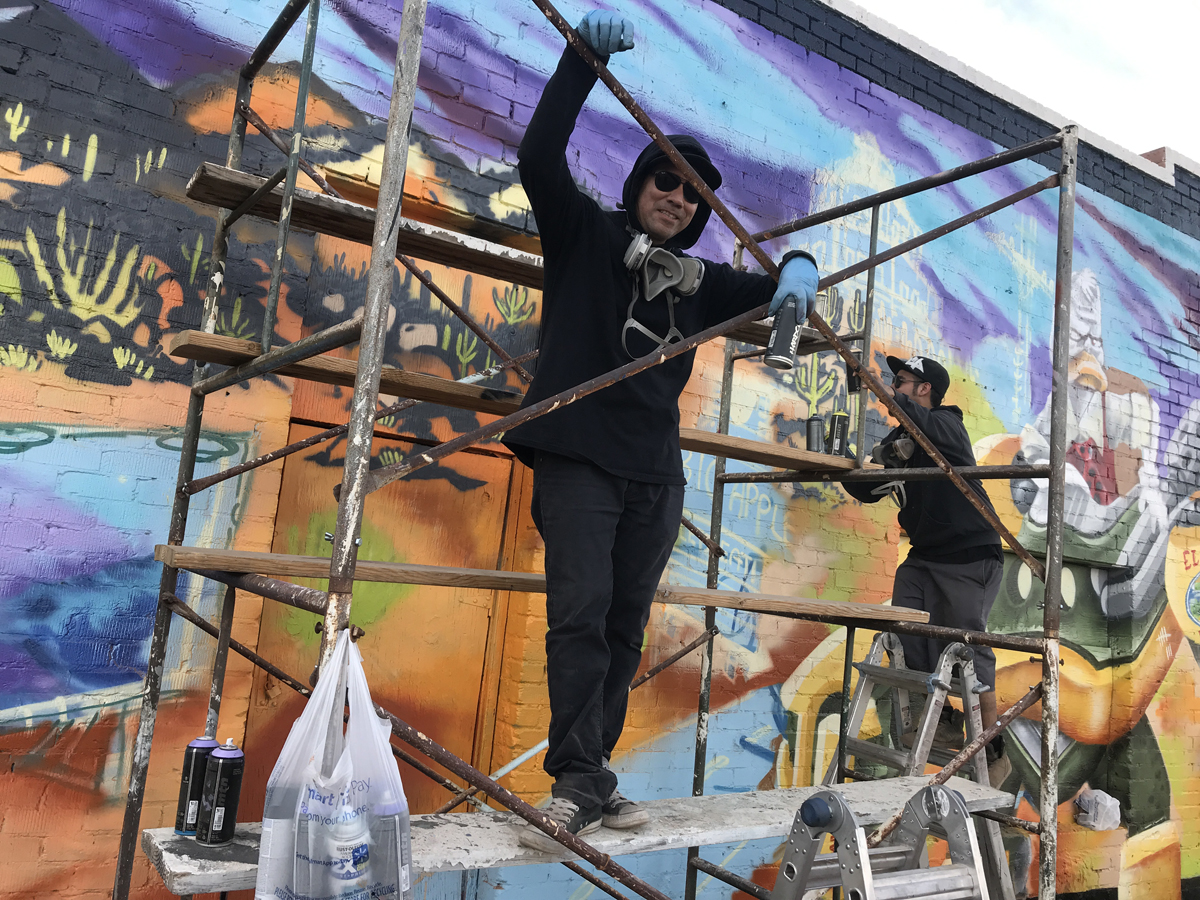
PHOENIX—Change is coming to the public art game in Phoenix—although the jury’s still out as to whether pending municipal mural guidelines are aimed at boxing artists in or uplifting their work.
Given the myriad ways some key arts organizations in the Southwest have sought to control or limit artistic expression in recent years, there’s a sense of paranoia setting in across the region—with federal attempts at creative and cultural erasure magnifying those concerns. In Phoenix, it’s compounded by attempts nearly a decade ago to curtail murals in historic neighborhoods.
The Phoenix Office of Arts & Culture is formulating mural guidelines “to support artists and guide property owners through best practices,” according to a recent call for artist input, part of outreach efforts including an online survey and in-person focus groups. It’s unclear at this point whether the guidelines will become actual requirements or policies for the city, or merely serve as suggestions. Some local artists hope it will embed a useful artist toolkit into the public art process, while others worry it will deliver mandates that restrict their creativity.
Maybe they want to exert some control, or maybe they want to up the city’s mural game.
“What is it that made them think of this now?” It’s a question posed by Lucretia Torva, an artist who’s created murals in Metro Phoenix mural hubs from Oak Street Alley to Danelle Plaza. “Maybe they want to exert some control, or maybe they want to up the city’s mural game,” Torva says of the city’s guideline efforts.
Her uncertainty is understandable. Until now, the city has taken a relatively hands-off approach to murals, offering a set of temporary art guidelines online, which includes some basics for both muralists and those who want to commission them. Muralists don’t need to get city approval unless the city is their client, although there are some cases where city code restricts murals construed as advertising.
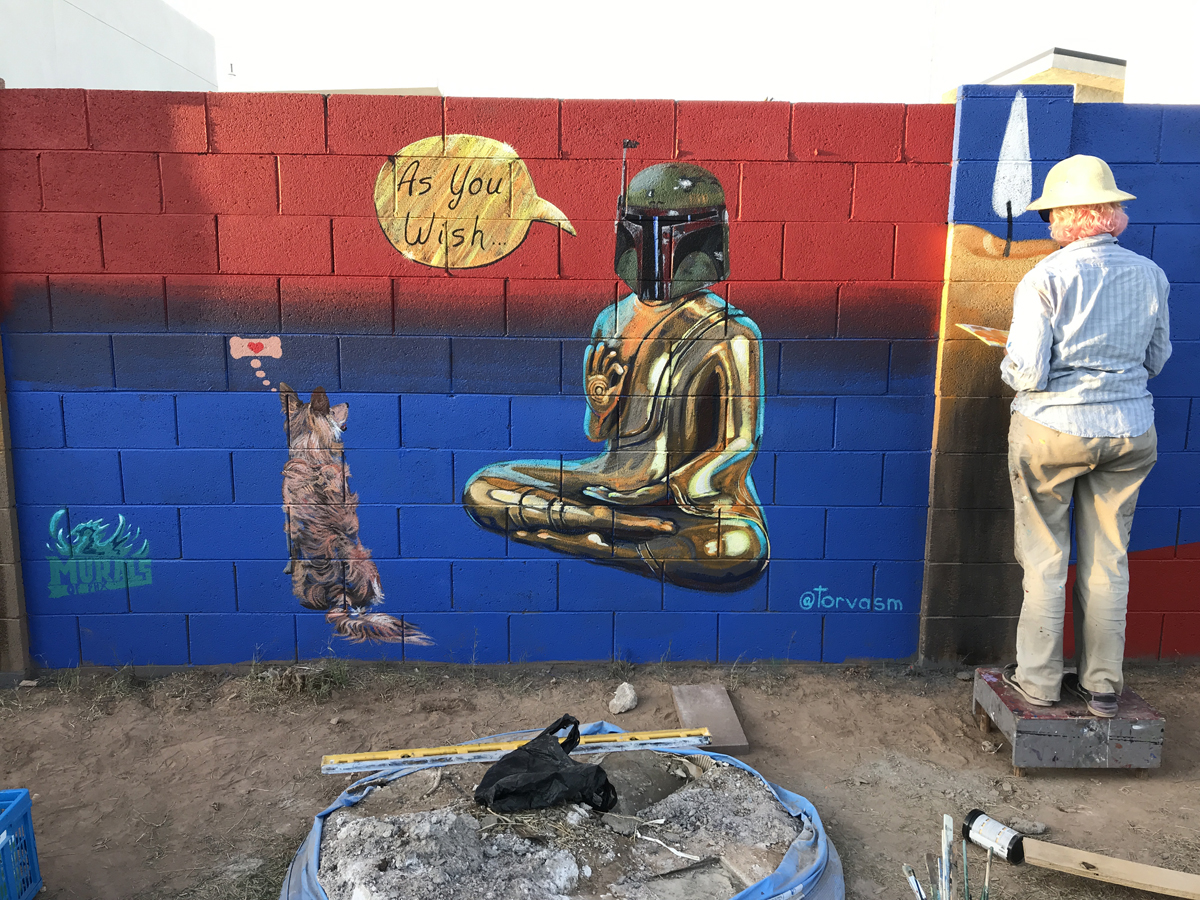
Torva is one of many artists eager to find out what will come from the city’s process, which is still somewhat nebulous at this point despite city materials stating that transparency in public art is one of their goals. City officials say they have provided artists with an outline of what they plan to include in the mural resource, although they have not made that document available to the press.
Catina Elizabeth, interim deputy director for Phoenix’s Office of Arts and Culture, says of the process, “We’ve been talking for a couple of years now, originally coordinating with the planning and development department, about how artists interface with the city, and now we’re launching this project.” She says that with the new guidelines, they aim to “create more transparency with relationship to the city’s permitting process” and states that “we don’t actually require permits for murals at this time.”
Elaborating on their intentions, Elizabeth says, “We love the idea of creating a free resource for artists, especially if they’re new to installing murals.” But she also notes that they’re “very interested in creating a resource that’s beneficial to the community.”
Meanwhile, other changes are taking place in the city’s public arts ecosystem. In November 2025, the city released its first-ever prequalified artist roster for murals, which contains forty-two artists who “will be eligible for City-funded mural projects over the next two years.” More recently the Phoenix-based nonprofit Artlink, which is already involved with coordinating some city calls for mural art, has announced its intention to “contribute to a robust, relevant brand that tells our city’s stories as we want them told.”
Select muralists on the pre-qualified roster were invited by the city to co-facilitate February mural guideline working groups, and Phoenix put out a public notice inviting local muralists to attend.
About two dozen artists showed up for the sessions, which were convened at the Pemberton, a nightlife hub in Roosevelt Row that’s home to murals by dozens of artists based in metropolitan Phoenix. Facilitators received a $250 stipend, but Torva says the artists who showed up to share their expertise deserve some renumeration as well. “We’ve learned a lot through trial and error,” she explains.
Instead, a city email to muralists offered them a chance to “share your experiences and challenges, influence guidelines that protect artist rights, improve mural processes, and connect with fellow creatives and City of Phoenix staff”—with food provided.
During the workgroups, facilitators led smaller breakouts organized around different themes from project management to community involvement. Several facilitators noted the prevalence of emerging artists, or experienced artists ready to expand their creative practice into mural art. Suggestions surfaced during the breakouts included making sure you’re not low-balling what you charge and setting limits on how much time you spend painting in the heat.
Artists can still contact city public arts staff with their suggestions or complete the online survey.
Basically, the survey has three sections. One addresses challenges faced by muralists, and another explores challenges experienced by muralist “collaborators,” namely those who hire them or invite them to work in their communities. There is also a section on best practices, where artists can rank in order of importance nine topics such as project management and community engagement.
Next, the city plans to engage the people who commission murals, according to Elizabeth, who cites city departments and private property owners by way of example. “Our guidelines will also address their questions about working with mural artists,” she explains.
For Torva, that’s a plus. “Artists are professionals who deserve to get paid fairly for their designs and their work,” she says. “And people need to know that we retain certain rights to our artwork under the federal Visual Artists Rights Act” of 1990.
Yet there’s skepticism too, as you might expect within the broader context of federal actions aimed at gutting arts and culture and curtailing freedom of expression. But also because the city’s last public-facing conversations about possible mural guidelines struck a decidedly different tone.
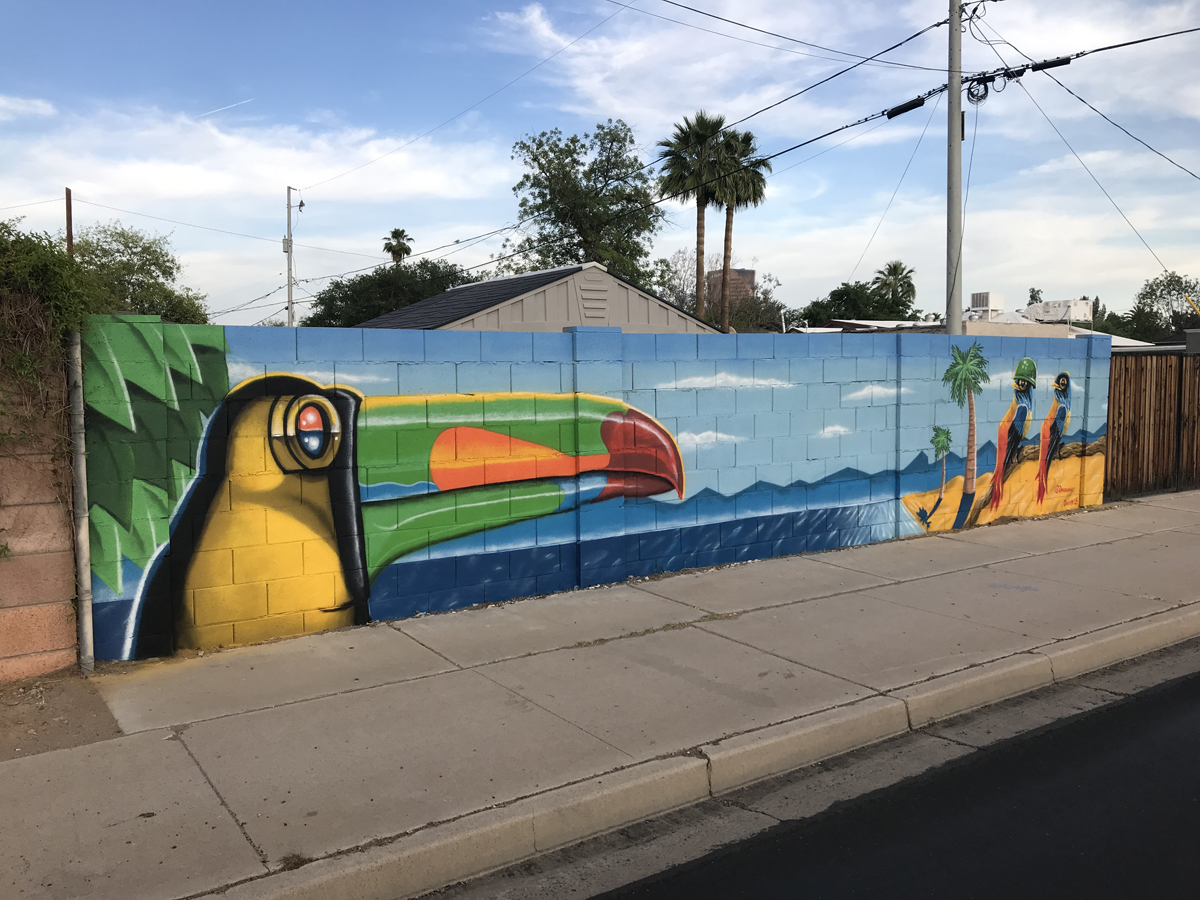
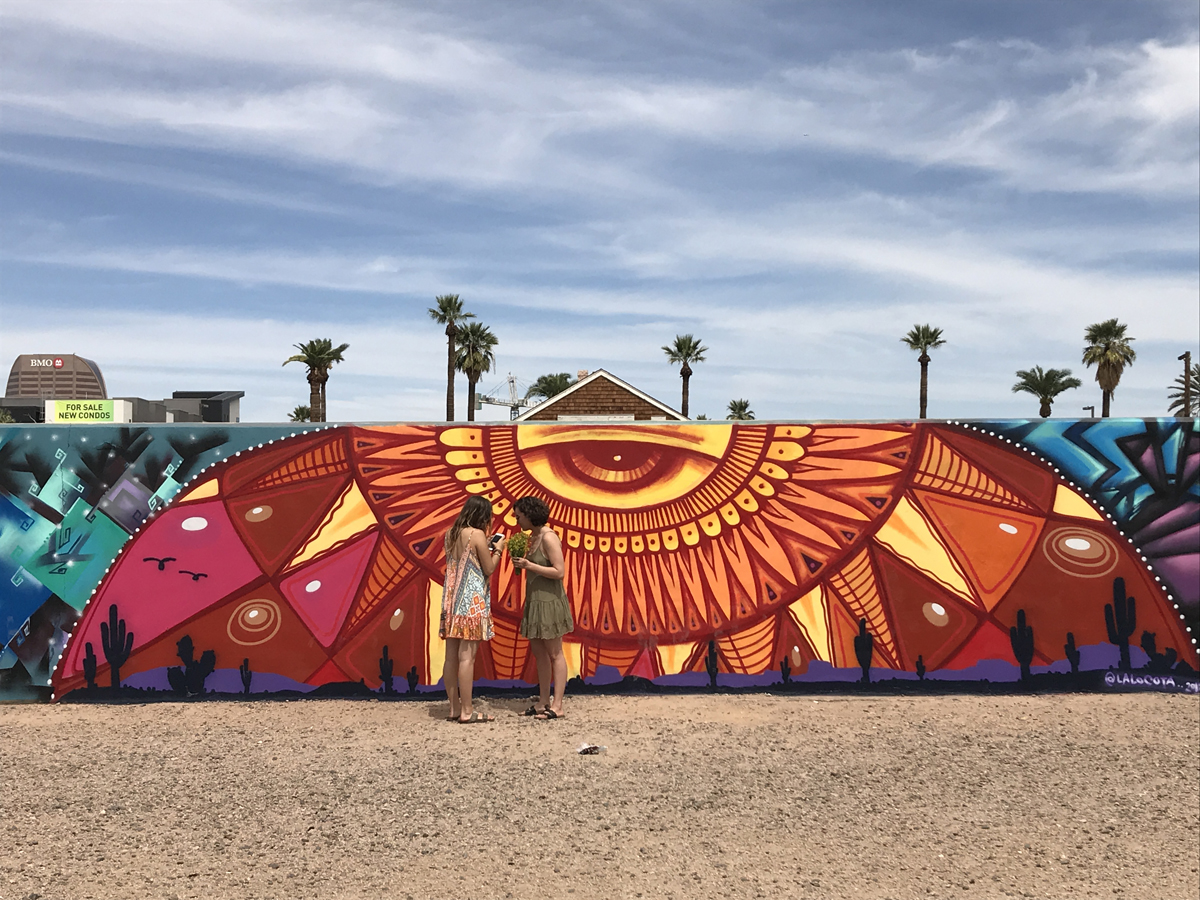
David Morgan, an artist who attended one of the February working groups, recalls a heated public meeting the city convened in 2018, after some residents in a historic neighborhood decried the presence and aesthetics of artworks that went up during a mural festival. At the time, some artists accused naysayers of objecting to content and styles rooted in diverse cultures and communities. The restrictive city guidelines some hoped for never came to pass, by the way, and the vibrant tropical scene Morgan painted along a busy byway during the festival still stands.
Also in play is the question of how new guidelines might influence or dictate which artists and aesthetics float to the top in highly competitive submission processes.
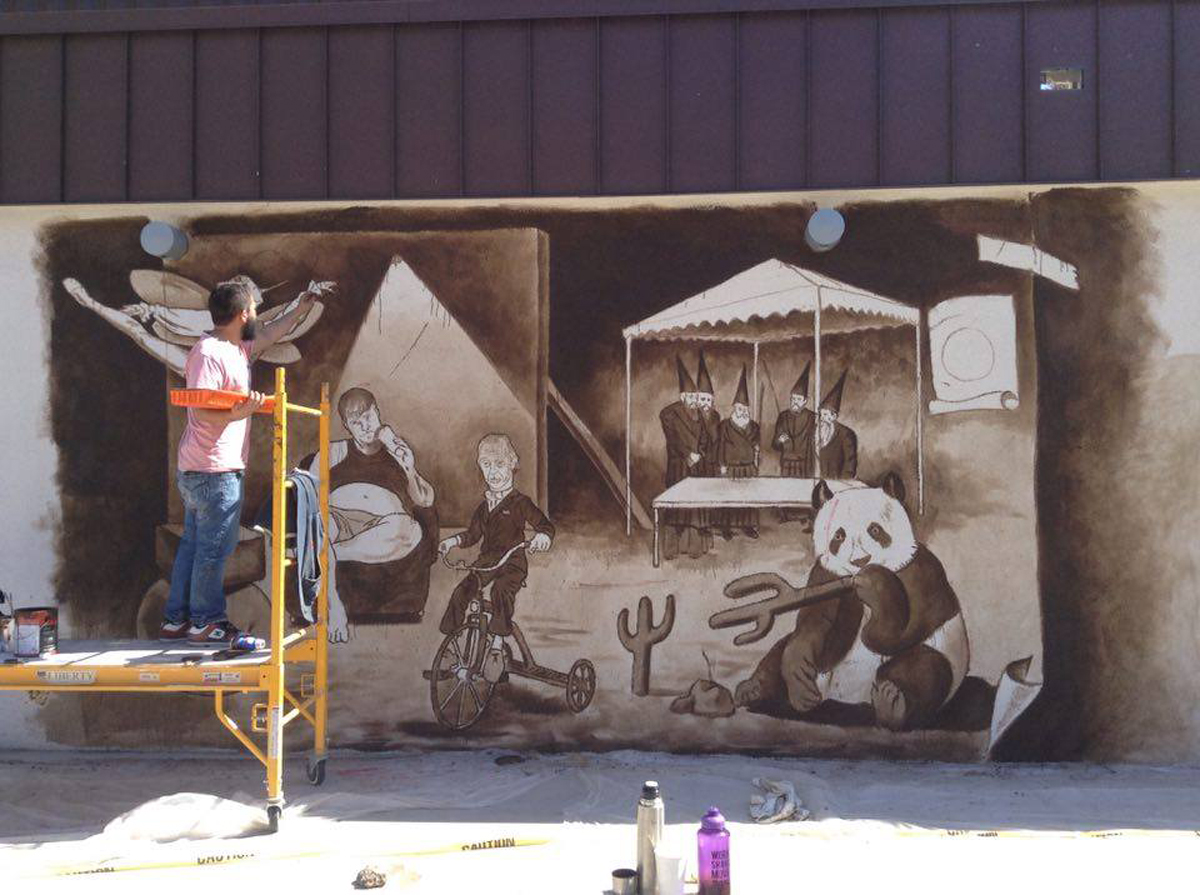
“City guidelines won’t necessarily help artists if they’re not getting chosen when Phoenix decides who to commission for a mural,” reflects Diego Perez, an artist who imbues his work with sarcasm and art historical references.
“I hope the guidelines won’t make Phoenix murals more repetitive because we need to have a broader range of aesthetics,” Perez explains. Beyond that, he’s hoping the city will focus on more than downtown. “We need to amplify mural opportunities around the city.”
Meanwhile, some artists believe the guidelines will be helpful. “There’s nothing else like it here, and it’s really needed,” says Tato Caraveo, a prolific muralist who facilitated one of the city’s working groups. One of Caraveo’s murals anchors a massive multi-artist installation designed to welcome people to Roosevelt Row.
Before creating her James Baldwin portrait installed on a nine-story building in Roosevelt Row, Antoinette Cauley had only done a couple of small murals inside local businesses. “Looking back, I really didn’t know what I was doing,” she says of those early works. “Having this kind of resource would have been invaluable and saved me so much time.” Cauley also facilitated one of the working groups.
In Phoenix it’s still kind of the Wild West. There are still things that get in under the radar.
The latest mural discussion is just one moving part in a creative ecosystem that’s in flux, which might help to explain why the city says now it could be a year before the guidelines are released despite a city website reference to a spring 2026 release.
In recent months the city has searched for a new director of arts and culture, explored creating a new entertainment district, faced questions about the safety of First Friday art walks, and moved closer to choosing a site for its long-awaited Latino Cultural Center.
“We’re still trying to figure out a timeline [for the mural guidelines],” says Elizabeth. “It’s a little dependent on community engagement, and we’re still trying to figure out a process for that.”
Morgan quips that at present, “In Phoenix it’s still kind of the Wild West. There are still things that get in under the radar.”
Editor’s note: This story was updated on April 16, 2026, to clarify the city’s current position on mural permits and to note that city officials say they shared an outline of material planned for the mural resource with local artists.