- This event has passed.
Exhibition Opening: Ever-Changing Nations
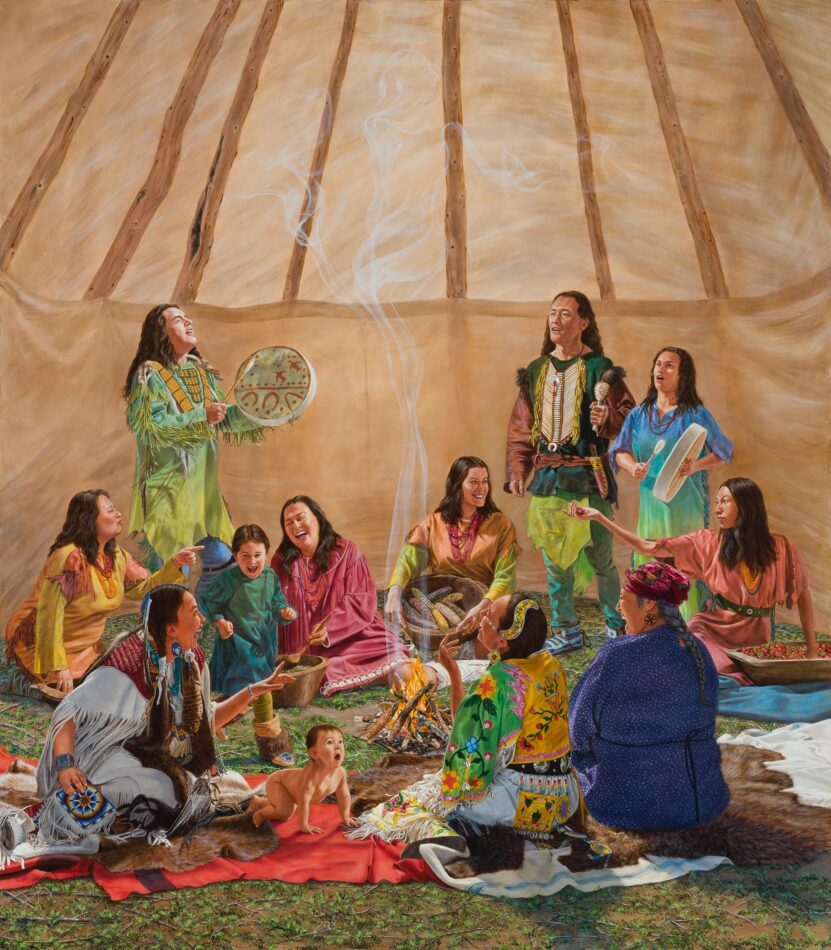
Ever-Changing Nations opens at Trotta-Bono Contemporary in Santa Monica Friday, February 27th to coincide with Frieze Los Angeles and the United States’ 250th anniversary. The exhibition presents a sharp, visually compelling reconsideration of the dominant historical narratives of the nation. The exhibition will open to the public with a special reception Saturday, February 28 from 6 to 8pm.
Anchored by major works by Kent Monkman and featuring powerful photographs by Cara Romero, the exhibition reframes the language of commemoration through counter-history, satire, and the enduring power of Indigenous representation. Rather than treating 1776 as a fixed point of origin, Ever-Changing Nations presents it as a contested beginning – shaped by displacement, resistance, and survivance that continue to define the present.
Bringing together an inter-generational group of leading Indigenous artists – including Cannupa Hanska Luger, David Bradley, Jaune Quick-to-See Smith, Rick Bartow, Fritz Scholder, T.C. Cannon, Richard Glazer-Danay, Brad Kahlhammer, Pop Chalee, Rose Simpson, Bob Haozous, and Nicholas Galanin, among others – the exhibition foregrounds Indigenous voices as central authors of American history rather than its subjects. Romero’s monumental portraits reassert presence, dignity, and contemporary identity, while Monkman’s expansive history paintings overturn colonial narratives with wit, scale, and theatricality.
A newly conceived multimedia and video installation by Virgil Ortiz expands his ongoing Pueblo Revolt 1680/2180 series into a cinematic realm of clay, film, sound, and immersive storytelling. The work collapses time, reframing Indigenous resistance not as a closed historical chapter, but as an active, unfolding continuum – one that reverberates across centuries and into the future.
Presented in the gallery’s new Santa Monica space, Ever-Changing Nations invites viewers to confront the past as living, unfinished terrain and to imagine more just futures grounded in sovereignty, memory, and cultural continuity.