How do we survive distortion in a militarized landscape? Jennifer Seas reflects on Land Art, lossless technology, and itinerant art practices that respond to the unstable conditions of real life.
Around the same time that Spotify started running recruitment ads for ICE, the company announced that its archive is now “lossless”—a class of data compression that promises no loss of information.
Lose yourself in Lossless music. Stream wirelessly in up to 24-bit quality.
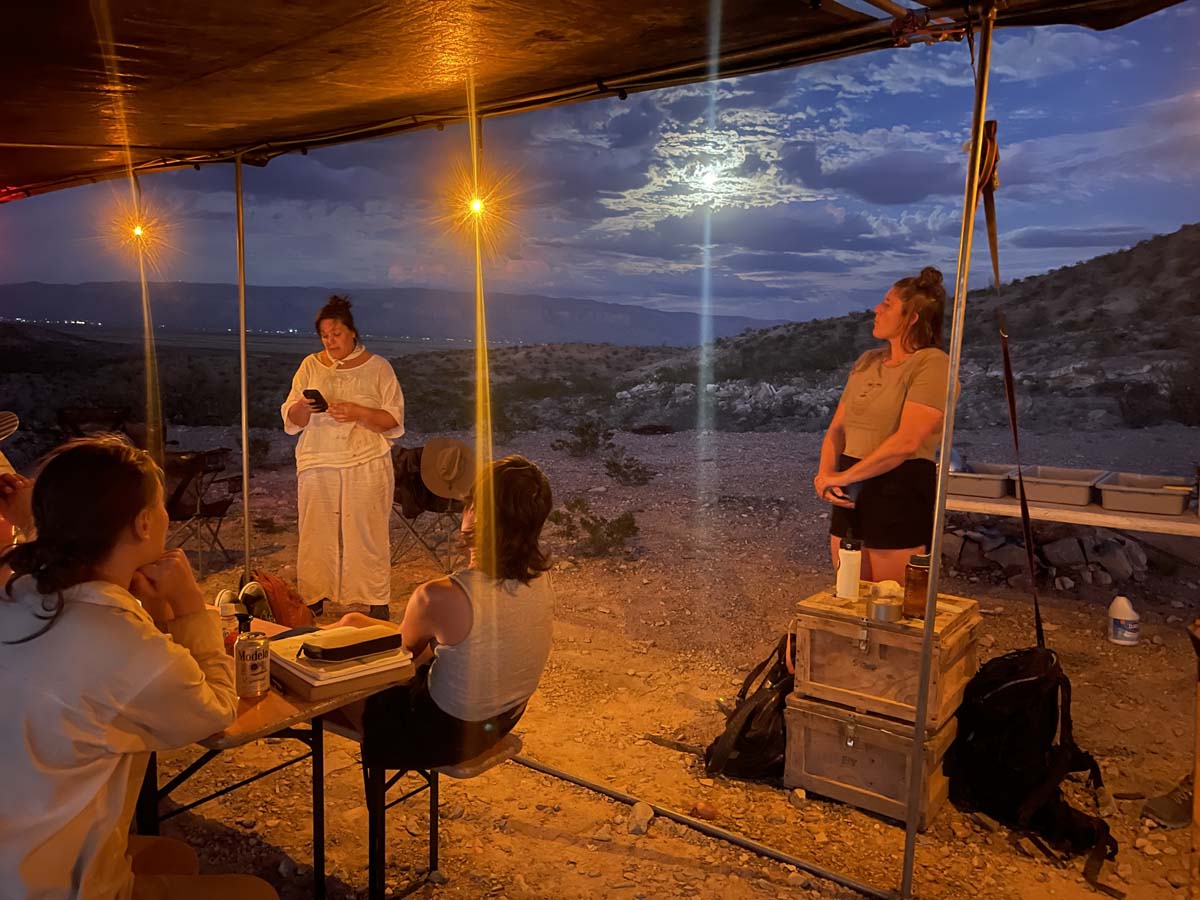
I receive the announcement while wrapping up a week of rest before returning to the desert for another month of field work with Land Arts of the American West at Texas Tech University—a program that supports artists and other scholars on a 6,051-mile highway and off-road journey through Texas, New Mexico, Arizona, Nevada, and Utah. I pack to set up camp again, readying myself to live and work outside, in community, embedded in the history and presence of both Land Art and the U.S. military’s test sites and blast zones.
On the way to our first campsite, we take a break from listening to playlists to read aloud into the microphone that connects both our vehicles via FM frequency. We will be discussing Ann Reynolds’s essay on Robert Smithson’s travel-based works later in the evening. Smithson’s field notes instantiate the relationship between his “nonsite” (indoor earthwork) and “site” (here, the Yucatán landscape)—a relational model that extends easily to other temporospatial dichotomies such as the U.S. and Mexico, gallery and studio, lossy and lossless.
Reynolds reminds us that Smithson’s works consist of repeated actions and their remains, and that together they have the potential to produce something new. She doesn’t suggest this is a clean translation—site and nonsite are not equivalent. Both are partial, displaced, and contingent. What is brought back is not a whole experience but a fragment marked by movement, erosion, and selection.
I sense a resonance here with artist and media theorist Hito Steyerl’s defense of the “poor” image—compressed files circulated at degraded resolution. Steyerl calls it an itinerant image, bearing the marks of its passage.
While you may have your streaming quality set to Lossless, factors such as the stability of your WiFi or mobile data connection, and the availability of sufficient internet bandwidth, can significantly impact whether you actually experience lossless quality.
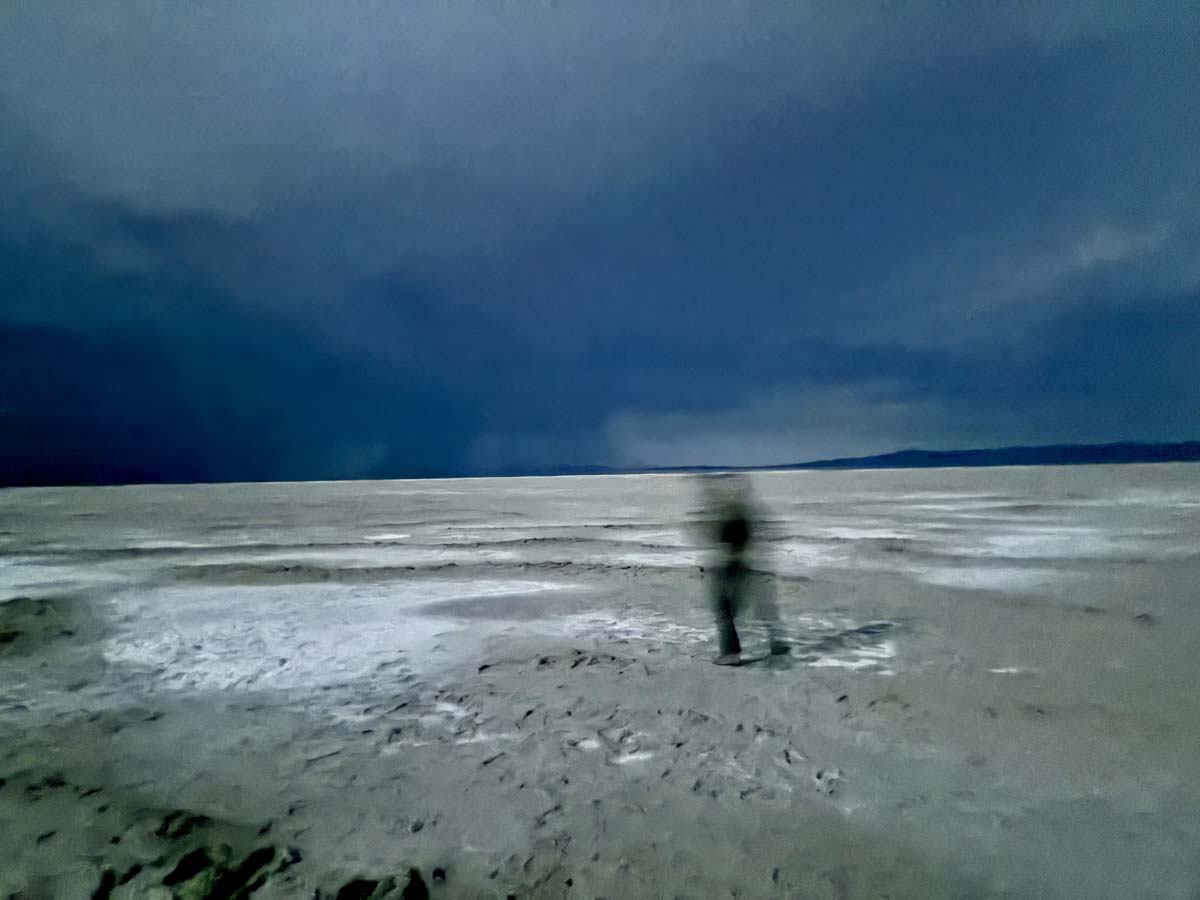
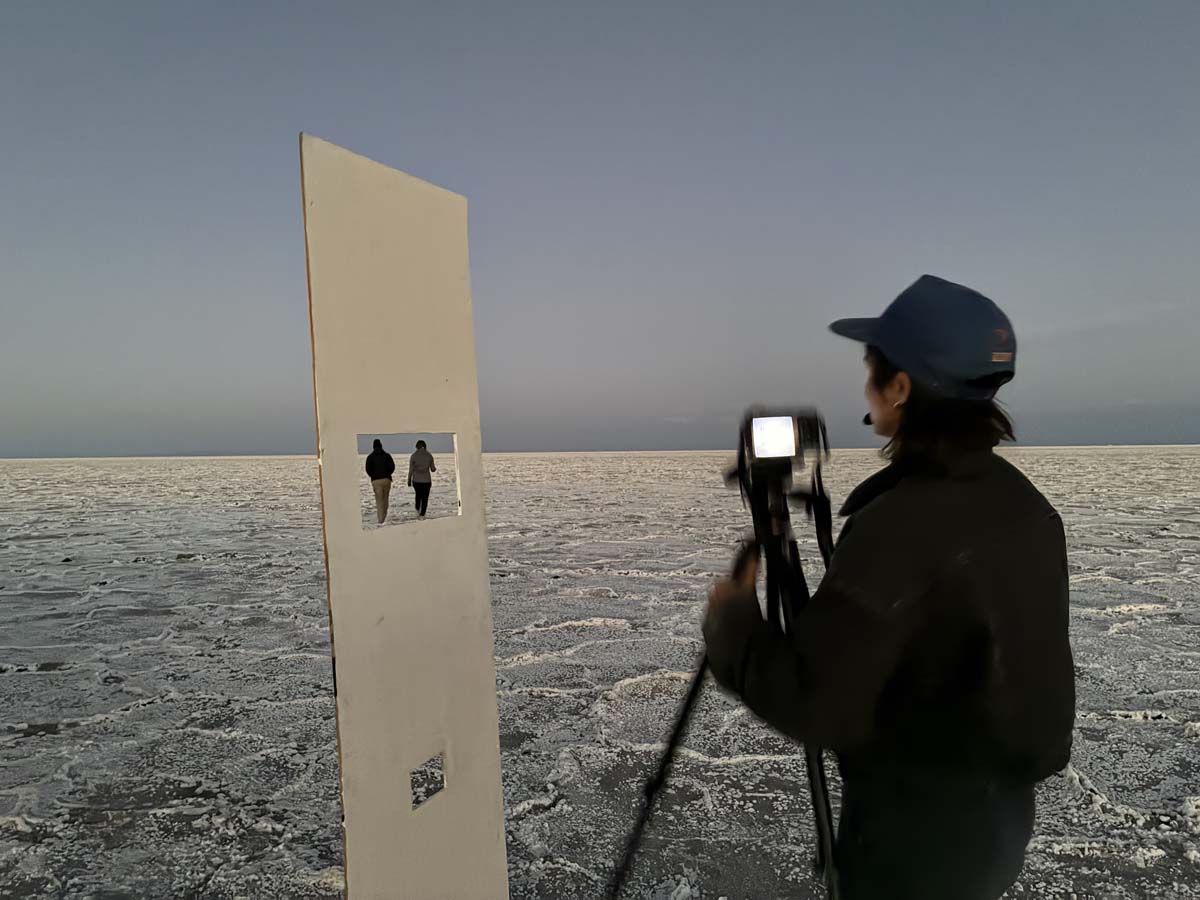
We can imagine the poor image as more than visual, as a condition of perception under pressure. An itinerant state defines my experiments in the field, moving between potential and limits shaped by excessive conditions. I try to recreate a prop for an artwork, gluing printed JPEGs made from a PDF of one text onto the pages of a different book, and eventually lose it to a lake’s waves. I attempt to film using a camera on an errant gimbal, which renders otherwise lossless files windblown and unusable. The landscape has more to teach me about adaptation than fidelity.
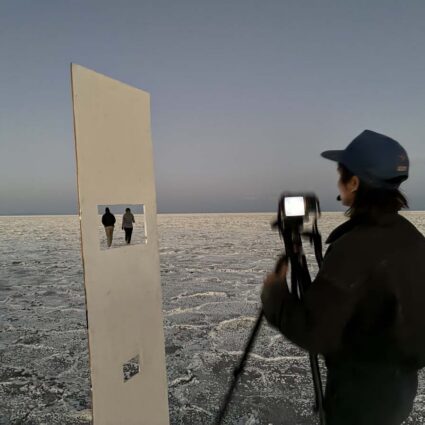
Another participant in this itinerant practice approaches their artmaking through proposals: What if I float this material on saltwater? What if I release a balloon into this wind with five people holding the string? Anika Todd’s proposals form perfect sentences, but reality produces messy interactions between intention and circumstance. Todd experiments with viewfinders and balloons, tracing movement never fully under their control. Each proposal generates an imagined outcome, tests, more tries, then actual outcomes shaped by what the work itself demanded.
At an abandoned U.S. Army barracks site, Joey Grimm clears brush from a concrete foundation—the slab of a building meant to exist only briefly. Hours of cutting tangles of plants produces a form aligned with sculptural minimalism. It also carries the absurd charge of a gesture of care for something history intended to erase. It is difficult to document and will likely be reclaimed by time, but on our last night the group turns it into a dance floor. Perhaps this is the work’s truest record.
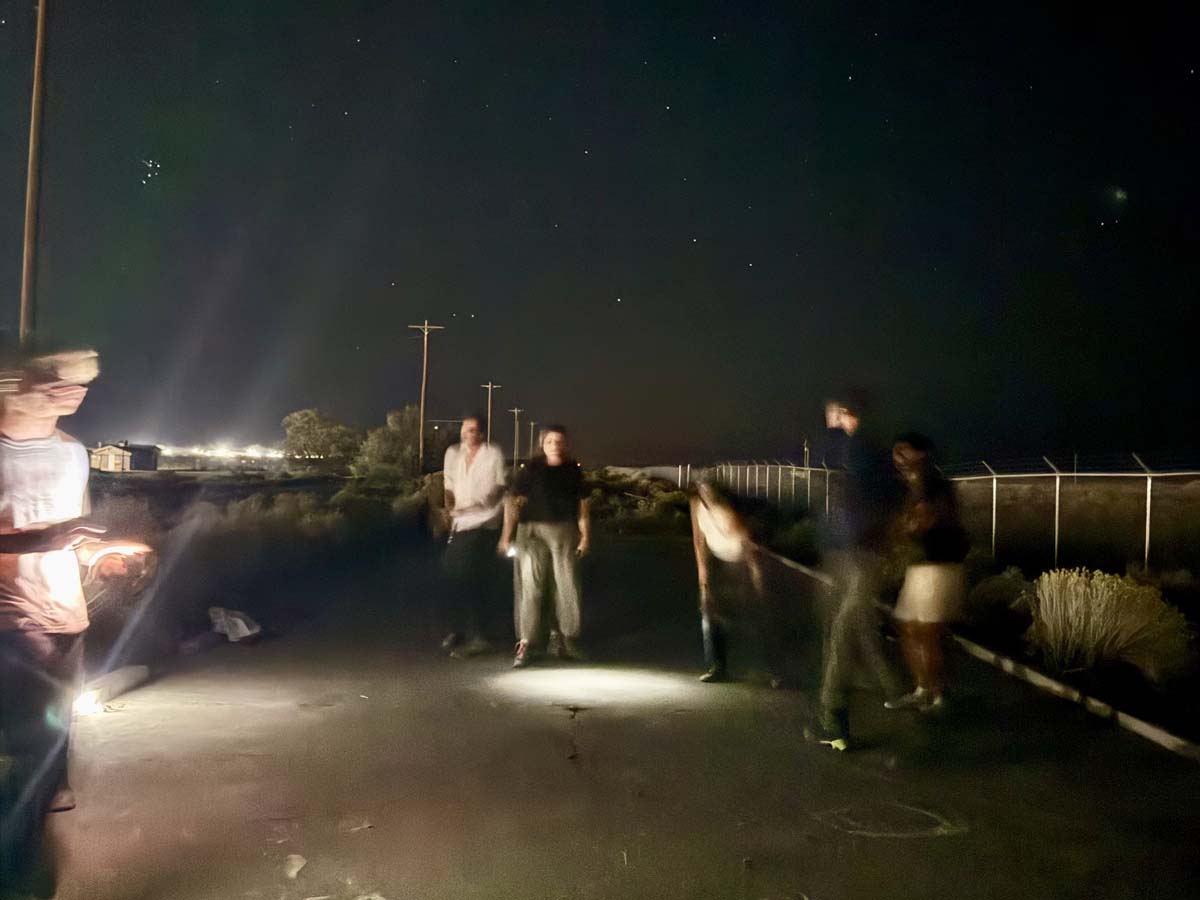
Repeated actions become performances, whether scattering mirrors in the Yucatán, lighting a flare on the salt flats, floating in a lake, or hammering tent stakes into sand that doesn’t want to hold them. Performativity suggests language itself can have the effect of change, making space for its own undoing, never fully complete or representable. We attempt to leave no trace in the field while also creating something to bring back with us. Both of these gestures are encoded with failure.
And the remains—a photograph, a party, an essay, a salt-encrusted book—are the images as copy in motion that Steyerl writes of. They are performative objects, residues that claim to carry the original signal, but never do. They are incomplete, a conservator’s nightmare, degraded so they can be shared.
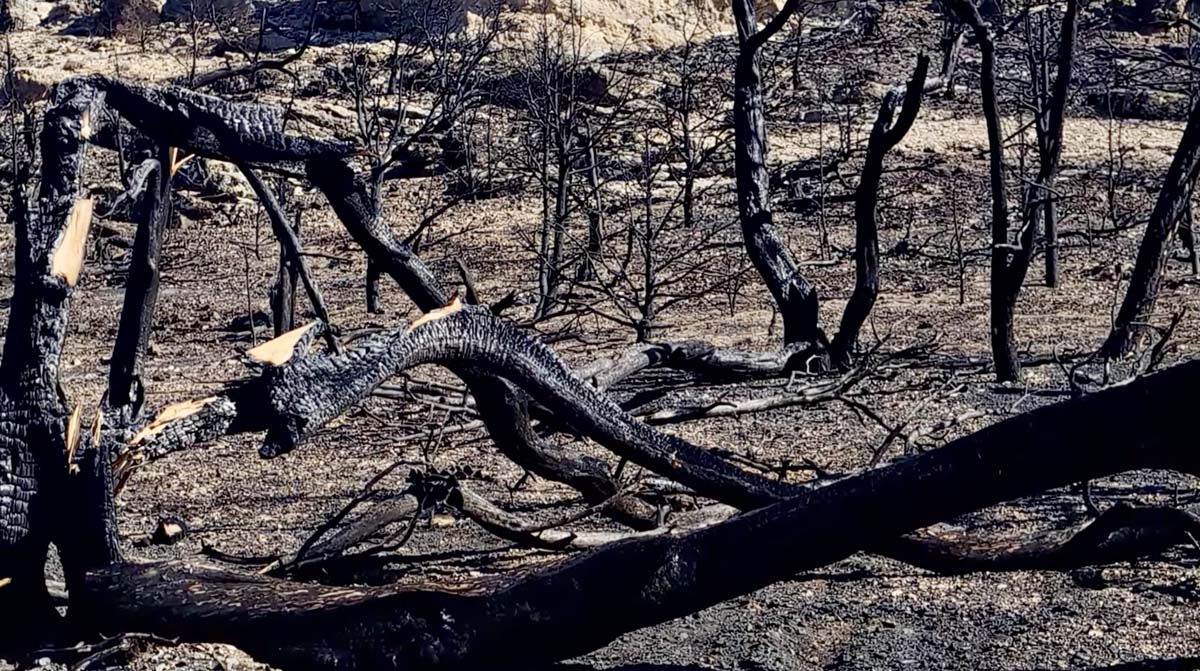
Soil from arid and burned landscapes becomes material for Miles Matis-Uzzo to make blurred compositions on paper. They read as drawings but behave more like sculptures—matter displaced and re-presented. The titles do the work of return by citing specific fires (Horseshoe 2 Fire, Dragon Bravo Fire), naming a place and time while also naming what is gone. Ash is evidence of a singular event, specific trees, communications between plants that no longer exist. Loss cannot be reversed and what remains is a trace.
A promise of fidelity can never be experienced in the unstable conditions of real life, whether in the desert or in your bedroom with patchy WiFi.
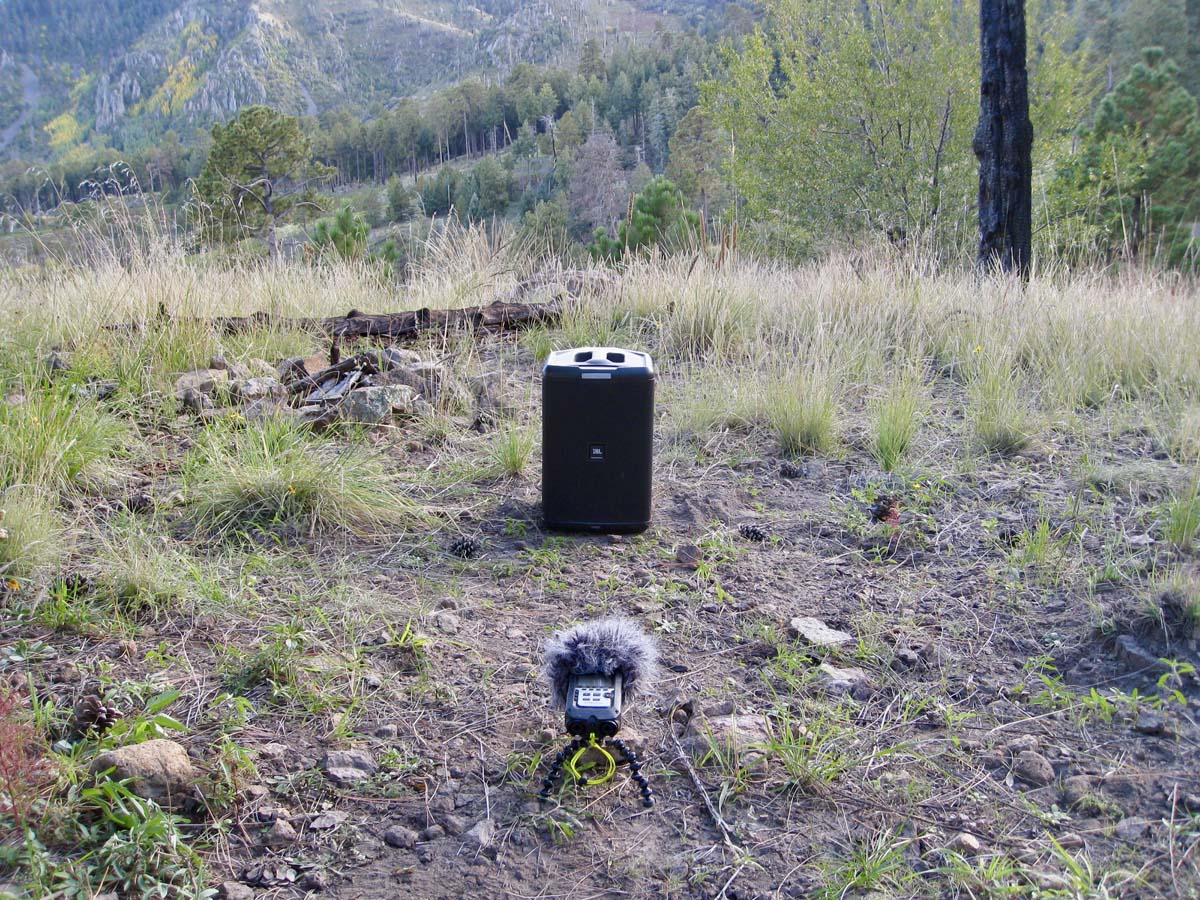
Watching our group repeatedly take the “same” photograph of the same site—adding it to a twenty-year archive of near-identical images, differing only slightly in perspective, resolution, or mood, is a catalyst for James Warren to work outside his chosen practice of painting. In the mountain landscape, he places a speaker and a microphone three feet apart, records the ambient sound, plays it back in the same spot, and records it again, repeating this process ten times. Each iteration gathers more environmental noise, more “before” and “after,” and the repetition reveals a new sonic structure.
These poor images—not monumental, likely unstable, degraded—bear dust, injury, interference, and memory. Their impoverished state is their potential according to Reynolds and their political strength according to Steyerl.
We are reminded often by our guide on this journey that presence is more important than perfection. Many argue that performance’s only life is in the present. To document is to lose something even as you try to keep it. Compression erases, yet in doing so enables new circulation. Lossless is merely an illusion. Last fall it was a marketing strategy.
We recommend a steady internet connection of 1.5 to 2 Mbps for the best lossless listening experience.
Movement teaches us to listen through interruptions—a clumsy page turn while holding the mic as we read to each other, or wind against tent fabric waking us to the hum of military drones above. Listening is lossy. But it is precisely this lossy condition that enables us to carry new interpretations from place to place—site to nonsite.
A promise of fidelity can never be experienced in the unstable conditions of real life, whether in the desert or in your bedroom with patchy WiFi. Spotify promises lossless listening while participating in systems that deepen distortion, offering “pure” sound while amplifying violence(s). Back home, we are being flooded by streams of the most horrific soundscapes imaginable. Images, statements, threats, and tragedies circulate before we have the bandwidth to make sense of them.
Cultivating an itinerant art practice insists that fidelity is not always a virtue. Lossless formats are a commercial endeavor, not a creative goal. No body can persist unchanged. Lossy listening—listening with and through loss—is a creative methodology we need. Preservation maintains the systems that delivered us to this troubled place. We don’t need cleaner versions of the same data, we need to be willing to unrender such familiar forms.